 PlantFun
Plant Needs
Characteristics
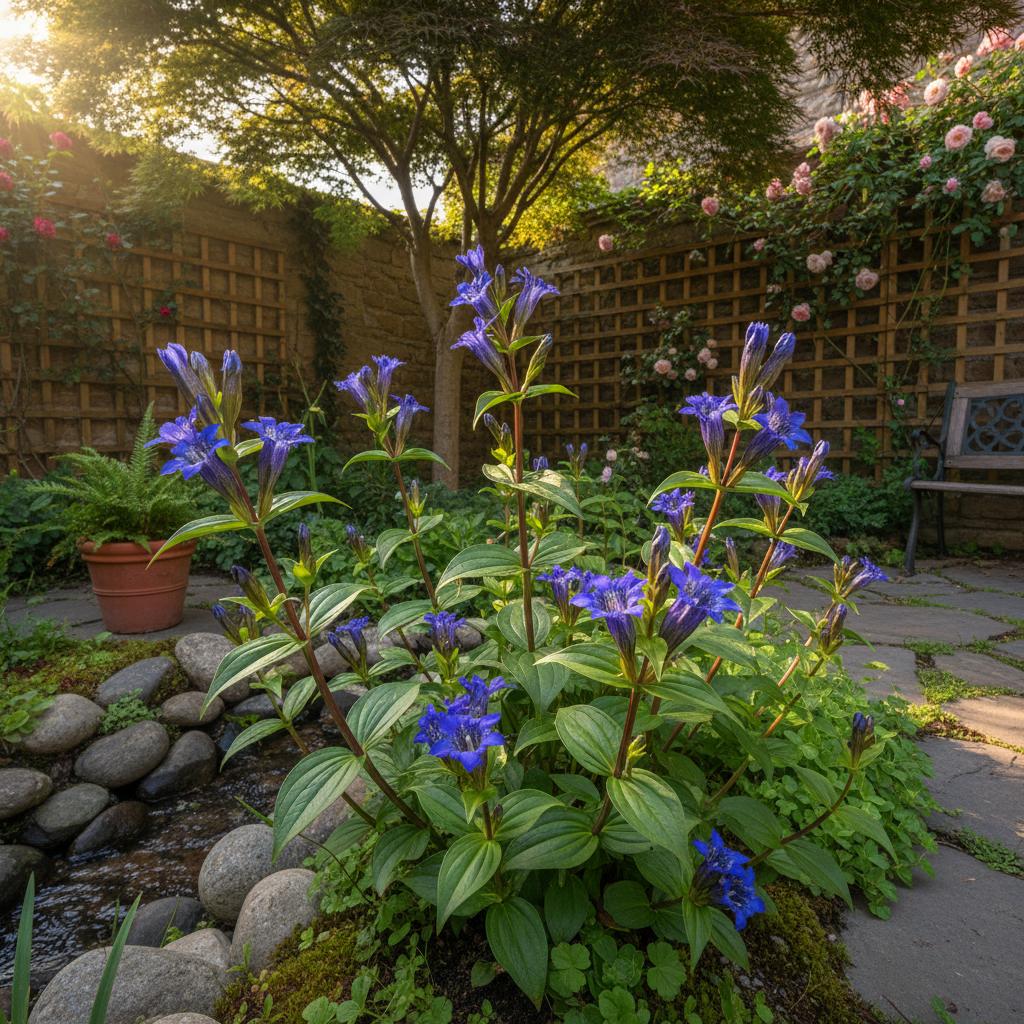
- Leaves: Opposite, ovate to lanceolate, relatively small, forming a basal rosette that often withers by flowering;
- Flowers: Deep blue to violet, tubular-campanulate, borne on the ends of the numerous branches;
- Stems: Erect, characteristically branched from the base, giving the plant its common and scientific name.
Care Guide
Keep evenly moist but not waterlogged
Apply a weak, low-nitrogen fertilizer once. Gentians require very little fertilizer; over-fertilizing can promote weak, leggy growth.
Banana Peel Tea:Steep chopped banana peels in water for 24 hours. Dilute 1:1 with water. Avoid using raw peels directly on the soil to prevent mold. Potassium supports vibrant blue blooms.- Deadhead spent flowers to maintain a neat appearance;
- Remove dead or decaying foliage at the base to prevent fungal rot in damp conditions.
Toxicity
Warning: this plant may be toxic.
Pets: Non-toxic to cats per ASPCA guidelines, though bitter taste usually deters ingestion.
Humans: Generally considered non-toxic to humans, though it contains bitter principles.
Garden Uses & Culture
Culture: In European alpine regions, gentians are iconic symbols of the mountains, often featured in folklore, traditional art, and mountaineering emblems as representations of rugged beauty and purity.
Usage: - Ornamental use in rock gardens, alpine troughs, and scree beds; - Historically, roots of related Gentiana species were used to flavor bitter liqueurs and digestive tonics.