 PlantFun
Plant Needs
Sunlight
Requires bright, indirect light; direct sunlight will scorch the leaves and fade the vibrant patterns.
Watering
Keep soil consistently moist but not waterlogged; requires high ambient humidity (above 50%).
Temperature
Prefers warm environments; sensitive to cold drafts and sudden temperature drops.
Characteristics
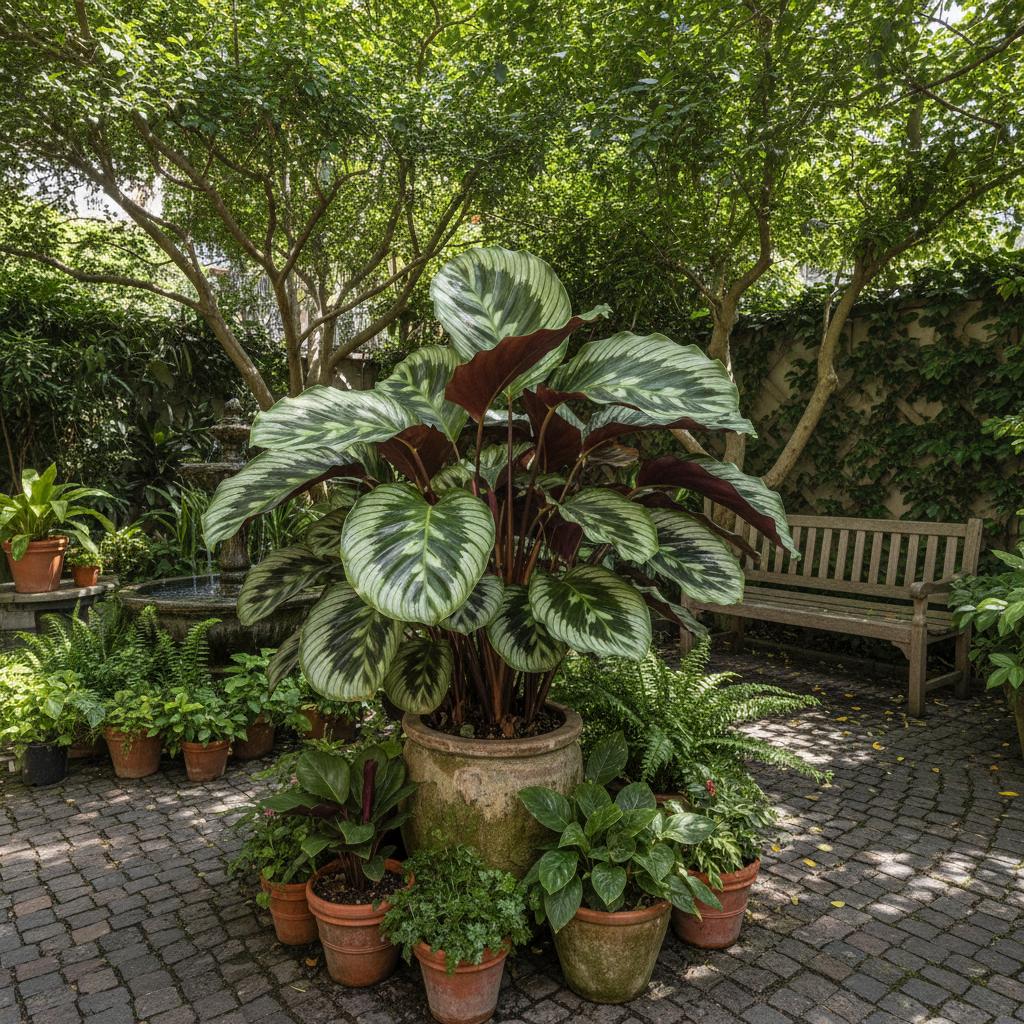
- Leaves: Large, broadly oval leaves with striking patterns of deep green, silver, and emerald green resembling a medallion; undersides are a rich, deep burgundy-purple.
- Stems: Short, clumping habit, arising directly from underground rhizomes.
- Flowers: Inconspicuous, small tubular white or purple flowers arranged in short spikes, though rarely seen in indoor cultivation.
Care Guide
Watering
Water thoroughly when the top inch of soil feels dry, keeping it evenly moist.
Fertilization
Apply a highly diluted, balanced fertilizer.. Avoid over-fertilizing, as salt buildup in the soil will quickly damage the sensitive roots and leaves.
Aquarium Water:Use old aquarium water during routine tank changes. It provides gentle, natural nutrients without the harsh mineral salts that cause leaf tip burn in prayer plants. Ensure the water is at room temperature.Pruning
- Remove dead, yellowing, or crispy leaves by cutting them at the base of the stem with sterilized shears.
- Wipe leaves gently with a damp cloth to remove dust and support photosynthesis.
- Do not use commercial leaf shine products, as they can clog the plant's pores.
Toxicity
Warning: this plant may be toxic.
Pets & Humans
Pets: Non-toxic to cats per ASPCA.
Humans: Non-toxic to humans; safe to handle.
Garden Uses & Culture
Culture: Highly prized in European conservatories during the 19th century for its intricate, hand-painted appearance, becoming a staple of Victorian exotic plant collections.
Usage: - Cultivated primarily as a highly decorative indoor foliage plant. - Used in biophilic interior design to add tropical aesthetics and color contrast.