 PlantFun
Plant Needs
Sunlight
Prefers full sun to partial shade; morning sun with afternoon shade is ideal in hot climates.
Watering
Water deeply when the top inch of soil feels dry to the touch, avoiding water on the crown.
Temperature
Thrives in moderate temperatures; protect from frost and extreme heat.
Characteristics
- Leaves: Basal rosette of deeply lobed, dark green, pubescent leaves, typically 15-25 cm long;
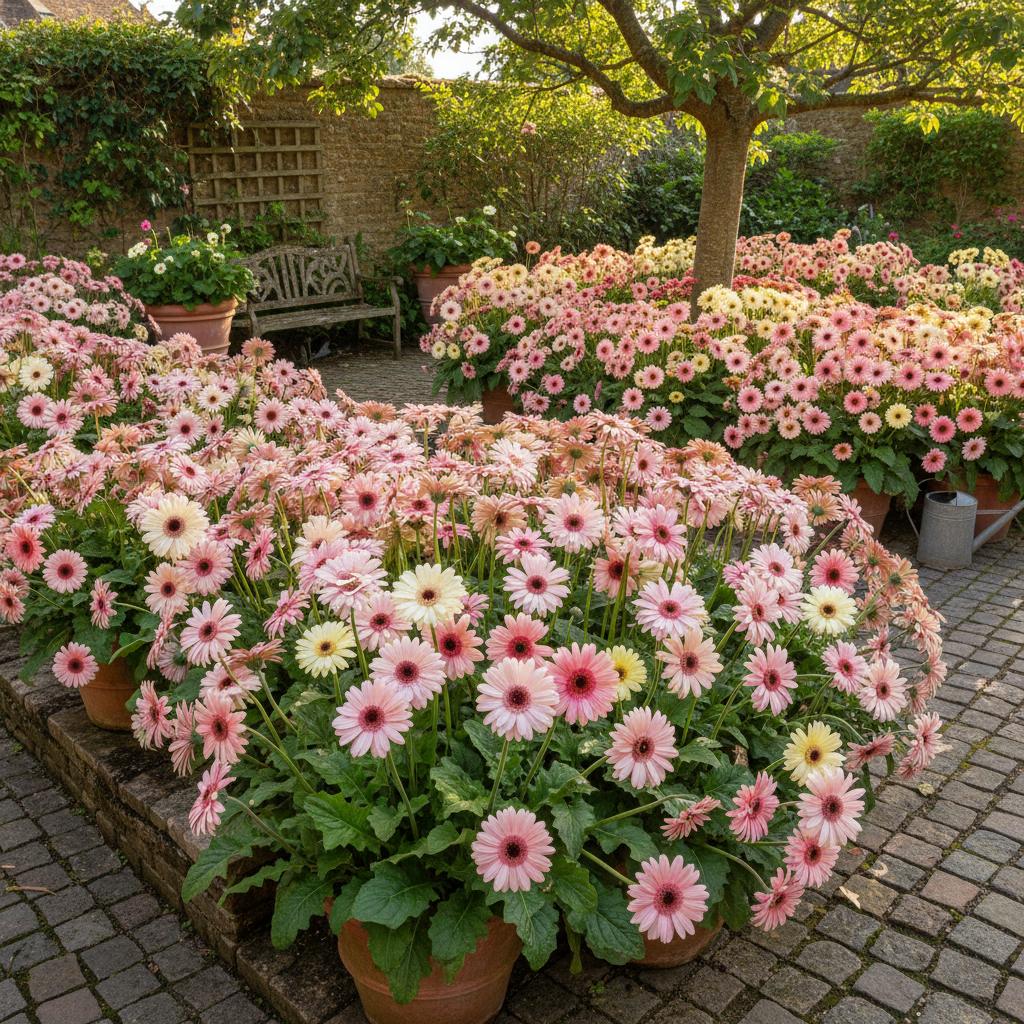
- Flowers: Large capitulum (flower head) up to 10 cm across, featuring bright pink ray florets and a contrasting lighter or dark center of disk florets;
- Stem: Scape is leafless, tubular, hollow, and covered in fine, soft hairs;
- Roots: Fibrous root system with a slightly thickened crown.
Care Guide
Watering
Keep soil evenly moist but never waterlogged; water at the base to keep leaves dry.
Fertilization
Begin feeding with a balanced or phosphorus-rich fertilizer to promote bud development.. Apply fertilizer to moist soil to avoid root burn.
Banana Peel Tea:Soak chopped banana peels in water for 24-48 hours. Strain and dilute 1:1 with water. Apply to the soil to promote vibrant pink blooms. Discard peels in compost to avoid attracting pests.Pruning
- Deadheading: Cut spent flower stems at the base (near the crown) to encourage new blooms;
- Foliage: Remove dead, yellowing, or damaged leaves to improve air circulation;
- Thinning: If the crown becomes too dense, gently thin out center leaves to allow light to reach new buds.
Toxicity
Warning: this plant may be toxic.
Pets & Humans
Pets: Non-toxic to cats per ASPCA.
Humans: Non-toxic to humans.
Garden Uses & Culture
Culture: In Western floral symbolism, Gerbera daisies represent innocence, purity, and cheerfulness. The 'Sweet Sixteen' variety, with its bright pink hue, is often gifted to convey admiration, joy, and celebration of youth.
Usage: Widely used as a premium cut flower in floristry, a vibrant potted houseplant, and a colorful border plant in summer gardens.