 PlantFun
Plant Needs
Characteristics
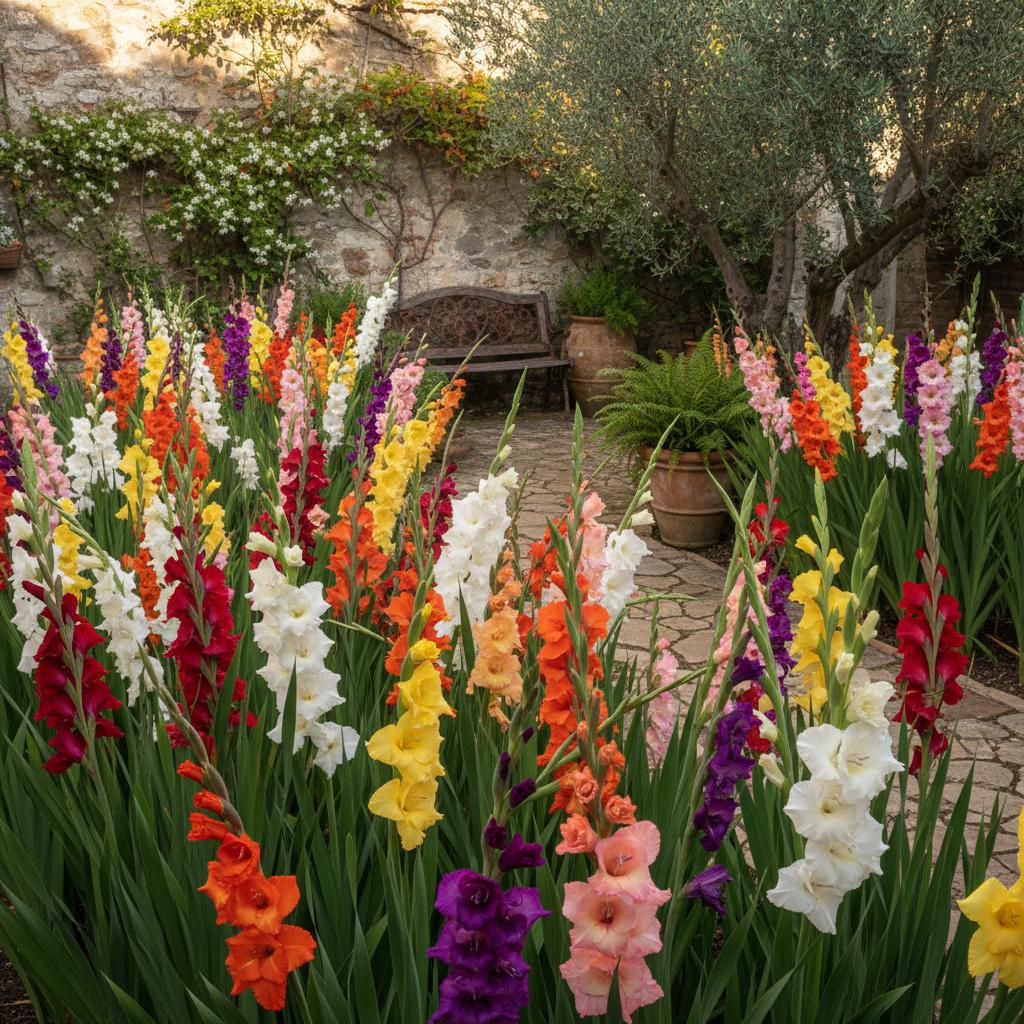
- Leaves: Sword-shaped (ensiform), green, with prominent parallel venation, growing in a fan-like basal arrangement;
- Flowers: Funnel-shaped, zygomorphic flowers arranged in a one-sided terminal spike, colors naturally range from pink to magenta;
- Stem: Erect, unbranched, fleshy but sturdy floral spike emerging from an underground corm.
Care Guide
Water deeply once or twice a week, ensuring the soil doesn't dry out completely.
Apply a balanced nutrient mix when shoots first emerge from the soil.. Feed regularly during active growth to support the massive floral spikes.
Banana Peel Tea:Steep chopped banana peels in water for 24-48 hours. Dilute 1:1 with water and apply to the base of the plant to promote large, vibrant blooms. Discard solids in compost to avoid attracting pests.- Deadhead spent flowers to encourage energy storage in the corm rather than seed production;
- Leave foliage intact until it turns completely yellow and dies back naturally;
- Cut stalks down to 2-3 inches above the soil line after foliage has died before winter storage.
Toxicity
Warning: this plant may be toxic.
Pets: Toxic (per ASPCA); ingestion of corms can cause salivation, vomiting, drooling, lethargy, and diarrhea.
Humans: Mildly toxic if large quantities of corms are ingested, causing gastrointestinal upset.
Garden Uses & Culture
Culture: In Western culture, the gladiolus symbolizes strength of character, faithfulness, and honor, deriving its name from the Latin 'gladius' (sword) associated with Roman gladiators.
Usage: Widely used as cut flowers in floral arrangements and as striking vertical accents in garden borders.