 PlantFun
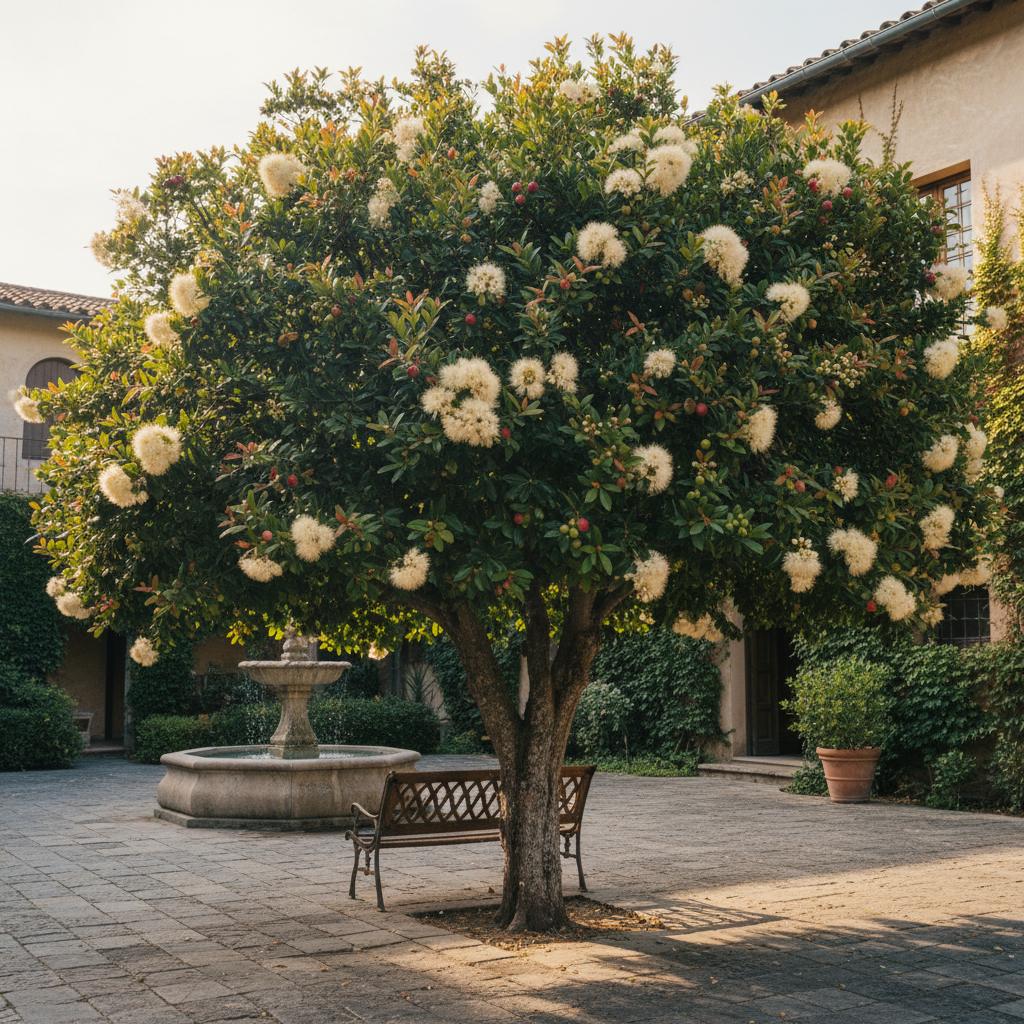
Plant Needs
Sunlight
Requires full sun for optimal growth and health.
Watering
Drought-tolerant once established; young trees need regular watering.
Temperature
Prefers mild to warm climates but can tolerate light frosts.
Characteristics
- Leaves: Juvenile leaves are broad, glaucous, and opposite; adult leaves are sickle-shaped, dark green, glossy, and alternate, emitting a strong camphoraceous odor when crushed.
- Flowers: Solitary, axillary, with a warty, glaucous bud cap (operculum) that falls off to reveal numerous creamy-white stamens.
- Bark: Smooth, shedding in long ribbons to reveal a pale, bluish-grey or yellowish surface, with rough, persistent bark retained at the base of the trunk.
- Fruit: A woody, warty capsule (gumnut) with prominent valves.
Care Guide
Watering
Water deeply once a week for young trees; mature trees rely on rainfall.
Fertilization
Apply a balanced, slow-release fertilizer if soil is exceptionally poor.. Fertilization recommendations description
Coffee Grounds Compost:Mix used coffee grounds into the topsoil around the drip line to provide a gentle nitrogen boost and maintain slight soil acidity. Avoid applying directly against the trunk.Pruning
- Prune young trees to establish a strong central leader.
- Remove dead, diseased, or crossing branches in late winter.
- Can be coppiced for juvenile foliage production.
Toxicity
Warning: this plant may be toxic.
Pets & Humans
Pets: Toxic to cats per ASPCA. Ingestion of leaves can cause salivation, vomiting, diarrhea, and weakness.
Humans: Essential oil is toxic if ingested in large amounts; can cause nausea, vomiting, and respiratory issues.
Garden Uses & Culture
Culture: In Western herbalism and 19th-century European medicine, Eucalyptus was widely planted in marshy areas to dry them out and combat malaria, earning it the name "fever tree."
Usage: Timber, pulpwood, essential oil production (eucalyptol), ornamental planting, and windbreaks.