 PlantFun
Plant Needs
Characteristics
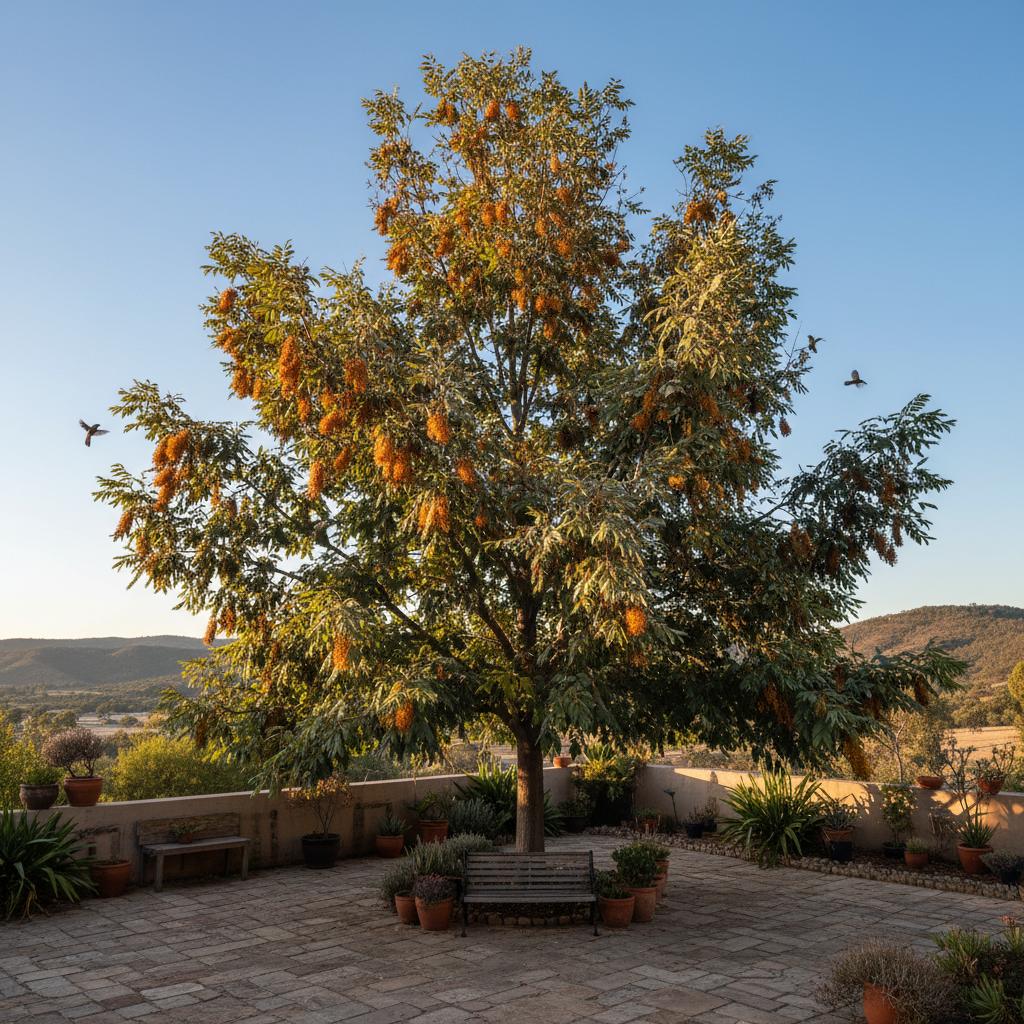
- Leaves: Fern-like, bipinnatifid, dark green above and silvery-silky below, 15-30 cm long;
- Flowers: Golden-orange to yellow, arranged in one-sided racemes (toothbrush-like), lacking petals but with prominent long styles;
- Bark: Dark grey, furrowed and fissured in older trees;
- Fruit: A leathery, boat-shaped follicle containing winged seeds.
Care Guide
Water deeply once a week during active growth and dry spells.
Apply a low-phosphorus or phosphorus-free fertilizer.. Proteaceae plants have specialized roots and are easily killed by standard high-phosphorus fertilizers.
Used Coffee Grounds:Lightly scatter used coffee grounds around the base of the tree. This provides a gentle nitrogen boost and helps maintain soil acidity without introducing harmful levels of phosphorus. Avoid thick layers to prevent mold.- Prune when young to establish a strong central leader and structural framework;
- Remove dead, damaged, or crossing branches in late winter;
- Avoid heavy pruning of mature trees as it can ruin their natural pyramidal shape;
- Wear gloves and long sleeves when pruning to prevent contact dermatitis from the sap.
Toxicity
Warning: this plant may be toxic.
Pets: May cause mild gastrointestinal upset if ingested or skin irritation upon contact.
Humans: Sap and foliage may cause contact dermatitis in sensitive individuals.
Garden Uses & Culture
Culture: Introduced to Europe and the Americas in the 19th century, it became a popular Victorian-era indoor foliage plant before its massive outdoor size was fully appreciated. It is now a common street tree in warm-climate cities globally.
Usage: - **Ornamental**: Specimen tree in large gardens and parks; - **Timber**: Wood is prized for cabinet making and furniture, historically used for window frames; - **Ecological**: Rich nectar source attracting bees and nectar-feeding birds.