 PlantFun
Plant Needs
Characteristics
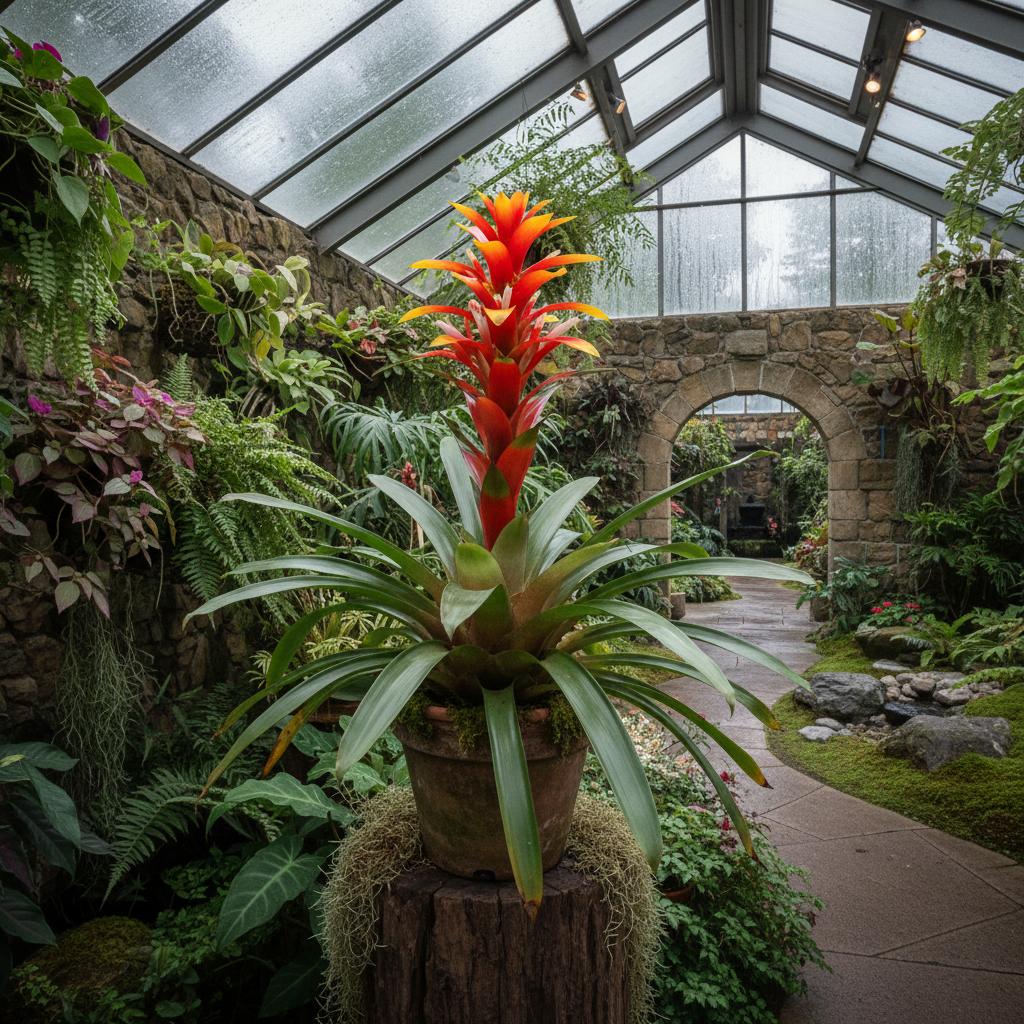
- Leaves: Smooth, glossy green, strap-like leaves forming a tight basal rosette that functions as a central water-holding tank (urn);
- Flowers: True flowers are small, tubular, and white to yellow, nestled deep within striking, star-shaped, bright red or orange floral bracts;
- Roots: Shallow, wiry root system primarily adapted for anchoring to tree bark rather than absorbing water and nutrients.
Care Guide
Keep the central tank filled with distilled or rain water. Water the potting medium lightly when the top inch dries out.
Apply a highly diluted liquid fertilizer directly to the soil or lightly mist the leaves.. Bromeliads are light feeders; over-fertilizing can cause them to lose their vibrant colors.
Aquarium water:Use fresh water from a routine aquarium water change. Apply directly to the soil medium, avoiding the central leaf tank to prevent algae and bacterial rot. Do not use if the aquarium has been treated with medications or high salts.- Flower Removal: Once the colorful bracts turn brown and dry up, cut the flower stalk down to the base using sterilized shears;
- Mother Plant: The main plant will slowly decline after blooming (which is natural); do not remove it immediately;
- Pups: Wait until the offsets (pups) at the base are about one-third the size of the mother plant before separating them to start new plants.
Toxicity
Warning: this plant may be toxic.
Pets: Non-toxic to cats per ASPCA.
Humans: Non-toxic to humans.
Garden Uses & Culture
Culture: In Western interior design, bromeliads like Guzmania became highly sought after in the late 20th century to bring a touch of the exotic tropics into modern homes, symbolizing hospitality and modern architectural aesthetics.
Usage: - **Ornamental**: Highly popular indoor houseplant for tabletops and bright offices; - **Landscaping**: Used as an understory accent in frost-free tropical gardens; - **Terrariums**: Smaller varieties like 'minor' are excellent for large, well-ventilated dart frog vivariums.