 PlantFun
Plant Needs
Characteristics
- Leaves: Palmately compound, typically with 5 leaflets, covered in golden-brown pubescence (hairs) especially on the undersides;
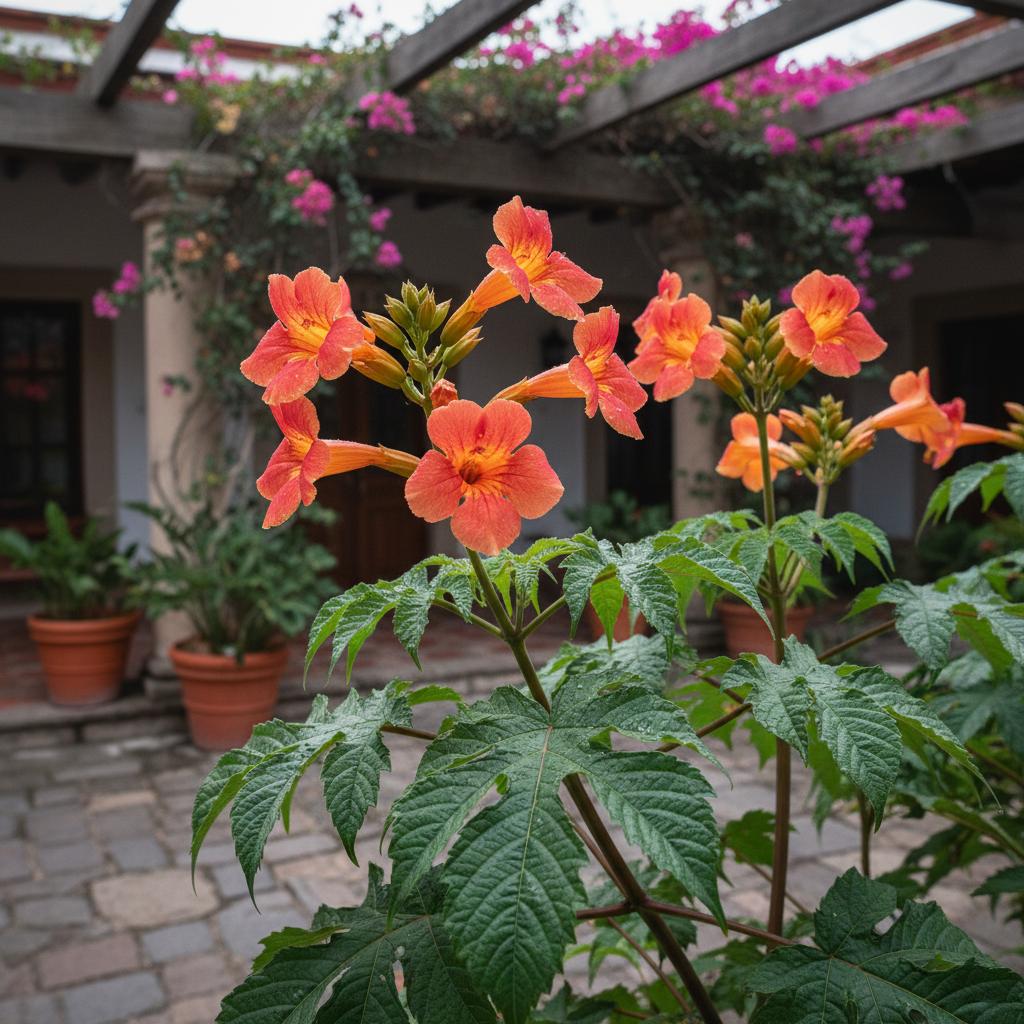
- Flowers: Bright yellow, tubular-campanulate (trumpet-shaped), clustered in dense terminal panicles, often featuring reddish-brown nectar guides in the throat;
- Bark: Grayish-brown, rough, and deeply fissured on mature trunks;
- Fruit: Long, slender, pod-like capsules covered in golden hairs, containing numerous winged seeds.
Care Guide
Water moderately during the active growing season, allowing the topsoil to dry out completely between waterings.
Apply a balanced or potassium-rich fertilizer just before the blooming season.. Mature trees generally do not require regular fertilization if planted in reasonably fertile soil.
Banana Peel Tea:Steep chopped banana peels in water for 24-48 hours. Use the strained liquid to water the base of the tree in late winter to boost spring bloom production. Discard solids in compost to avoid attracting pests.- Prune immediately after the flowering season ends;
- Remove dead, diseased, or crossing branches to maintain a strong structural framework;
- Shape young trees to establish a central leader and raise the canopy for street or pedestrian clearance.
Toxicity
Warning: this plant may be toxic.
Pets: Non-toxic to cats; no known severe toxicity reported.
Humans: Generally considered non-toxic to humans.
Garden Uses & Culture
Culture: Widely planted in warm regions of the Americas as a spectacular ornamental street tree, celebrated in subtropical landscaping for its brilliant late-winter floral display.
Usage: - **Ornamental**: Popular as a specimen tree, street tree, and shade tree in residential and commercial landscapes; - **Ecological**: Attracts bees, hummingbirds, and other pollinators during the early spring when few other nectar sources are available.