 PlantFun
Plant Needs
Sunlight
Prefers bright, indirect sunlight; can tolerate some morning direct sun but harsh afternoon sun may cause leaf scorch or reddening.
Watering
Highly drought-tolerant. Allow the soil to dry out completely between waterings.
Temperature
Thrives in average room temperatures; protect from frost and prolonged exposure to temperatures below 5°C.
Characteristics
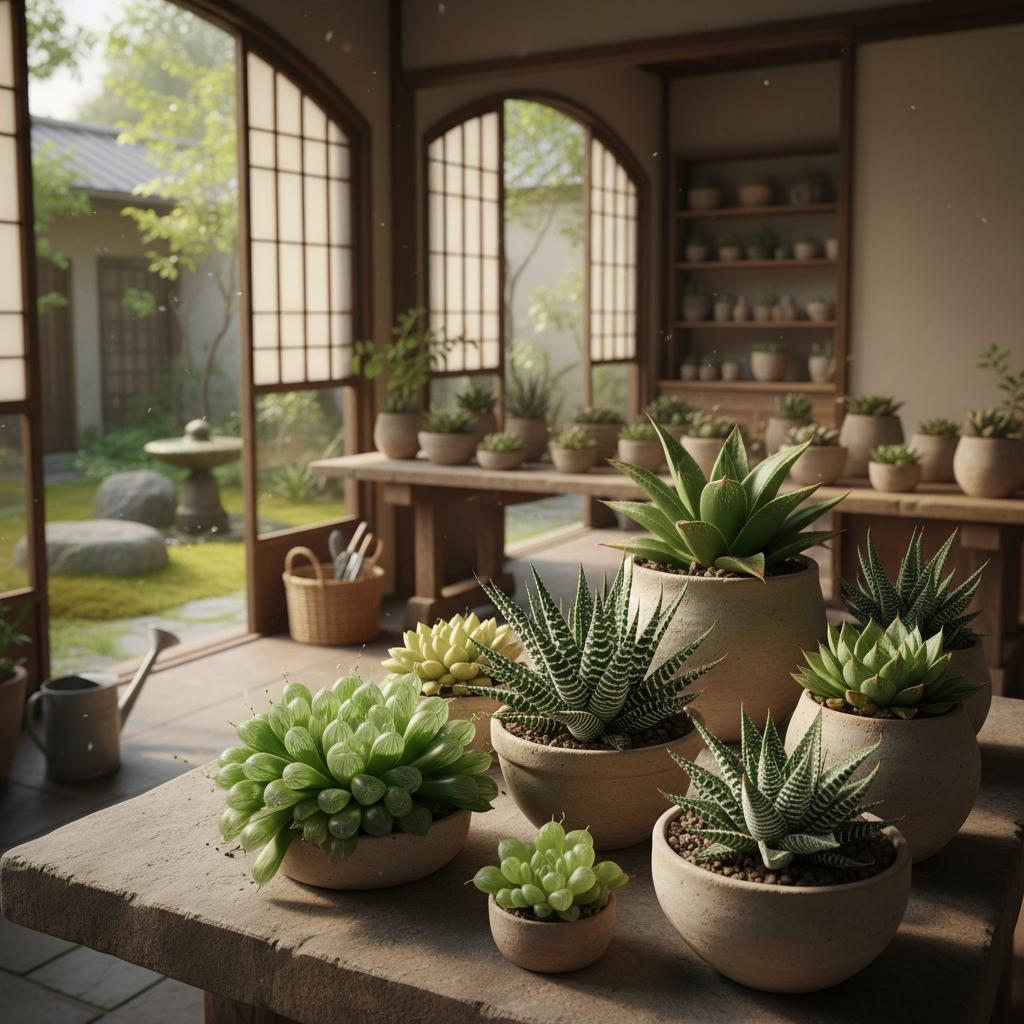
- Leaves: Fleshy, dark green, tapering to a point, covered with prominent white warty tubercles forming transverse bands on both inner and outer surfaces;
- Flowers: Small, tubular, white with greenish-brown veins, borne on a slender, wiry inflorescence up to 40 cm tall;
- Stem: Stemless or very short-stemmed, forming tight clumping rosettes through basal offsets.
Care Guide
Watering
Water thoroughly, allowing excess to drain, then wait until soil is completely dry.
Fertilization
Apply a highly diluted, balanced liquid fertilizer once.. Succulents require very little feeding; over-fertilizing can cause weak, stretched growth.
Eggshell Powder:Wash and dry eggshells thoroughly, crush into a fine powder, and sprinkle sparingly on the soil surface to provide slow-release calcium for strong cell walls. Avoid over-application to prevent soil alkalinity.Pruning
- Remove completely dried, dead basal leaves by gently pulling them away;
- Snip off spent flower stalks at the base using sterilized scissors to redirect energy to the rosette;
- Separate offsets (pups) during repotting if the clump becomes too crowded.
Toxicity
Warning: this plant may be toxic.
Pets & Humans
Pets: Non-toxic to cats (per ASPCA).
Humans: Non-toxic to humans.
Garden Uses & Culture
Culture: Introduced to European botanical collections in the 17th century, these architectural succulents became highly prized in Victorian glasshouses for their exotic, geometric forms.
Usage: - Excellent for indoor windowsills, terrariums (with caution regarding humidity), and dish gardens; - Popular desk plant due to its small footprint and low maintenance requirements.