 PlantFun
Plant Needs
Sunlight
Prefers bright, indirect sunlight; can tolerate some morning sun but harsh afternoon sun may cause leaf burn.
Watering
Highly drought-tolerant; requires the "soak and dry" method, watering only when the soil is completely dry.
Temperature
Thrives in warm temperatures; protect from frost and freezing conditions.
Characteristics
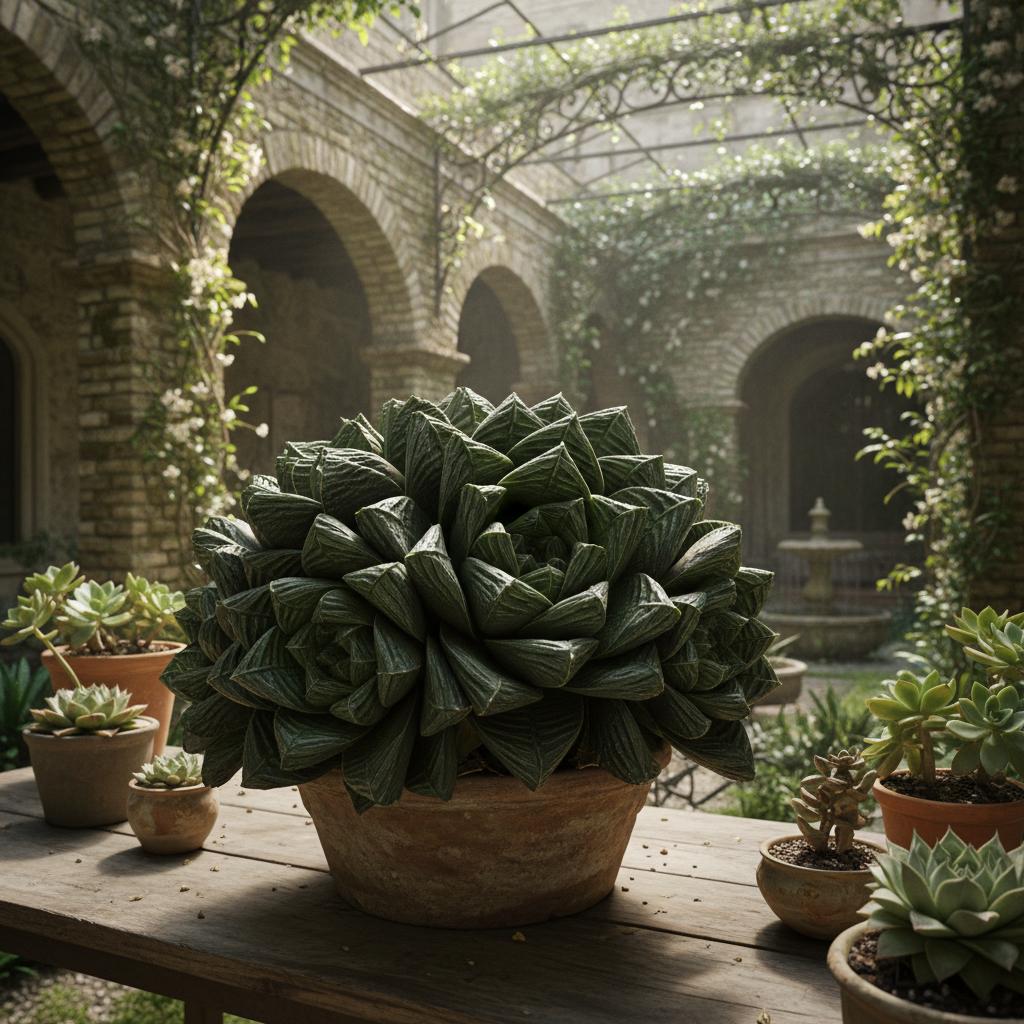
- Leaves: Triangular to ovate-lanceolate, dark green to brownish-green, spreading in a basal rosette, featuring prominent raised transverse ridges (tubercles) on both surfaces;
- Flowers: Slender raceme inflorescence up to 35 cm tall, bearing small, inconspicuous, tubular white flowers with greenish-brown midribs;
- Roots: Thick, fleshy, and relatively shallow, adapted to absorb surface moisture.
Care Guide
Watering
Water thoroughly when soil is completely dry.
Fertilization
Apply a diluted, balanced fertilizer.. Feed only during the active growing season; do not fertilize in winter.
Banana Peel Tea:Soak chopped banana peels in water for 24-48 hours, strain, and dilute 1:1 with fresh water. Use this to water the plant during the growing season to support root strength. Discard the solid peels in compost to avoid attracting fungus gnats indoors.Pruning
- Remove completely dried, dead basal leaves by gently pulling them away from the stem;
- Cut spent flower stalks down to the base using sterilized scissors to redirect the plant's energy;
- Separate offsets (pups) when they are about one-third the size of the mother plant to propagate and maintain a tidy pot.
Toxicity
Warning: this plant may be toxic.
Pets & Humans
Pets: Non-toxic to cats (per ASPCA).
Humans: Non-toxic to humans.
Garden Uses & Culture
Culture: Highly valued in Western indoor gardening and succulent collecting for its architectural, sculptural form and extreme resilience as a desk or windowsill plant.
Usage: Excellent for indoor potted culture, terrariums (with caution regarding humidity), and mixed succulent dish gardens.