 PlantFun
Plant Needs
Sunlight
Bright, indirect sunlight or partial sun; avoid harsh afternoon direct sun which can turn leaves red or brown.
Watering
Water thoroughly when the soil is completely dry, typically every 2 weeks.
Temperature
Prefers warm temperatures and is not frost-tolerant.
Characteristics
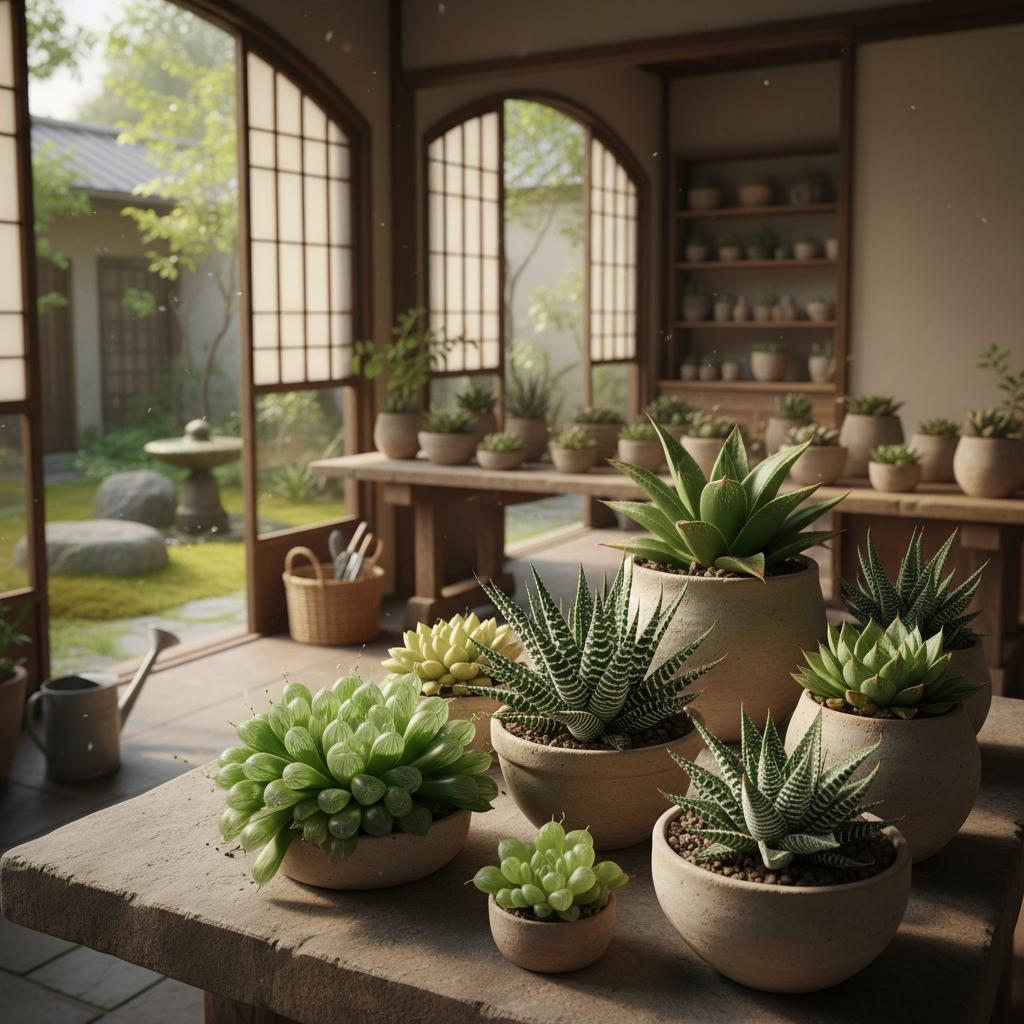
- Leaves: Dark green, fleshy, triangular-lanceolate, forming a stemless rosette, covered with conspicuous white warty tubercles that form transverse bands on both inner and outer surfaces;
- Flowers: Slender raceme inflorescence, bearing small, tubular, two-lipped white flowers with greenish-brown veins;
- Roots: Thick, fleshy, and relatively shallow root system adapted for rapid water absorption.
Care Guide
Watering
Water thoroughly, allowing excess to drain completely. Wait until the soil is entirely dry before watering again.
Fertilization
Apply a diluted, balanced succulent fertilizer once at the beginning of the growing season.. Requires very little feeding; over-fertilizing can cause weak, leggy growth.
Banana Peel Tea:Soak chopped banana peels in water for 24 hours. Strain and dilute 1:1 with water. Apply to the soil, avoiding the rosette center. Do not leave raw peels on the soil to prevent fungus gnats.Pruning
- Gently pull away any dead, dried, or shriveled basal leaves from the bottom of the rosette;
- Snip off spent flower stalks at the base using sterile scissors to redirect energy to foliage growth;
- Remove offsets (pups) if the pot becomes too crowded, which can be used for propagation.
Toxicity
Warning: this plant may be toxic.
Pets & Humans
Pets: Non-toxic to cats per ASPCA.
Humans: Non-toxic to humans; safe to handle.
Garden Uses & Culture
Culture: Popularized in European indoor gardening during the 20th century for its architectural form and exceptional resilience in centrally heated homes.
Usage: - **Ornamental**: Excellent for windowsills, desks, and small indoor spaces; - **Arrangements**: Frequently used in succulent bowls and well-ventilated terrariums.