 PlantFun
Plant Needs
Sunlight
Requires bright, indirect light to full sun for optimal blooming and growth.
Watering
Keep soil consistently moist but not waterlogged; requires high ambient humidity.
Temperature
Thrives in warm, tropical conditions; highly sensitive to frost and cold drafts.
Characteristics
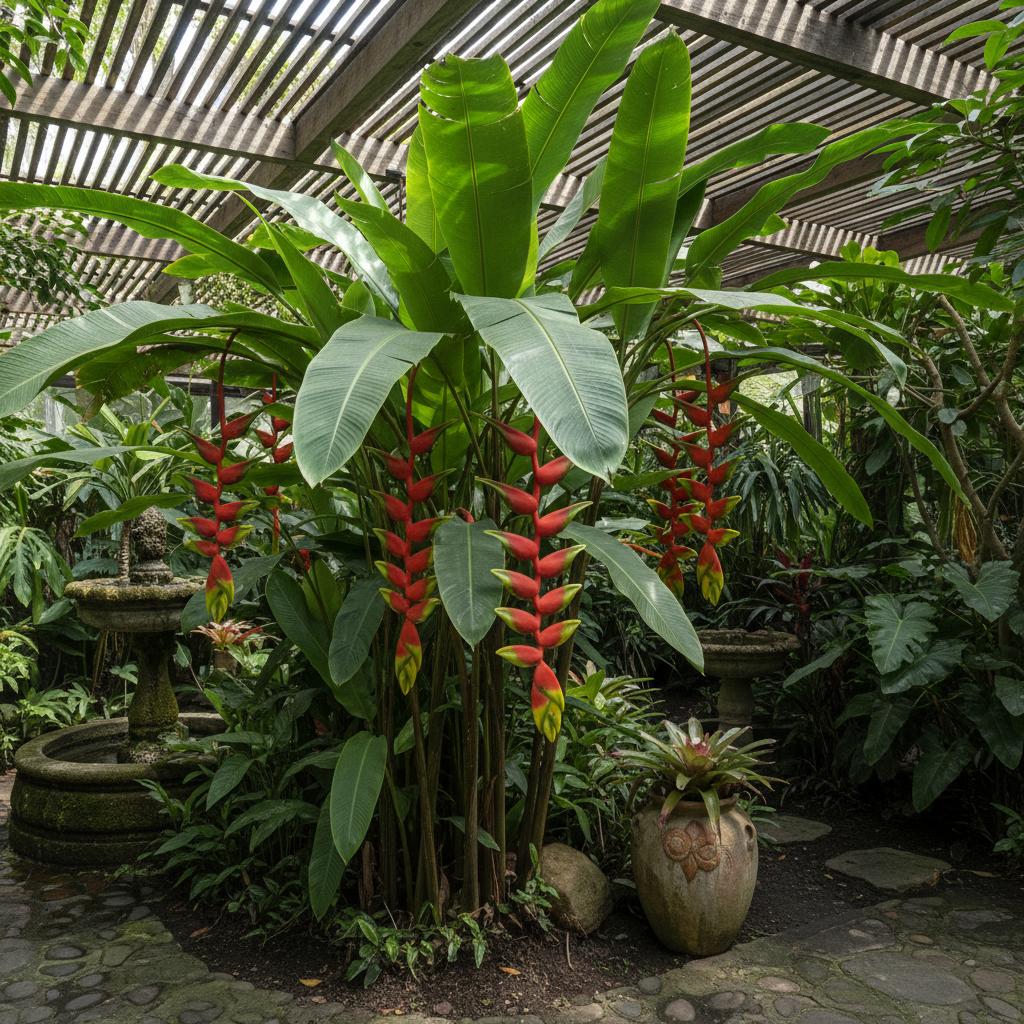
- Leaves: Large, paddle-shaped, banana-like leaves, up to 1.2 meters long, bright green with a prominent midrib;
- Flowers: Inflorescence is pendulous, up to 1 meter long, featuring striking red and yellow bracts with green edges; true flowers are small and hidden within the bracts;
- Stem: Pseudostems formed by overlapping leaf sheaths, emerging from underground fleshy rhizomes.
Care Guide
Watering
Water deeply and frequently to maintain even moisture in the root zone.
Fertilization
Apply a balanced, slow-release organic fertilizer to support new foliage.. Heavy feeders during the active growing season; ensure adequate micronutrients.
Banana Peel Tea:Steep chopped banana peels in water for 24-48 hours, strain, and use the liquid to water the plant to boost blooming; compost the solid peels to avoid attracting pests.Pruning
- Remove spent flower stalks at the base to encourage new growth;
- Cut away damaged, torn, or yellowing leaves to maintain aesthetics and airflow;
- Thin out overcrowded pseudostems annually to prevent fungal diseases.
Toxicity
Warning: this plant may be toxic.
Pets & Humans
Pets: Non-toxic per ASPCA guidelines.
Humans: Generally recognized as safe; no known toxicity to humans.
Garden Uses & Culture
Culture: In the Americas, the striking bracts are a staple in exotic floral arrangements and symbolize tropical abundance and hospitality in modern Western floristry.
Usage: Widely used as an ornamental landscape plant in frost-free regions, and as a premium, long-lasting cut flower in the floral industry.