 PlantFun
Plant Needs
Characteristics
- Leaves: Evergreen, leathery, palmately divided into serrated leaflets, dark green, basal leaves emerging on long, sturdy petioles;
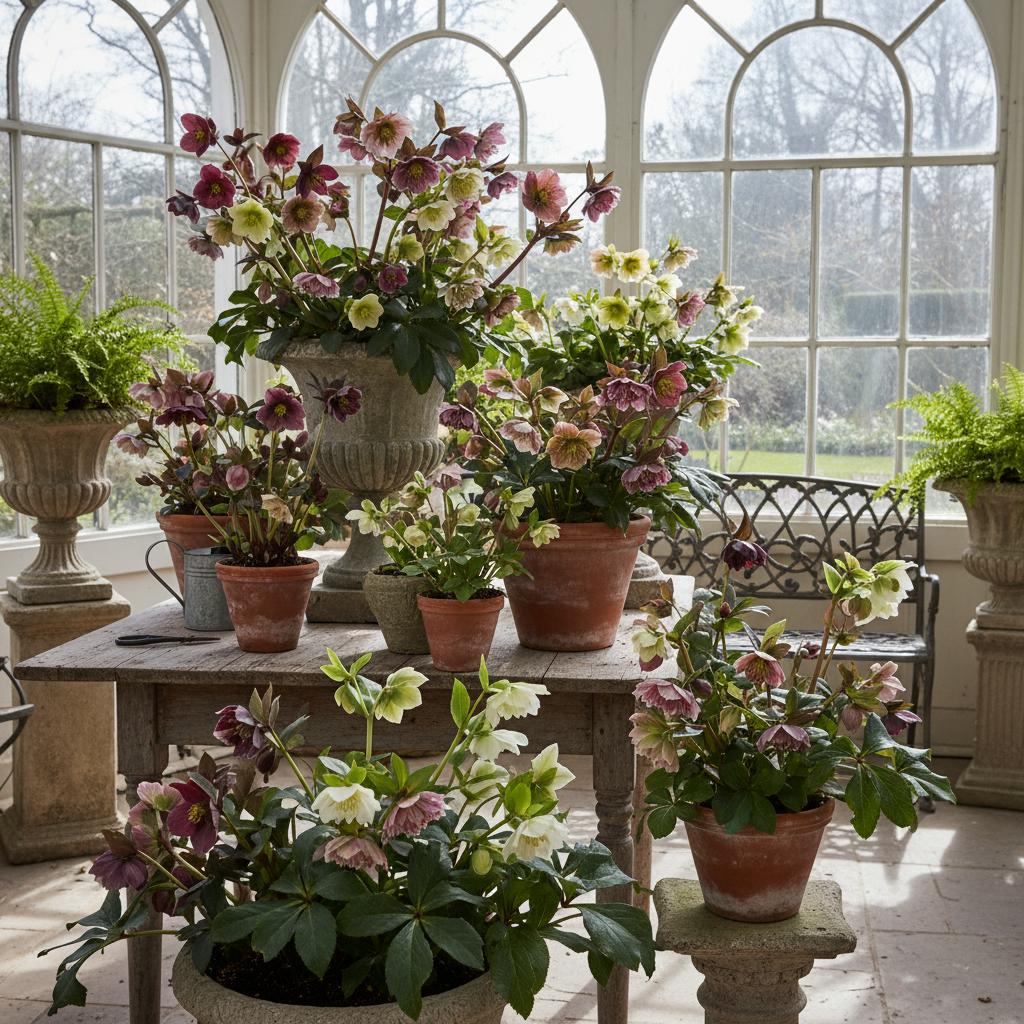
- Flowers: Nodding or outward-facing, cup-shaped, 5-8 cm across, consisting of 5 petal-like sepals in colors ranging from white, pink, purple, to near black, often spotted or veined;
- Stems: Thick, fleshy, emerging directly from a rhizomatous rootstock.
Care Guide
Water regularly during active spring growth; maintain slight moisture in summer heat.
Apply a balanced, slow-release organic fertilizer as new foliage emerges.. Avoid over-fertilizing, which can produce lush foliage at the expense of blooms.
Banana Peel Tea:Steep chopped banana peels in water for 24-48 hours. Strain and pour the liquid around the base of the plant to support robust blooming. Discard peels in the compost bin to avoid attracting pests.- Remove old, tattered, or diseased foliage in late winter just before new flower stalks emerge;
- Deadhead spent flowers if self-seeding is not desired;
- Leave healthy green leaves intact during summer to store energy for the next season.
Toxicity
Warning: this plant may be toxic.
Pets: Toxic to cats per ASPCA. Ingestion can cause severe gastrointestinal and potential cardiac issues.
Humans: Highly toxic if ingested due to cardiac glycosides and protoanemonin; sap can cause severe skin irritation.
Garden Uses & Culture
Culture: In European folklore, hellebores were planted near doors to ward off evil spirits, though their potent toxicity also tied them deeply to historical witchcraft and apothecary lore.
Usage: Excellent for shade garden borders, woodland gardens, and as an underplanting for deciduous trees and shrubs.