 PlantFun
Plant Needs
Characteristics
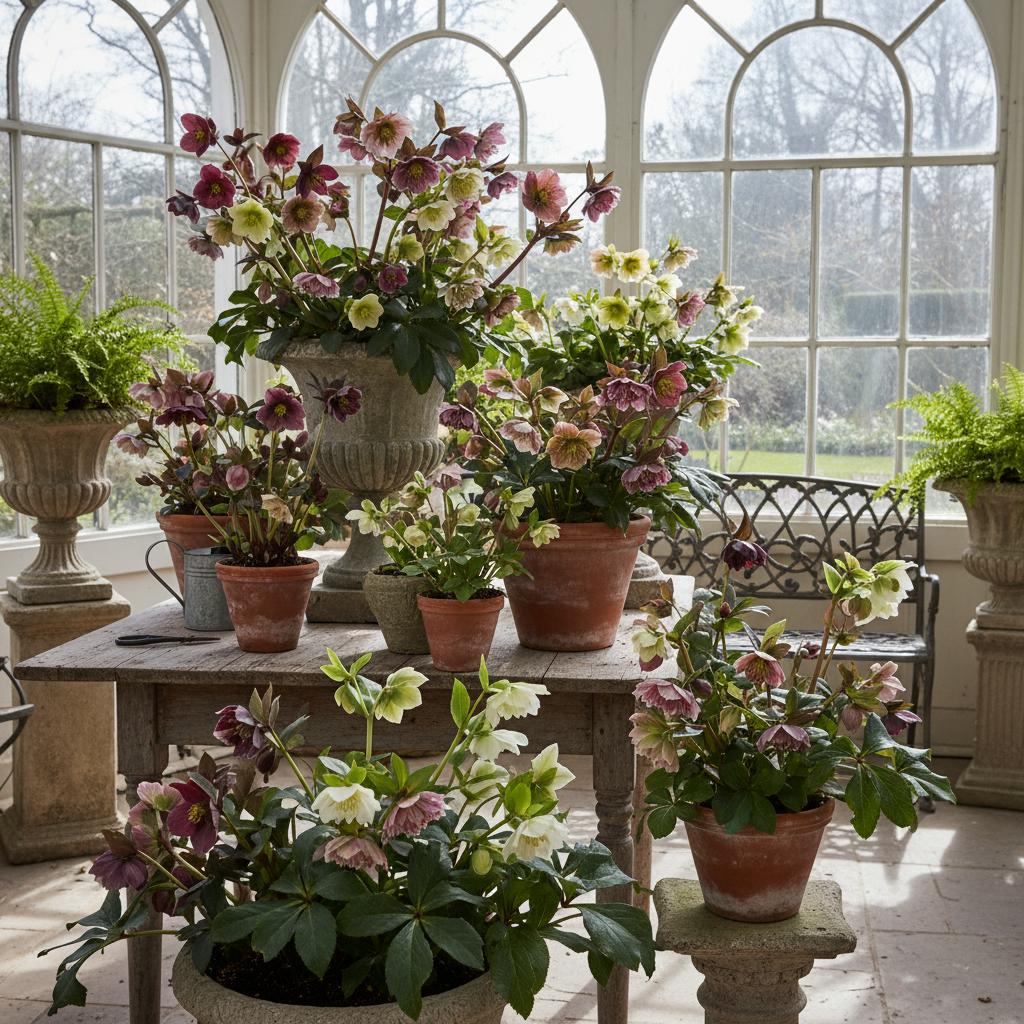
- Leaves: Evergreen, pedate, dark green and leathery, divided into 7-9 leaflets with toothed margins;
- Flowers: Large, bowl-shaped, 5-8 cm across, with 5 white petal-like sepals that may age to pink or green, surrounding prominent yellow stamens;
- Roots: Dark, fibrous rhizomes.
Care Guide
Water regularly to establish, then maintain even moisture without waterlogging.
Apply a balanced organic mulch or compost as new growth appears.. Feed lightly during the active growing season in late winter to spring.
Eggshell and Tea Leaf Blend:Crush rinsed, dried eggshells into a fine powder and mix with used tea leaves. Sprinkle around the base to provide gentle nutrients and improve soil structure. Avoid applying too close to the crown.- Remove old, tattered, or diseased foliage in late autumn or early winter before flower buds emerge;
- Deadhead spent flowers in spring to encourage vegetative growth and prevent unwanted seeding;
- Wear gloves when pruning to avoid skin irritation from the sap.
Toxicity
Warning: this plant may be toxic.
Pets: Toxic per ASPCA. Ingestion causes drooling, abdominal pain, diarrhea, and potential cardiac anomalies.
Humans: Highly toxic if ingested, causing severe gastrointestinal and cardiac issues. Sap may cause skin irritation.
Garden Uses & Culture
Culture: In European folklore, the Christmas Rose is said to have sprouted from the tears of a young girl who had no gift for the Christ child in Bethlehem. It was also historically believed to ward off evil spirits and witches.
Usage: Primarily used as an ornamental plant in woodland gardens, shaded borders, and winter containers.