 PlantFun
Plant Needs
Characteristics
- Leaves: Ovate to lanceolate, 10-20 cm long, with toothed margins; upper surface is green and glabrous, while the underside is densely pubescent and whitish.
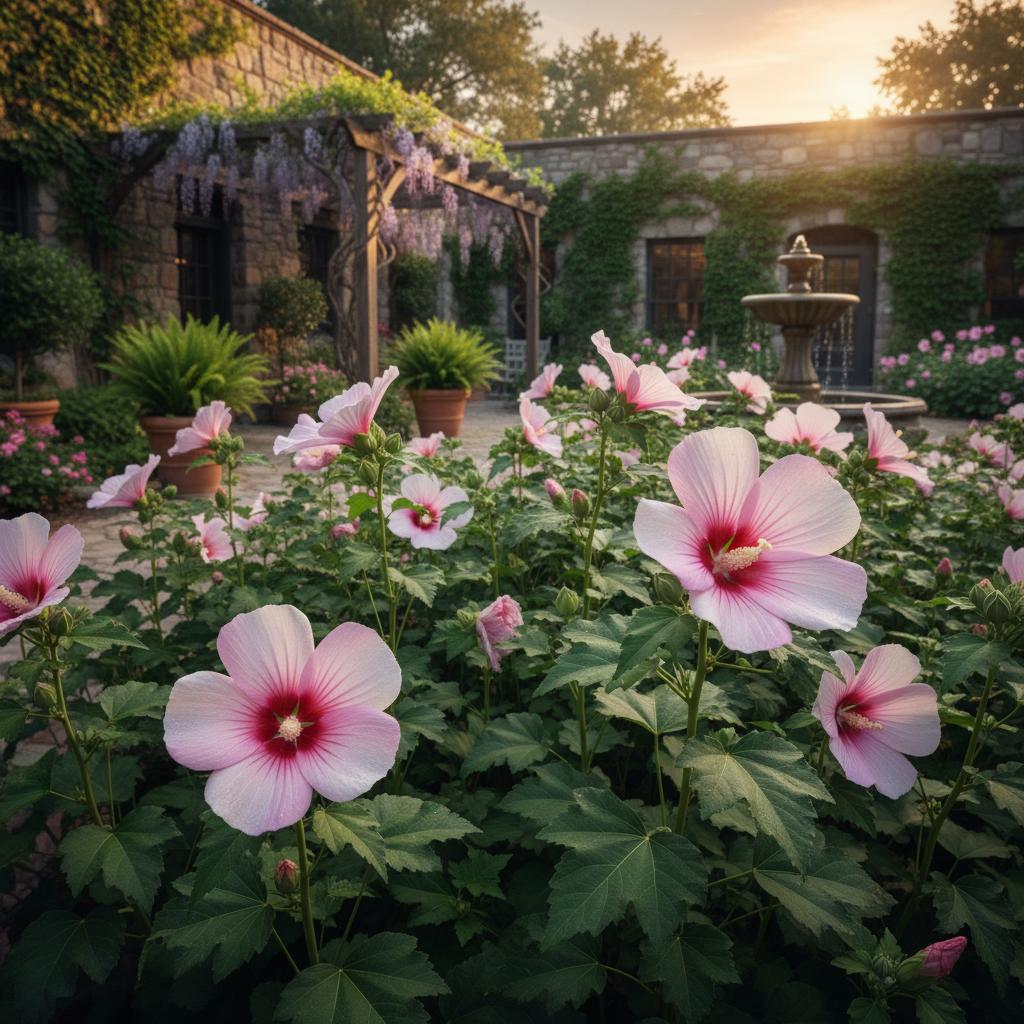
- Flowers: Massive, 15-25 cm across, consisting of 5 overlapping petals in shades of white, pink, or rose, typically featuring a prominent dark crimson eye at the center and a central staminal column.
- Stems: Sturdy, upright, cane-like, green to reddish, dying back completely to the ground in winter.
- Fruit: A woody, ovoid capsule containing numerous rounded, dark brown seeds.
Care Guide
Water deeply and frequently to maintain wet or constantly moist soil, especially during hot, dry spells.
Apply a balanced organic fertilizer as new shoots emerge (which is often late, around late May or June).. Heavy feeder; requires consistent nutrients during its rapid summer growth spurt.
Banana Peel Tea:Soak chopped banana peels in water for 24-48 hours. Dilute 1:1 with water and apply to the base to encourage large blooms. Discard peels in compost to avoid attracting pests.- Winter/Spring: Cut all dead stems down to 5-10 cm above the ground in late winter or early spring before new growth begins.
- Early Summer: Pinch back the growing tips when stems are about 60 cm tall to encourage branching and more blooms.
- Autumn: Deadhead spent flowers to improve appearance, though leaving the seed pods can provide winter interest.
Toxicity
Warning: this plant may be toxic.
Pets: Non-toxic to cats per ASPCA guidelines.
Humans: Non-toxic to humans; flowers and young leaves are technically edible but mucilaginous.
Garden Uses & Culture
Culture: A staple of American Victorian-era water gardens, admired for bringing a touch of the exotic to temperate landscapes without the need for a greenhouse.
Usage: - **Landscaping**: Excellent for rain gardens, pond edges, and low wet spots in the yard. - **Wildlife**: Highly attractive to hummingbirds, butterflies, and bees. - **Historical**: Native American tribes historically used the tough stem fibers to make cordage and twine.