 PlantFun
Plant Needs
Characteristics
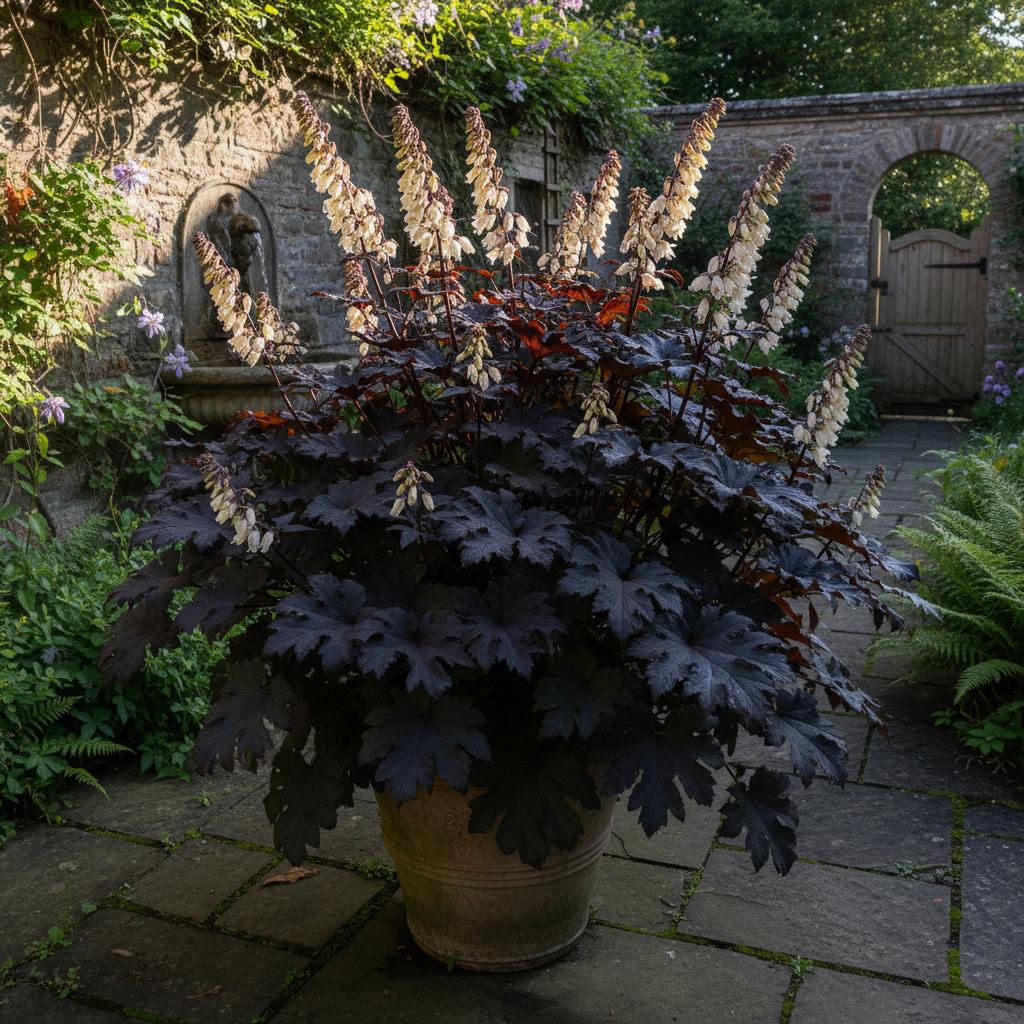
- Leaves: Deep purplish-black, astilbe-like, deeply cut and serrated compound leaves;
- Flowers: Tiny, highly fragrant, white to pale pink flowers borne on tall, wiry, bottlebrush-like terminal racemes;
- Stems: Upright, dark-colored, sturdy stems supporting the inflorescences above the foliage mound;
- Roots: Thick, fibrous rhizomatous root system.
Care Guide
Keep consistently moist, watering deeply when the top inch of soil feels dry
Apply a balanced slow-release fertilizer as new growth emerges. Feed lightly; excessive fertilizer can cause leggy growth and weak stems.
Compost Tea:Steep aged compost in water for a few days, strain, and use the liquid to water the base of the plant. Avoid applying directly to the foliage.- Cut back foliage to the ground in late autumn or early spring after it dies back;
- Remove spent flower stalks to tidy the plant's appearance, though seed heads can provide winter interest;
- Divide clumps every 3-4 years in early spring if they become overcrowded or lose vigor.
Toxicity
Warning: this plant may be toxic.
Pets: Toxic per ASPCA (as Bugbane/Snakeroot); ingestion causes vomiting, diarrhea, and potential cardiovascular or nervous system effects.
Humans: Ingestion can cause stomach upset, nausea, and dizziness; sap may cause mild skin irritation upon contact.
Garden Uses & Culture
Culture: In Victorian shade gardens, dark-leaved plants were often utilized to create depth, symbolizing mystery and elegance in woodland landscapes.
Usage: Excellent architectural plant for woodland gardens, shaded borders, and as a dramatic backdrop for lighter-colored shade plants like hostas and ferns.