 PlantFun
Plant Needs
Characteristics
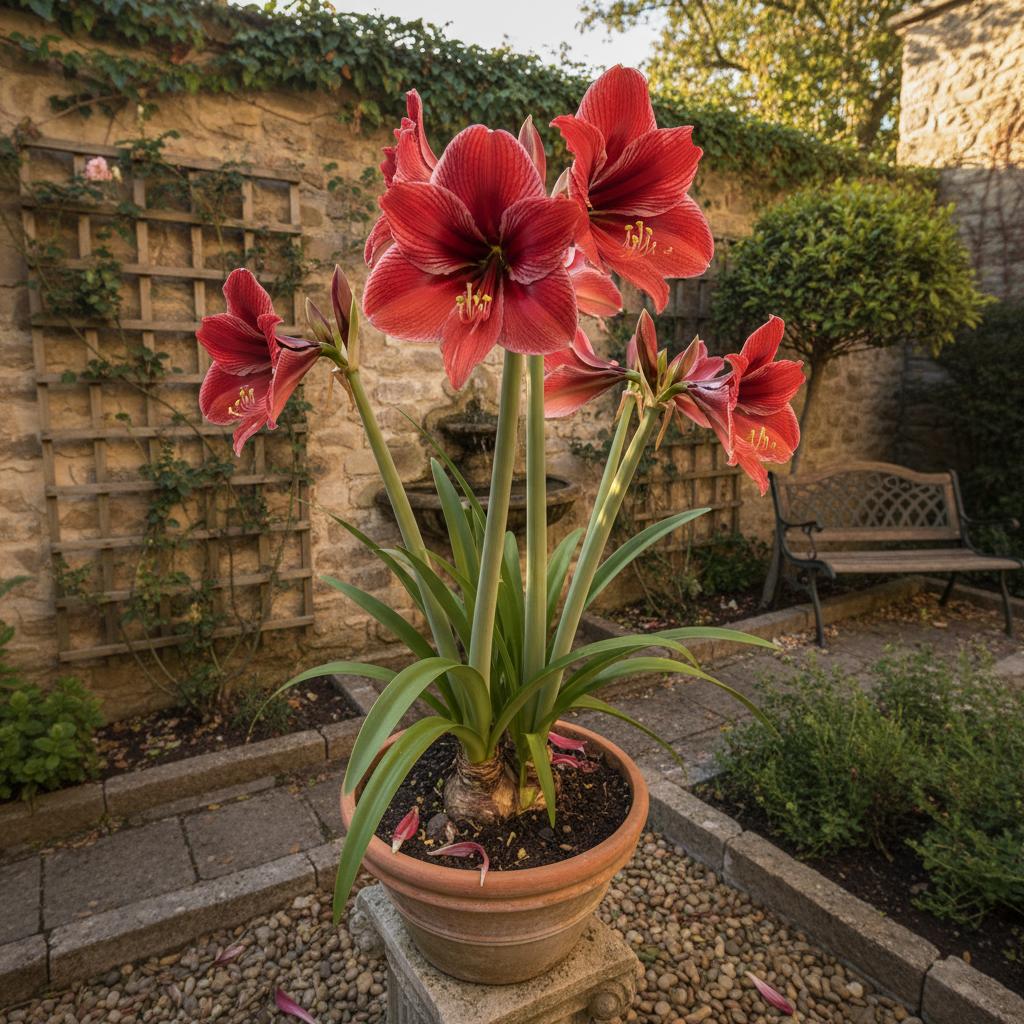
- Leaves: Basal, strap-shaped, fleshy, and bright green, typically emerging before or alongside the flower stalk;
- Flowers: Large, showy, trumpet-shaped blooms, 2 to 6 per stem, available in shades of red, pink, white, orange, or bi-colored;
- Stem: Thick, hollow, leafless scape (stalk) arising directly from a large, tunicated bulb;
- Bulb: Large, fleshy, spherical bulb covered in a papery brown tunic, storing water and nutrients for dormancy.
Care Guide
Water regularly when active growth appears, keeping soil evenly moist but not waterlogged.
Apply a balanced liquid fertilizer once active growth starts.. Fertilize regularly during the leaf-growing phase, stopping when foliage begins to yellow.
Banana Peel Tea:Steep chopped banana peels in water for 24-48 hours, strain, and use the liquid to water the plant. This provides potassium to support large blooms and bulb health. Discard peels in compost to avoid attracting pests.- Cut off faded flowers near the top of the stem to prevent seed formation;
- Once the main hollow stem yellows and sags, cut it back to about 2 inches above the bulb;
- Leave the green leaves intact until they naturally yellow and die back, as they are essential for photosynthesizing and recharging the bulb.
Toxicity
Warning: this plant may be toxic.
Pets: Toxic (per ASPCA); ingestion can cause vomiting, depression, diarrhea, abdominal pain, hypersalivation, anorexia, and tremors.
Humans: Ingestion of the bulb or foliage can cause mild to moderate gastrointestinal upset due to lycorine alkaloids.
Garden Uses & Culture
Culture: Highly popular in Europe and the Americas as a festive indoor plant during the Christmas season. In Victorian floriography, the Amaryllis symbolizes pride, determination, and radiant beauty.
Usage: Widely used as an indoor holiday ornamental, a striking cut flower in floral arrangements, and a garden perennial in warm climates.