 PlantFun
Plant Needs
Characteristics
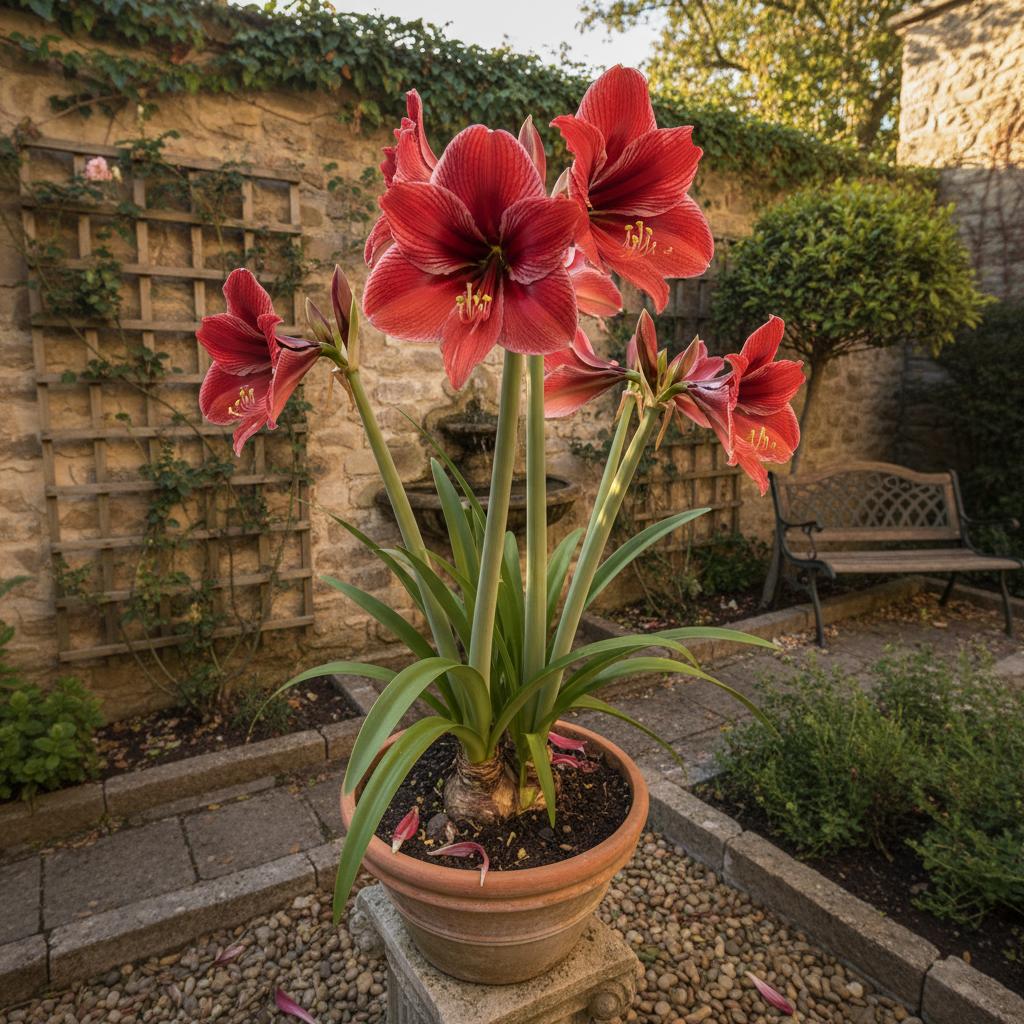
- Leaves: Basal, strap-shaped, fleshy, and bright green, typically emerging before or alongside the flower stalk;
- Flowers: Large, funnel-shaped, 2-6 per umbel atop a stout, hollow leafless scape; colors range from red, pink, and white to heavily striped or mottled;
- Bulb: Large, tunicate bulb, usually planted with the upper third exposed above the soil line.
Care Guide
Water regularly to support leaf growth and replenish the bulb.
Apply a balanced liquid fertilizer to support foliage growth.. Stop fertilizing in late summer when the plant enters its dormant phase.
Banana Peel Tea:Soak chopped banana peels in water for 24-48 hours. Strain and dilute 1:1 with water. Use during the active growth phase to support large blooms. Discard solids in compost to avoid indoor odors or pests.- Deadheading: Cut off faded flowers near the top of the stem to prevent seed formation and save the bulb's energy;
- Stem Removal: Leave the green flower stalk intact until it turns yellow and withers, as it continues to photosynthesize;
- Leaf Care: Do not cut green leaves; allow them to die back naturally in late summer/autumn to ensure the bulb is fully recharged.
Toxicity
Warning: this plant may be toxic.
Pets: Toxic per ASPCA. Contains lycorine and phenanthridine alkaloids causing severe gastrointestinal and neurological symptoms.
Humans: Bulbs contain lycorine and other alkaloids; ingestion can cause mild to moderate gastrointestinal distress.
Garden Uses & Culture
Culture: In Western culture, particularly during the Victorian era, the Amaryllis symbolized pride, determination, and radiant beauty. Today, it is a staple holiday gift plant in Europe and the Americas, bringing vibrant color to the dark winter months.
Usage: Widely cultivated as an indoor ornamental potted plant for winter forcing, and highly valued in the floral industry as a dramatic, long-lasting cut flower.