 PlantFun
Plant Needs
Sunlight
Prefers bright, indirect light or partial shade; direct sun can scorch leaves.
Watering
Keep soil consistently moist but not waterlogged.
Temperature
Prefers warm tropical temperatures and high humidity.
Characteristics
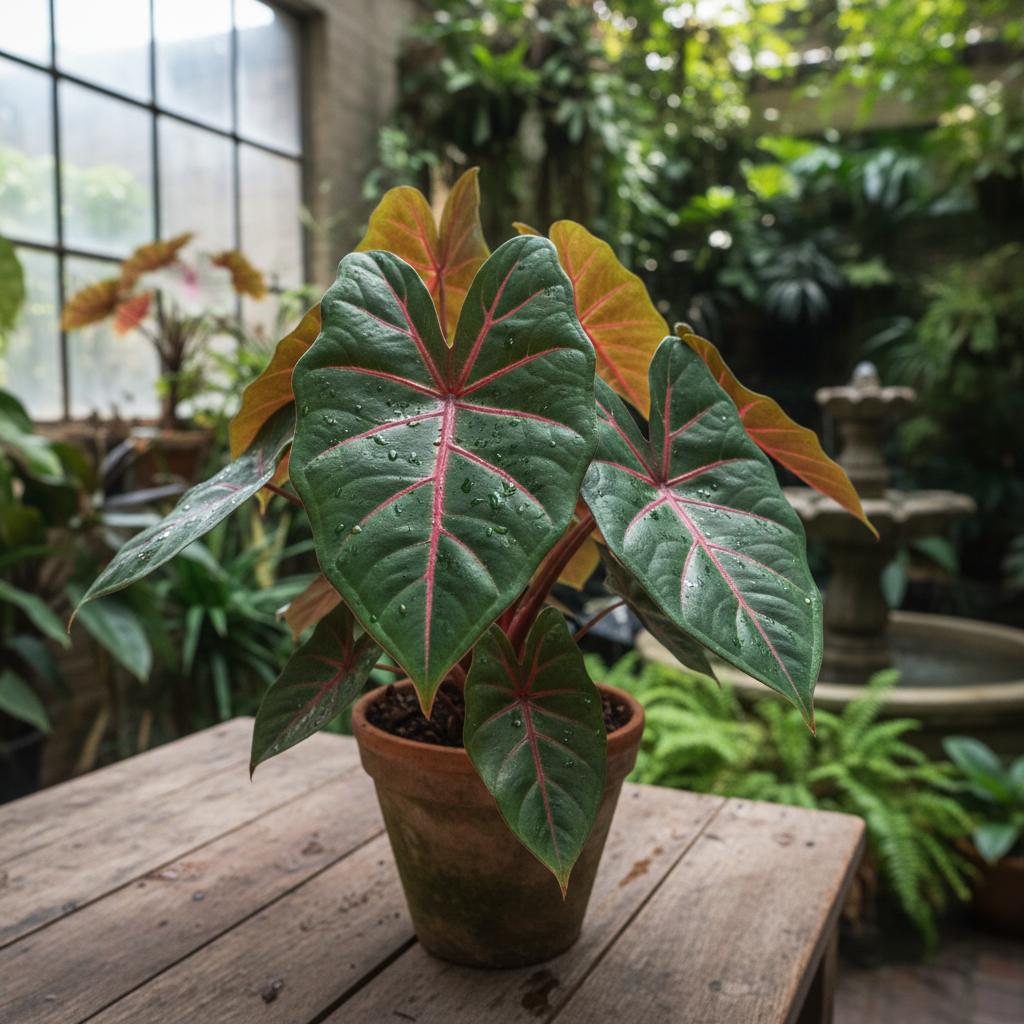
- Leaves: Heart-shaped (cordate) to arrow-shaped, glossy dark green, often with reddish or purplish undersides and petioles;
- Flowers: Inflorescence consists of a reddish spathe enclosing a spadix, typical of the Araceae family;
- Stems: Short, clumping rhizomes with prominent reddish petioles.
Care Guide
Watering
Keep soil evenly moist, watering when the top inch feels dry.
Fertilization
Apply a balanced liquid fertilizer diluted to half strength.. Feed during the active growing season and pause during winter.
Banana Peel Tea:Soak chopped banana peels in water for 24-48 hours. Strain and dilute 1:1 with water. Avoid leaving solid peels on the soil to prevent fungus gnats and odors.Pruning
- Remove yellowing or dead leaves at the base of the petiole to maintain appearance;
- Wipe leaves regularly with a damp cloth to remove dust and support photosynthesis;
- Divide overcrowded clumps during repotting to propagate and rejuvenate the plant.
Toxicity
Warning: this plant may be toxic.
Pets & Humans
Pets: Toxic per ASPCA due to insoluble calcium oxalates causing oral irritation, pain, and swelling.
Humans: Contains calcium oxalate crystals which can cause irritation of the mouth, lips, and throat if ingested.
Garden Uses & Culture
Culture: In Western houseplant culture, it is valued for its lush, tropical aesthetic and ability to thrive in lower light conditions, often featured in modern interior design.
Usage: Primarily used as an indoor ornamental foliage plant; suitable for understory planting in tropical greenhouse gardens.