 PlantFun
Plant Needs
Characteristics
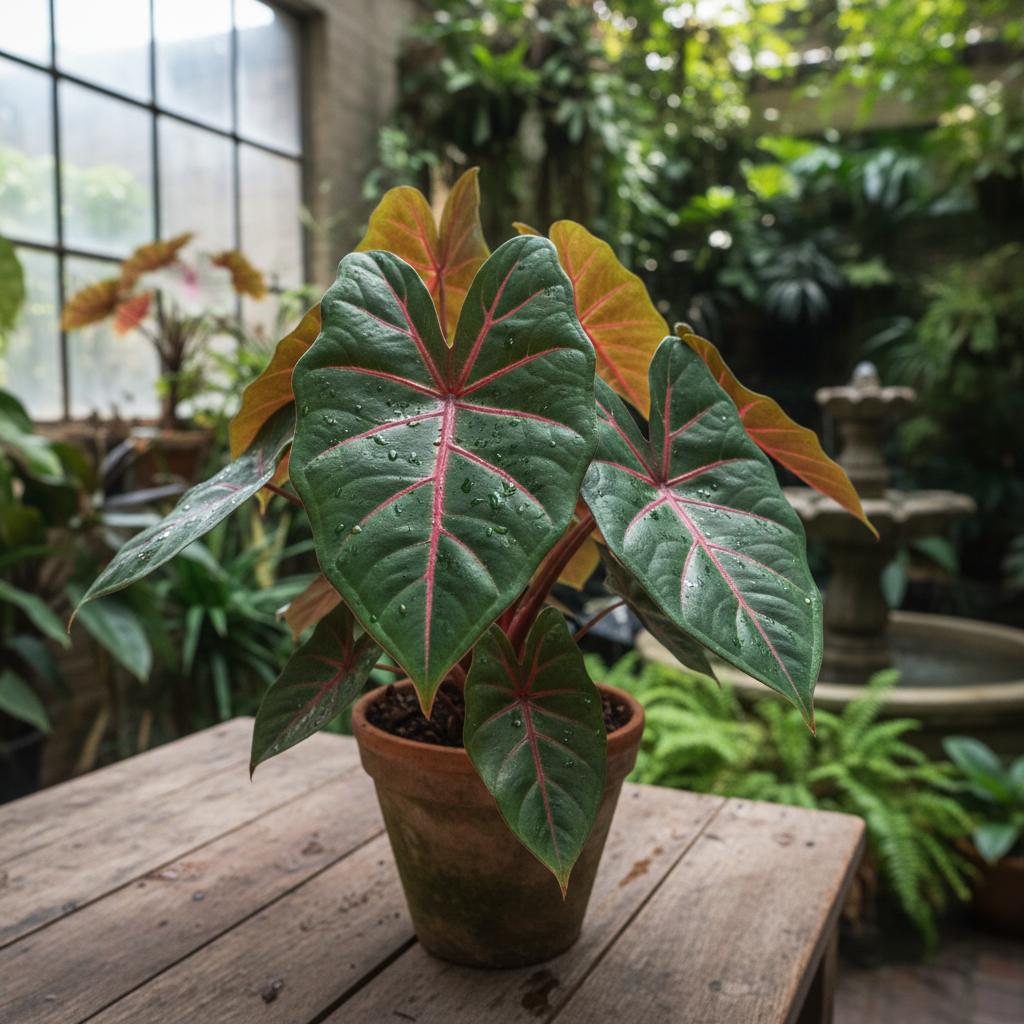
- Leaves: Large, heart-shaped (cordate) to arrow-shaped, glossy dark green with prominent reddish-purple petioles and midribs;
- Stems: Short, clumping habit, often reddish or burgundy, growing from a thick rhizome;
- Flowers: Typical aroid inflorescence with a greenish-red spathe and a white to cream spadix, often hidden beneath the dense foliage;
- Roots: Fleshy, robust rhizomatic root system adapted to forest floor conditions.
Care Guide
Water thoroughly when the top inch of soil feels dry to the touch.
Apply a diluted, balanced liquid fertilizer to support new foliage growth.. Do not fertilize during the winter dormancy period.
Banana Peel Tea:Steep chopped banana peels in water for 24 to 48 hours. Strain the liquid and dilute 1:1 with water before applying to the soil. Discard the solid peels in compost; do not leave raw peels on the soil surface to avoid attracting fungus gnats and mold.- Maintenance: Remove yellowing, damaged, or dead leaves at the base of the petiole to encourage healthy new growth;
- Cleaning: Wipe the large leaves regularly with a damp cloth to remove dust and improve photosynthesis;
- Size Control: Divide the rhizomes during spring repotting if the plant becomes too crowded in its container.
Toxicity
Warning: this plant may be toxic.
Pets: Toxic per ASPCA; ingestion of calcium oxalate crystals causes oral irritation, intense burning, and irritation of mouth, tongue, and lips.
Humans: Contains insoluble calcium oxalate crystals; chewing or biting can cause immediate pain and irritation of the mouth and throat.
Garden Uses & Culture
Culture: Popularized in Western Victorian-era conservatories for its tolerance of low light and striking, architectural foliage, fitting perfectly into the 19th-century fascination with exotic tropicals.
Usage: Cultivated primarily as an indoor ornamental foliage plant; valued for its air-purifying qualities in homes and offices.