 PlantFun
Plant Needs
Characteristics
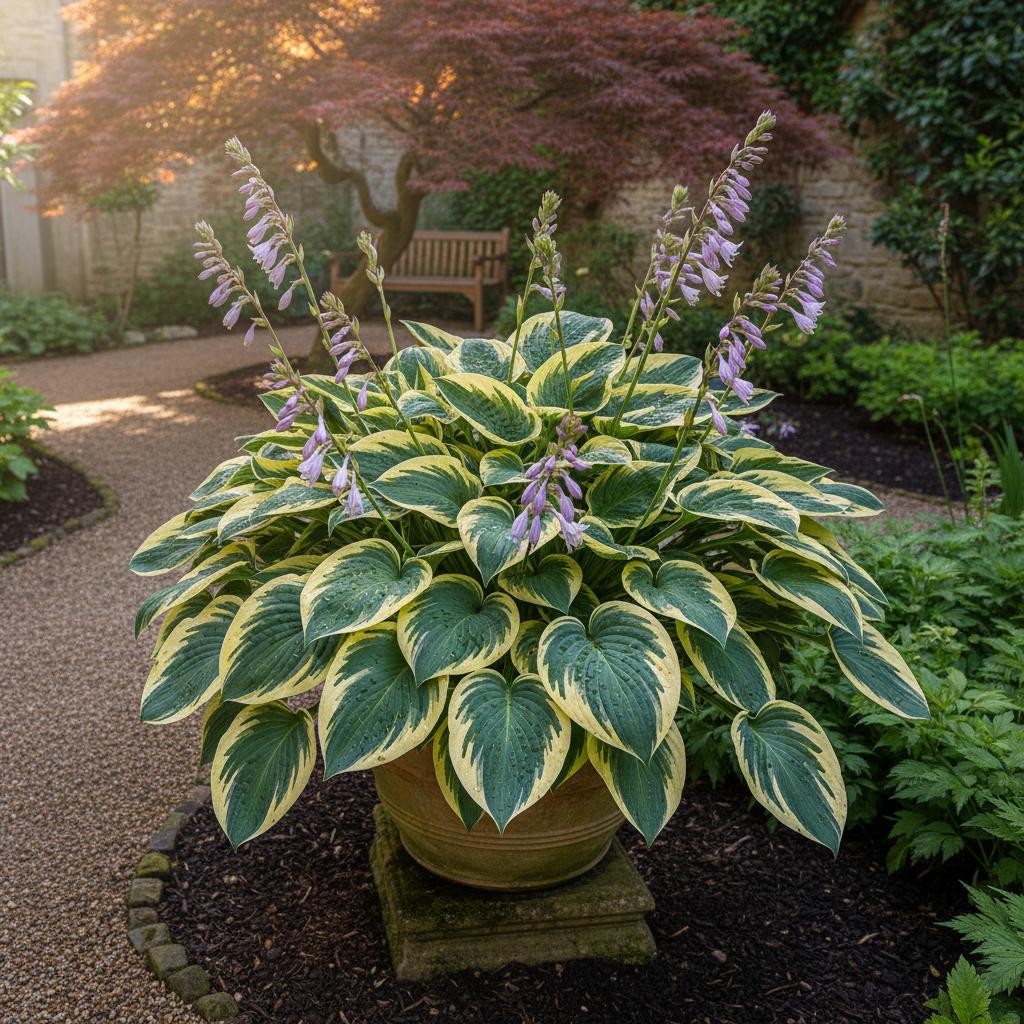
- Leaves: Ovate to lanceolate, 15-20 cm long, with distinctly wavy (undulate) margins. The center features a prominent white splash or irregular striping, bordered by vibrant green edges.
- Flowers: Funnel-shaped, pale lavender to violet, measuring about 5 cm long, borne on tall, leafless scapes (racemes) that rise well above the foliage.
- Roots: Fleshy, clump-forming rhizomes that allow the plant to spread slowly over time.
Care Guide
Water deeply and regularly to establish roots and support lush foliage growth.
Apply a balanced, slow-release fertilizer as new shoots emerge.. Avoid over-fertilizing, which can cause leggy growth and reduce variegation contrast.
Coffee Ground & Eggshell Mix:Mix used coffee grounds and crushed, rinsed eggshells into the topsoil around the base. Coffee grounds provide gentle nitrogen for lush foliage, while the sharp edges of crushed eggshells act as a physical barrier against slugs and snails, which are major pests for Hostas. Do not apply in thick, wet layers to prevent mold.- Cut back flower scapes at the base once blooms are spent to redirect energy to the roots.
- Remove dead or yellowing leaves throughout the growing season to maintain appearance.
- Clear away all dead foliage after the first hard frost in late autumn to eliminate overwintering sites for slug eggs and pests.
Toxicity
Warning: this plant may be toxic.
Pets: Toxic to cats per ASPCA (contains saponins). May cause vomiting, diarrhea, and depression.
Humans: Generally non-toxic to humans; young shoots are historically cooked and eaten in some cultures, though raw consumption is not recommended.
Garden Uses & Culture
Culture: A staple of Victorian shade gardens in Europe, the Hosta was widely embraced in American woodland landscaping for its reliable, striking foliage and ability to thrive where sun-loving plants fail.
Usage: Excellent for shade borders, woodland gardens, underplanting beneath large trees, and container gardening.