 PlantFun
Plant Needs
Characteristics
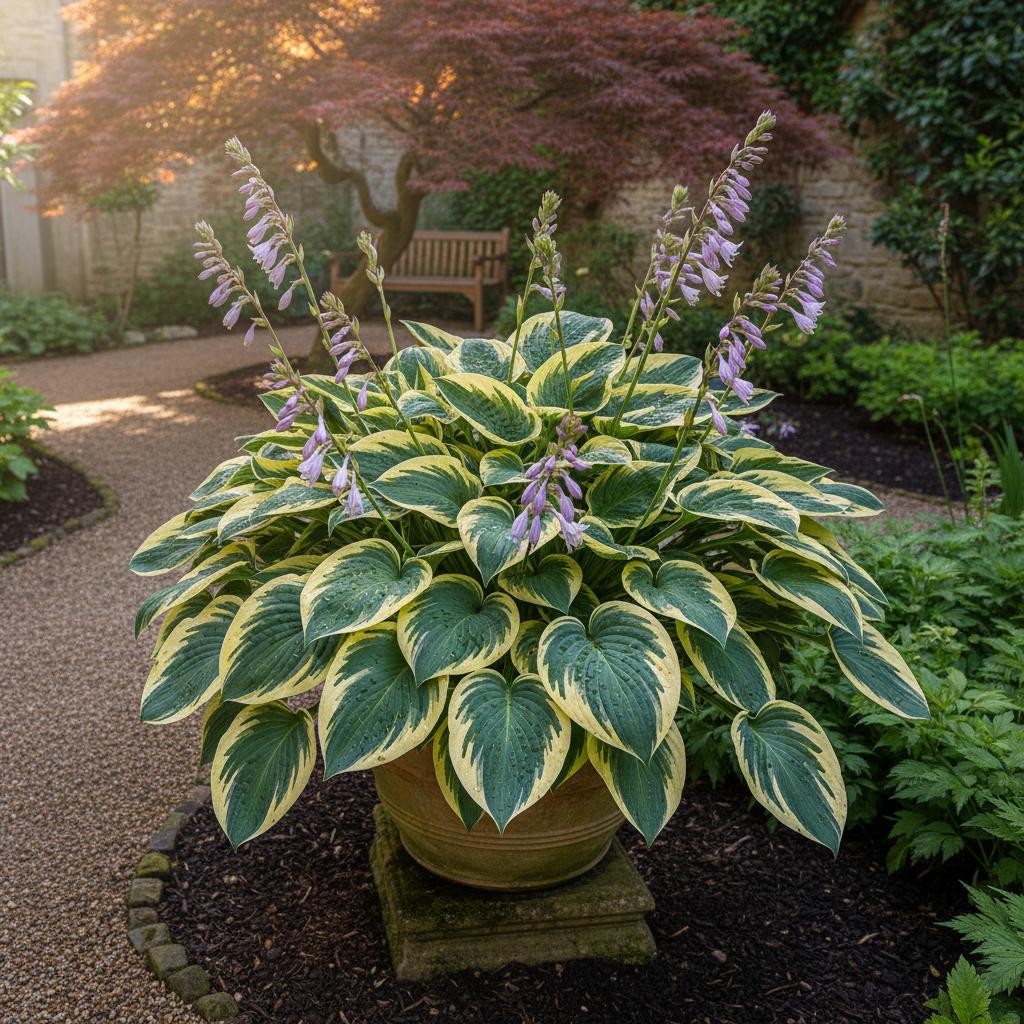
- Leaves: Basal rosette of large, ovate to heart-shaped leaves, featuring striking variegation with green margins and white or cream centers (or vice versa), prominent parallel venation;
- Flowers: Funnel-shaped, pale lavender to white, borne on tall, leafless scapes (racemes) rising well above the foliage;
- Roots: Fleshy, clump-forming rhizomes that allow for easy division.
Care Guide
Water deeply and regularly to keep the soil evenly moist, especially during dry spells.
Apply a balanced, slow-release organic fertilizer as new shoots emerge.. Avoid fertilizing in late summer or autumn to allow the plant to prepare for dormancy.
Crushed Eggshells and Coffee Grounds:Rinse and crush eggshells finely, mixing them with a small amount of used coffee grounds. Sprinkle around the base of the plant. The eggshells provide calcium and create a sharp barrier that helps deter slugs and snails, which are common Hosta pests, while the coffee grounds offer a gentle nitrogen boost.- Deadheading: Cut back flower scapes to the base once blooms fade to direct the plant's energy back into root and foliage growth;
- Fall Cleanup: Remove all dead and yellowing foliage after the first hard frost to prevent pests and fungal spores from overwintering;
- Division: Divide mature clumps every 3-5 years in early spring to maintain vigor and propagate new plants.
Toxicity
Warning: this plant may be toxic.
Pets: Toxic to cats per ASPCA. Contains saponins which can cause gastrointestinal irritation.
Humans: Generally considered non-toxic to humans; young shoots are even cooked and eaten in some cultures, though raw consumption of mature leaves may cause mild stomach upset.
Garden Uses & Culture
Culture: In Western horticulture, the Hosta is the quintessential shade garden staple, highly valued in Victorian-era gardens and modern landscapes alike for its reliable foliage and architectural form. It symbolizes devotion and friendship.
Usage: Excellent for shade borders, woodland gardens, underplanting beneath large trees, and container gardening.