 PlantFun
Plant Needs
Sunlight
Partial shade to dappled sunlight; morning sun enhances the yellow foliage color.
Watering
Requires consistently moist, well-drained soil; do not let it dry out completely.
Temperature
Highly cold tolerant, hardy in USDA zones 3-9. Requires winter dormancy.
Characteristics
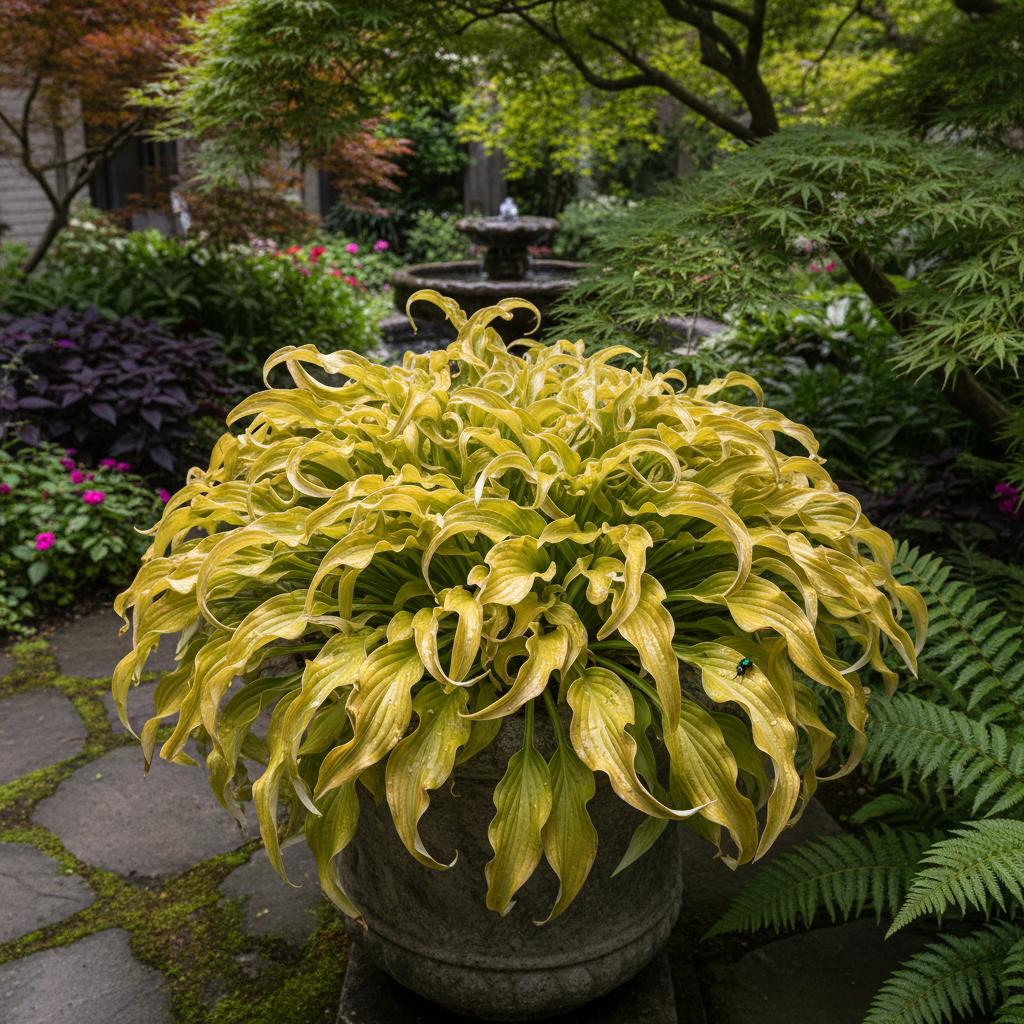
- Leaves: Extremely narrow, lanceolate, heavily rippled or ruffled margins, emerging chartreuse and fading to pale yellow depending on sun exposure;
- Flowers: Bell-shaped, pale lavender, borne on tall, deep purple scapes well above the foliage;
- Roots: Fleshy rhizomes forming dense, spreading clumps.
Care Guide
Watering
Water deeply and regularly to keep soil evenly moist
Fertilization
Apply a balanced, slow-release fertilizer as new shoots emerge. Avoid fertilizing late in the season to allow the plant to prepare for dormancy.
Coffee Grounds Compost:Sprinkle used, cooled coffee grounds lightly around the base to provide a gentle nitrogen boost and slightly acidify the soil. Avoid thick layers to prevent mold.Pruning
- Remove spent flower scapes at the base to redirect energy to foliage growth;
- Cut back dead, yellowed foliage to the ground in late autumn or early spring;
- Clear away dead leaves to prevent harboring slugs and snails over winter.
Toxicity
Warning: this plant may be toxic.
Pets & Humans
Pets: Toxic to cats per ASPCA. Contains saponins which cause gastrointestinal irritation.
Humans: Generally considered non-toxic to humans, though ingesting large amounts of raw plant material may cause mild stomach upset.
Garden Uses & Culture
Culture: Hostas are a staple of Western shade gardens, prized for their reliable foliage, architectural form, and ease of cultivation in woodland settings.
Usage: Excellent for edging, miniature or fairy gardens, mixed containers, and the front of shaded borders.