 PlantFun
Plant Needs
Sunlight
Prefers bright, indirect light but is highly tolerant of low-light conditions.
Watering
Allow the top 2-3 inches of soil to dry out completely between waterings.
Temperature
Ideal temperature range is 18°C to 27°C (65°F - 80°F).
Characteristics
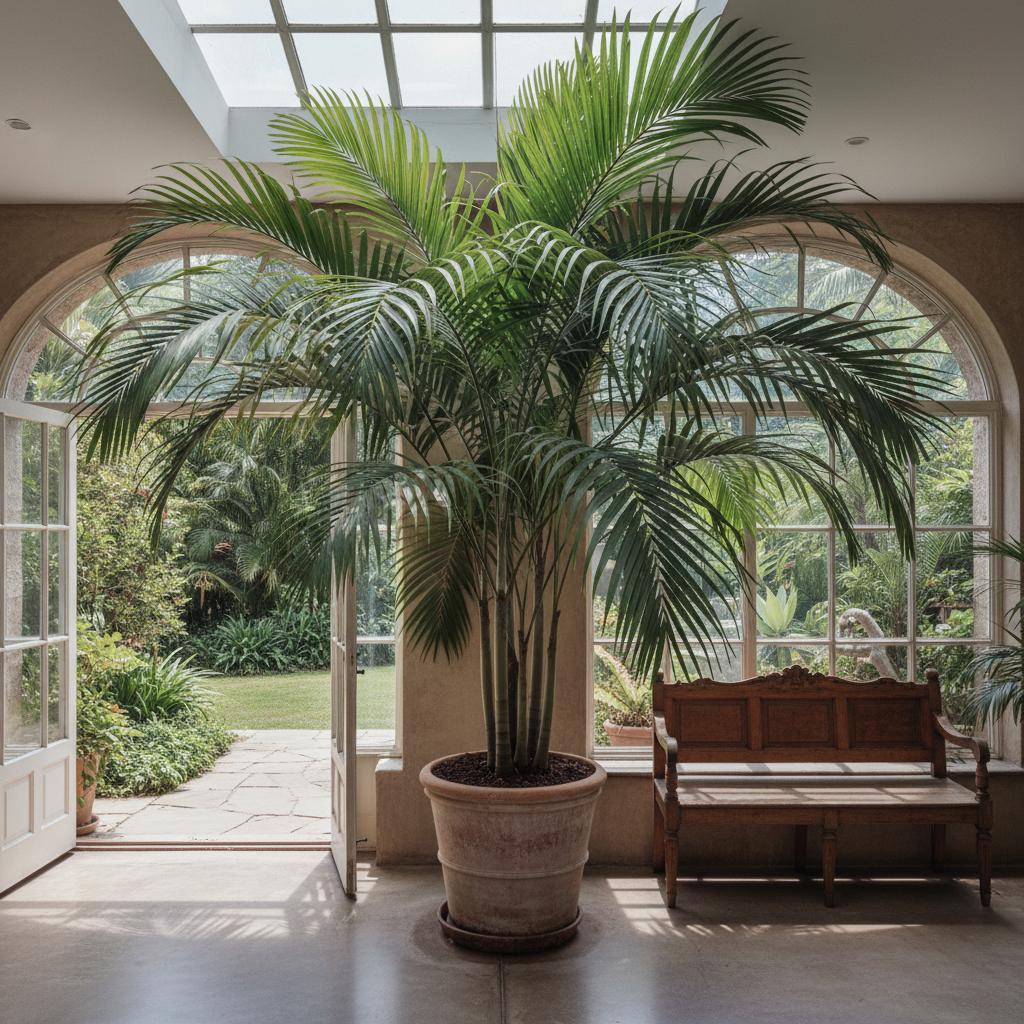
- Leaves: Pinnately compound, dark green fronds with drooping, graceful leaflets, growing up to 3 meters long on mature plants;
- Stems: Solitary, slender trunk, green when young, turning gray with prominent, closely spaced leaf scar rings as it ages;
- Flowers: Monoecious, borne on long, branching inflorescences that emerge from the leaf bases, consisting of small white flowers;
- Fruit: Dull red, olive-shaped drupes when fully mature, though rarely produced in indoor cultivation.
Care Guide
Watering
Water thoroughly when the top few inches of soil feel dry to the touch.
Fertilization
Apply a balanced liquid fertilizer diluted to half strength.. Do not fertilize during the winter months when growth naturally slows down.
Banana Peel Tea:Steep chopped banana peels in water for 24-48 hours. Strain and dilute the liquid 1:1 with fresh water before applying to the soil. This provides gentle potassium for strong frond development. Discard the solid peels in an outdoor compost bin to prevent indoor pests.Pruning
- Remove dead, brown, or yellowing lower fronds by cutting them cleanly near the trunk;
- Never cut the top growing tip, as this will kill the palm;
- Wipe leaves periodically with a damp cloth to remove dust and prevent spider mites.
Toxicity
Warning: this plant may be toxic.
Pets & Humans
Pets: Non-toxic to cats per ASPCA.
Humans: Non-toxic to humans.
Garden Uses & Culture
Culture: The Kentia palm became a symbol of high society and exotic elegance during the Victorian era, favored for its ability to thrive in the low light and poor air quality of 19th-century parlors.
Usage: Widely used as a premium interior landscaping plant for homes, offices, and hotel lobbies due to its architectural form and low-maintenance nature.