 PlantFun
Plant Needs
Sunlight
Prefers bright, indirect sunlight; avoid harsh direct afternoon sun which can scorch the leaves.
Watering
Allow the potting medium to dry out almost completely between waterings.
Temperature
Thrives in warm, humid environments; protect from drafts and temperatures below 10°C.
Characteristics
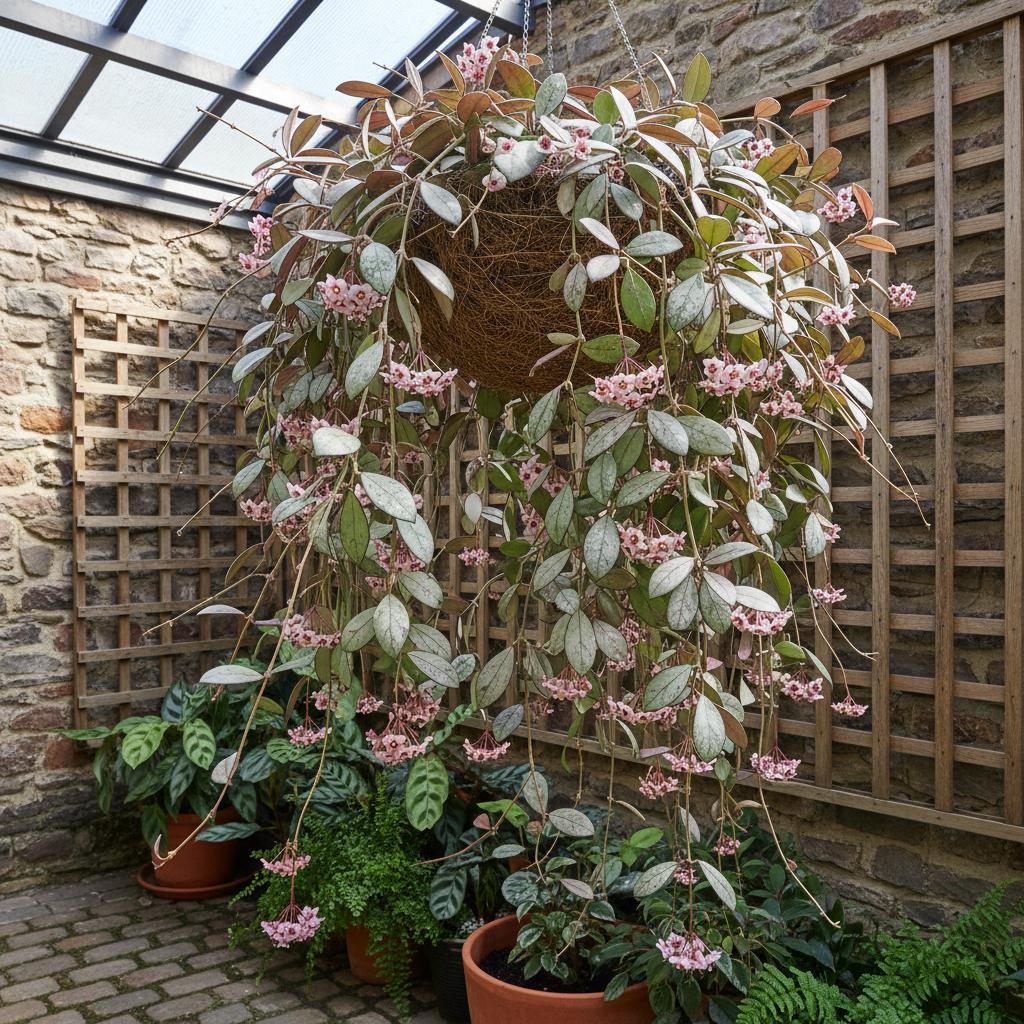
- Leaves: Fleshy, opposite, ovate to lanceolate, often exhibiting slight pubescence or silver mottling on the upper surface;
- Flowers: Star-shaped, waxy, borne in dense umbels, typically featuring a contrasting central corona, highly fragrant especially at night;
- Stem: Slender, twining vines that produce adventitious roots for climbing and anchoring.
Care Guide
Watering
Water thoroughly when the top 2 inches of soil are dry, allowing excess to drain.
Fertilization
Apply a diluted, balanced fertilizer to support new growth.. Do not fertilize during the winter dormancy period.
Banana Peel Tea:Steep chopped banana peels in water for 24-48 hours, strain, and dilute 1:1 with water. Use this to water the plant during the growing season to encourage blooming. Discard the peels in compost to avoid attracting pests.Pruning
- Do not remove peduncles: Hoyas rebloom from the same flower spurs (peduncles) year after year;
- Trim for shape: Prune only dead, damaged, or overly leggy vines to maintain a tidy appearance;
- Propagate: Healthy stem cuttings with at least two nodes can be easily propagated in water or sphagnum moss.
Toxicity
Warning: this plant may be toxic.
Pets & Humans
Pets: Non-toxic to cats (per ASPCA).
Humans: Non-toxic to humans; safe to handle.
Garden Uses & Culture
Culture: Highly prized in Victorian-era greenhouses and modern Western indoor gardens for their architectural foliage and intricate, porcelain-like blooms that look almost artificial.
Usage: Excellent for hanging baskets, indoor trellises, or trailing over shelves.