 PlantFun
Plant Needs
Sunlight
Prefers bright, indirect light; avoid harsh direct afternoon sun which can scorch the leaves.
Watering
Allow the top half of the soil to dry out completely between waterings; requires excellent drainage.
Temperature
Prefers cooler temperatures than many other tropical Hoyas, thriving in typical indoor conditions.
Characteristics
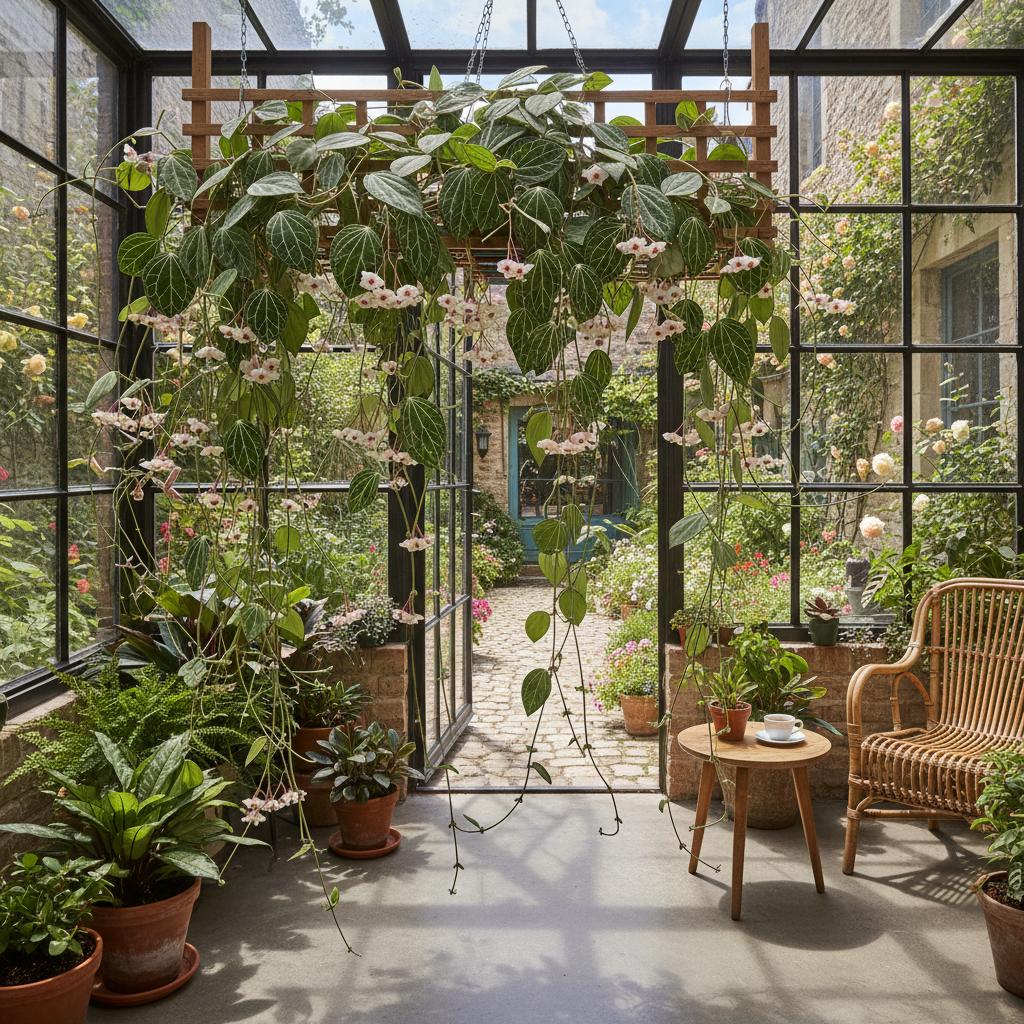
- Leaves: Diamond or rhombus-shaped, light green with prominent dark green pinnate venation resembling a fishtail, glabrous and slightly succulent;
- Flowers: Pendulous umbel inflorescence, corolla reflexed and cream to pale yellow, corona reddish-purple to burgundy, fragrant;
- Stems: Thin, trailing, epiphytic, producing adventitious roots along the nodes.
Care Guide
Watering
Water thoroughly when the top 50% of the soil is dry.
Fertilization
Apply a balanced, diluted fertilizer to support new growth.. Do not fertilize during the winter dormancy period.
Banana Peel Tea:Steep chopped banana peels in water for 24-48 hours, strain, and dilute 1:1 with fresh water. Use this to water the plant during the growing season to encourage blooming. Discard solids in compost to avoid attracting pests.Pruning
- Do not remove peduncles: Hoyas rebloom from the same flower spurs (peduncles) year after year;
- Trim for shape: Prune only dead, damaged, or overly long, leafless vines;
- Propagation: Pruned stem cuttings with at least two nodes can be easily rooted in water or sphagnum moss.
Toxicity
Warning: this plant may be toxic.
Pets & Humans
Pets: Non-toxic to cats per ASPCA guidelines.
Humans: Non-toxic to humans; safe to handle.
Garden Uses & Culture
Culture: Highly prized in Western houseplant communities for its architectural foliage and elegant trailing habit, often featured in modern interior design as a statement hanging plant.
Usage: Ornamental indoor plant, ideal for hanging baskets or elevated shelves where its cascading foliage can be displayed.