 PlantFun
Plant Needs
Sunlight
Requires bright, indirect light; can tolerate a few hours of direct morning sun which encourages reddish sun-stress on the leaves.
Watering
Allow the soil to dry out almost completely between waterings. Epiphytic roots are highly susceptible to rot if kept constantly wet.
Temperature
Prefers warm household temperatures and high humidity, but adapts well to average indoor conditions.
Characteristics
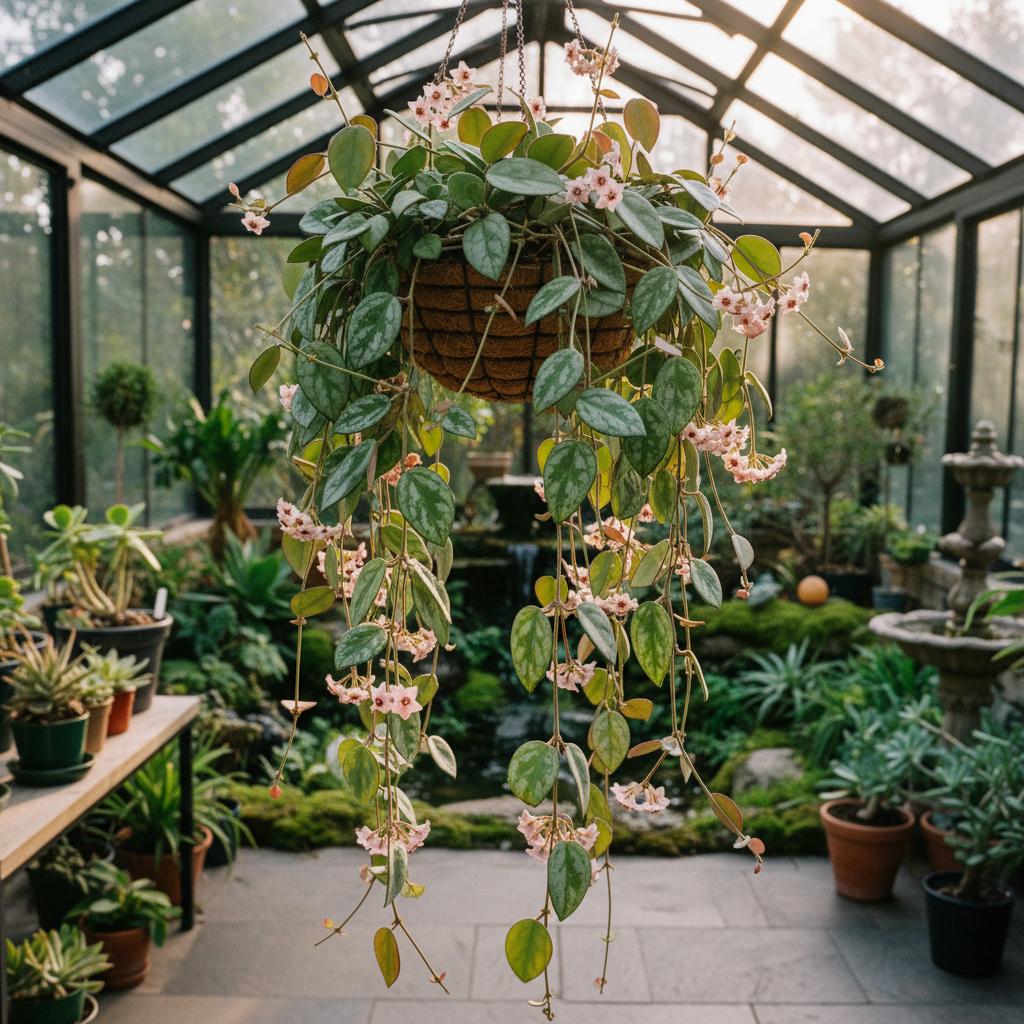
- Leaves: Ovate to almond-shaped, 4 - 5 cm long, covered in fine pubescence (velvety texture), olive green with darker margins, turning reddish-purple under bright light;
- Flowers: Umbel inflorescence with 15 - 25 small flowers, corolla reflexed and raspberry-red to caramel-colored, corona yellowish with a dark red center, emitting a sweet caramel or butterscotch scent;
- Stems: Slender, trailing or climbing vines with adventitious aerial roots at the nodes.
Care Guide
Watering
Water thoroughly when the top 75% of the soil is dry.
Fertilization
Apply a diluted balanced fertilizer to support new vine growth.. Fertilize only during the active growing season.
Banana Peel Tea:Steep chopped banana peels in water for 24 hours. Strain and dilute 1:1 with water. Potassium helps promote blooming. Discard the solid peels in the compost to avoid attracting fungus gnats indoors.Pruning
- Do not cut the peduncles: Hoyas rebloom from the same flower spurs (peduncles) year after year;
- Trim for length: Prune overly long or bare vines just above a leaf node to encourage branching;
- Remove dead wood: Snip off any dried, dead, or yellowing vines to maintain plant health.
Toxicity
Warning: this plant may be toxic.
Pets & Humans
Pets: Non-toxic to cats per ASPCA guidelines for the Hoya genus.
Humans: Non-toxic to humans.
Garden Uses & Culture
Culture: Hoyas have been cherished in Western indoor gardening since the Victorian era, prized for their wax-like, porcelain flowers and ability to thrive in parlor conditions.
Usage: Excellent for hanging baskets where the vines can cascade, or trained to climb a small trellis or hoop.