 PlantFun
Plant Needs
Sunlight
Bright indirect light or dappled shade; avoid direct afternoon sun.
Watering
Requires consistent moisture and high humidity; do not let the root ball dry out completely.
Temperature
Thrives in warm, tropical temperatures; protect from frost and cold drafts.
Characteristics
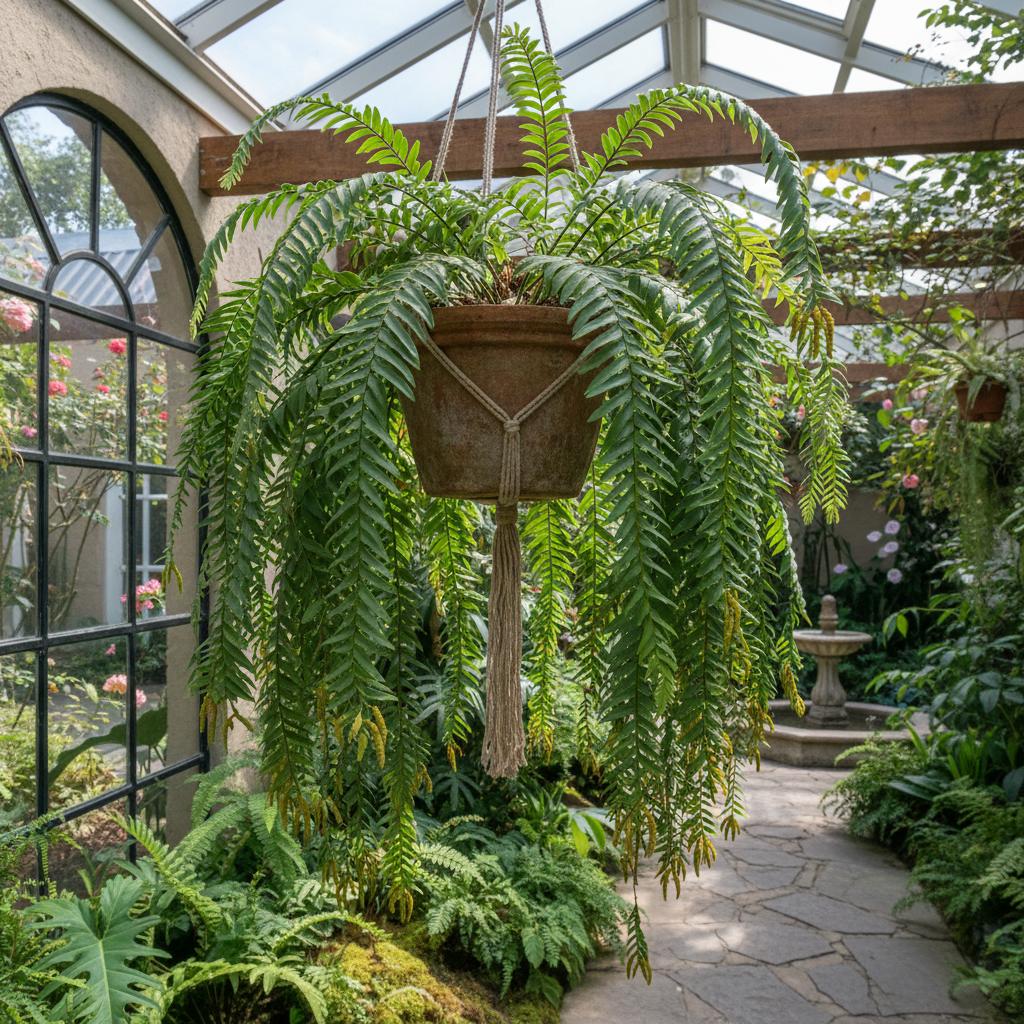
- Leaves: Spirally arranged, narrow, lanceolate to linear, stiff, spreading outward and downward (squarrose), bright green;
- Stems: Pendulous, dichotomously branching, forming thick cascading tassels;
- Reproductive structures: Sporangia borne in the axils of specialized leaves (sporophylls) towards the tips of the stems, blending with the vegetative leaves.
Care Guide
Watering
Keep consistently moist, watering when the top inch of the medium feels dry.
Fertilization
Apply a diluted, balanced liquid fertilizer.. Use a weak fertilizer solution, as epiphytes are sensitive to salt buildup.
Aquarium Water Fertilizer:Use dirty aquarium water when doing water changes; it provides gentle, natural nutrients perfect for sensitive epiphytes. Avoid if the tank has been treated with medications or high salts.Pruning
- Remove dead, brown, or damaged stems at the base using sterilized shears;
- Do not trim the growing tips of healthy stems, as this will halt their cascading growth;
- Gently clean out any accumulated debris from the center of the plant to prevent rot.
Toxicity
Warning: this plant may be toxic.
Pets & Humans
Pets: May cause mild vomiting or diarrhea if chewed on, due to alkaloids.
Humans: Contains lycopodium alkaloids which may cause mild gastrointestinal upset if ingested in large quantities.
Garden Uses & Culture
Culture: Highly prized in Victorian-era fern collections and modern tropical conservatories for its architectural, cascading form.
Usage: Excellent for hanging baskets, mounted on cork bark, or in terrariums and indoor greenhouses.