 PlantFun
Plant Needs
Characteristics
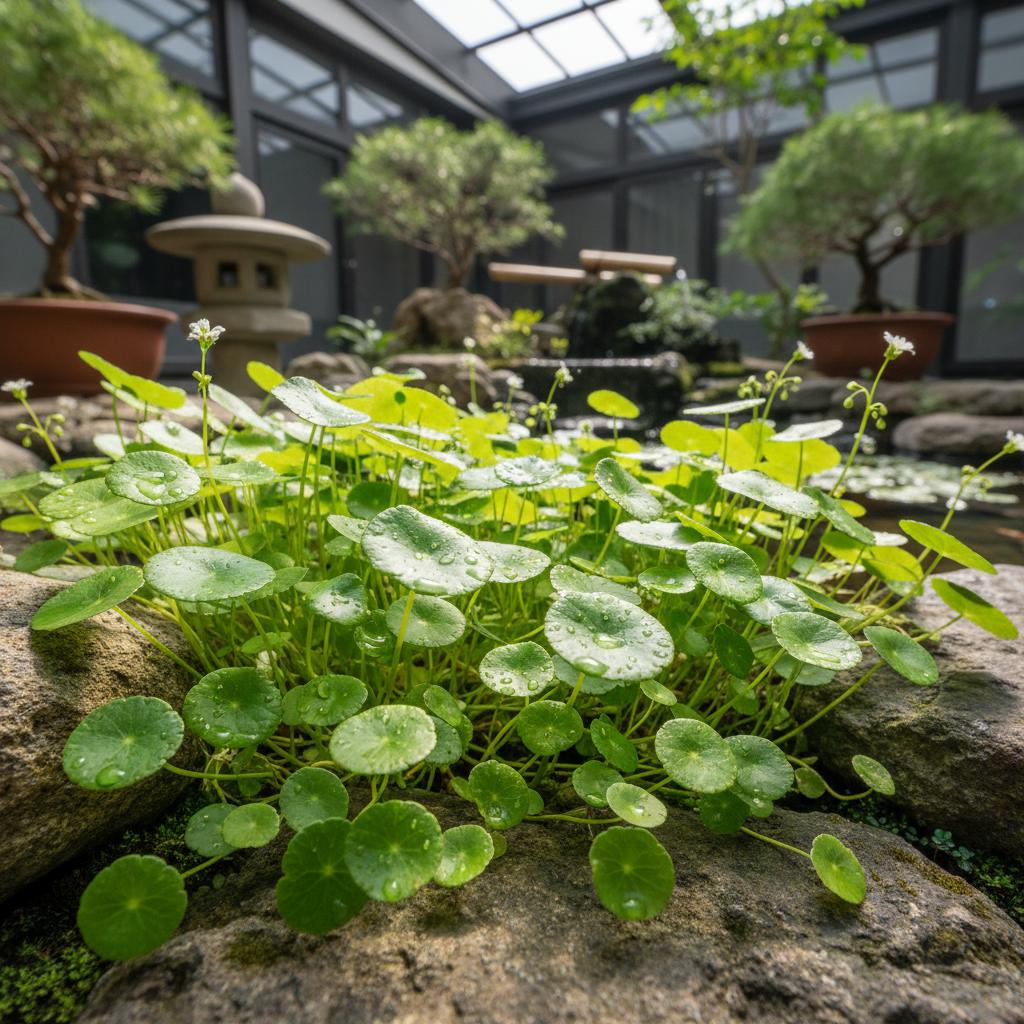
- Leaves: Peltate, circular, 1 to 4 cm in diameter, with shallowly lobed or crenate margins, attached to the petiole exactly at the center like a miniature lily pad;
- Flowers: Inflorescence a simple or proliferous umbel, flowers are tiny, inconspicuous, and greenish-white;
- Stems: Creeping rhizomes that root readily at the nodes, forming dense, spreading mats in mud or shallow water.
Care Guide
Keep soil constantly saturated or submerge roots entirely in water.
Apply a balanced liquid fertilizer diluted to half strength if grown outside of an aquarium.. If grown in an aquarium with fish, the fish waste usually provides sufficient nutrients.
Aquarium Water Fertilizer:Use water from routine aquarium changes to water the plant; it provides gentle, natural nitrogen without the risk of chemical burn. Avoid if the water has been treated with fish medications.- Trim back overgrown or yellowing leaves at the base of the petiole to maintain a tidy appearance;
- Thin out dense mats periodically to ensure adequate light reaches the lower stems and prevents rot;
- Pinch off flower stalks if strictly foliage growth is preferred.
Toxicity
Warning: this plant may be toxic.
Pets: Non-toxic per ASPCA guidelines; safe for households with felines.
Humans: Generally considered non-toxic, though foraging from contaminated water sources poses risks of waterborne pathogens.
Garden Uses & Culture
Culture: In Western water gardening and aquascaping, pennyworts are highly valued for their geometric, lily-pad-like appearance, often used to soften the hard edges of ponds and indoor water features.
Usage: Widely used in aquariums, paludariums, terrariums, water gardens, and as a marginal pond plant for edge coverage.