 PlantFun
Plant Needs
Characteristics
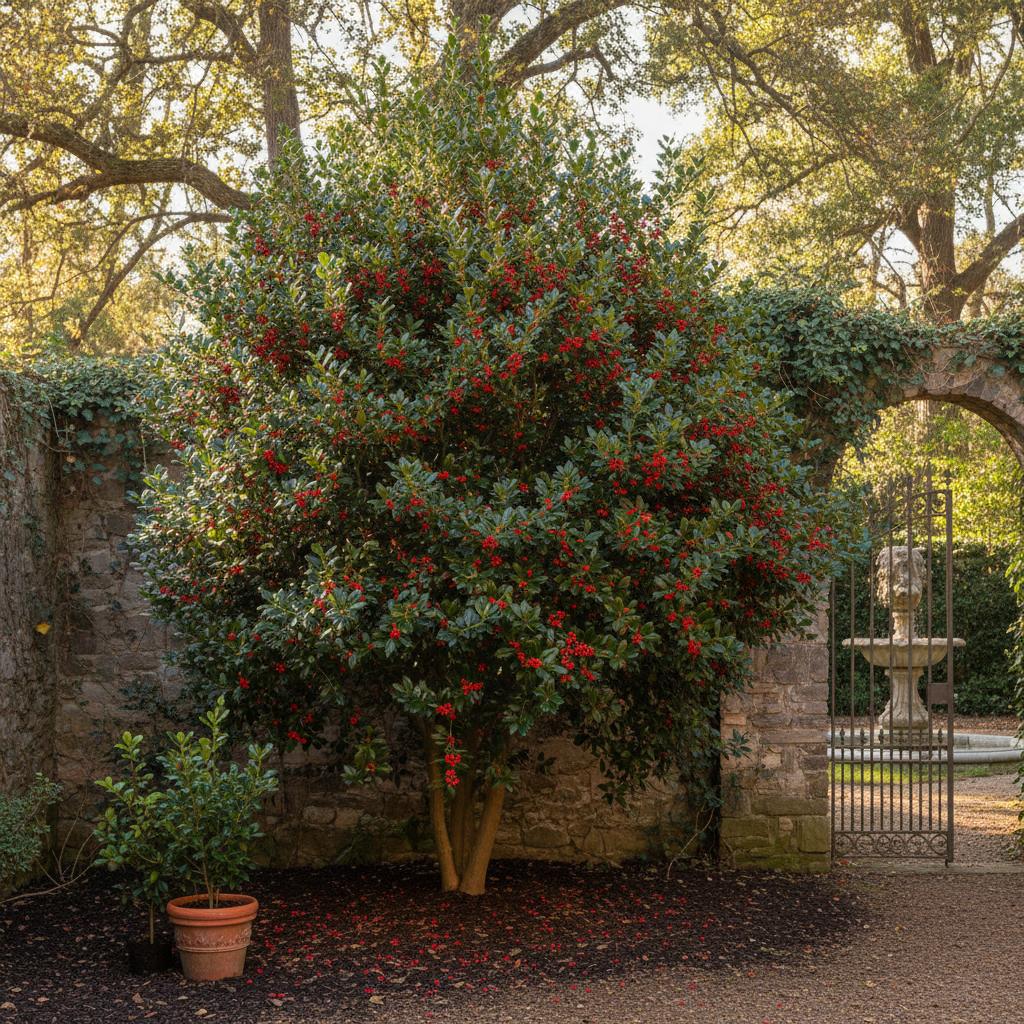
- Leaves: Evergreen, alternate, ovate to elliptic, leathery, glossy dark green above; margins often strongly undulate and spiny-toothed, especially on lower branches.
- Flowers: Dioecious, small, white, 4-lobed, borne in axillary cymes.
- Fruits: Bright red drupes (berries) containing 4 seeds, persisting through winter on female plants.
- Bark: Smooth, silvery-gray to brownish, becoming slightly fissured with age.
Care Guide
Water regularly to keep the soil evenly moist but not waterlogged.
Apply a balanced, slow-release fertilizer for acid-loving plants before new growth begins.. Feed lightly, as excessive nitrogen can reduce berry production.
Coffee Grounds:Sprinkle used, cooled coffee grounds lightly around the base of the plant and scratch into the soil. This provides a gentle nitrogen boost and helps maintain the slight acidity hollies prefer. Avoid thick layers to prevent mold.- Prune in late winter or early spring while the plant is still dormant.
- Remove dead, diseased, or crossing branches to improve air circulation.
- Can be sheared for formal hedges, but hand-pruning preserves the natural shape and prevents cut-leaf browning.
- Always wear thick, puncture-resistant gloves to protect hands from the sharp, spiny leaves.
Toxicity
Warning: this plant may be toxic.
Pets: Toxic per ASPCA. Ingestion of leaves or berries can cause gastrointestinal distress and depression.
Humans: Berries contain ilicin and saponins, which can cause severe gastrointestinal upset if ingested.
Garden Uses & Culture
Culture: Deeply rooted in Celtic and Roman mythology, the holly tree is widely used in Western Christmas traditions as a symbol of eternal life, resilience, and the winter solstice.
Usage: Popular in ornamental landscaping as specimen trees, privacy hedges, and security barriers. Branches are heavily harvested for holiday wreaths and decorations. The dense, white wood is historically used in inlay work and chess pieces.