 PlantFun
Plant Needs
Sunlight
Prefers bright, indirect sunlight; can tolerate early morning direct sun.
Watering
Requires soaking in water for 20-30 minutes once a week, or frequent misting.
Temperature
Thrives in warm environments; protect from frost and freezing temperatures.
Characteristics
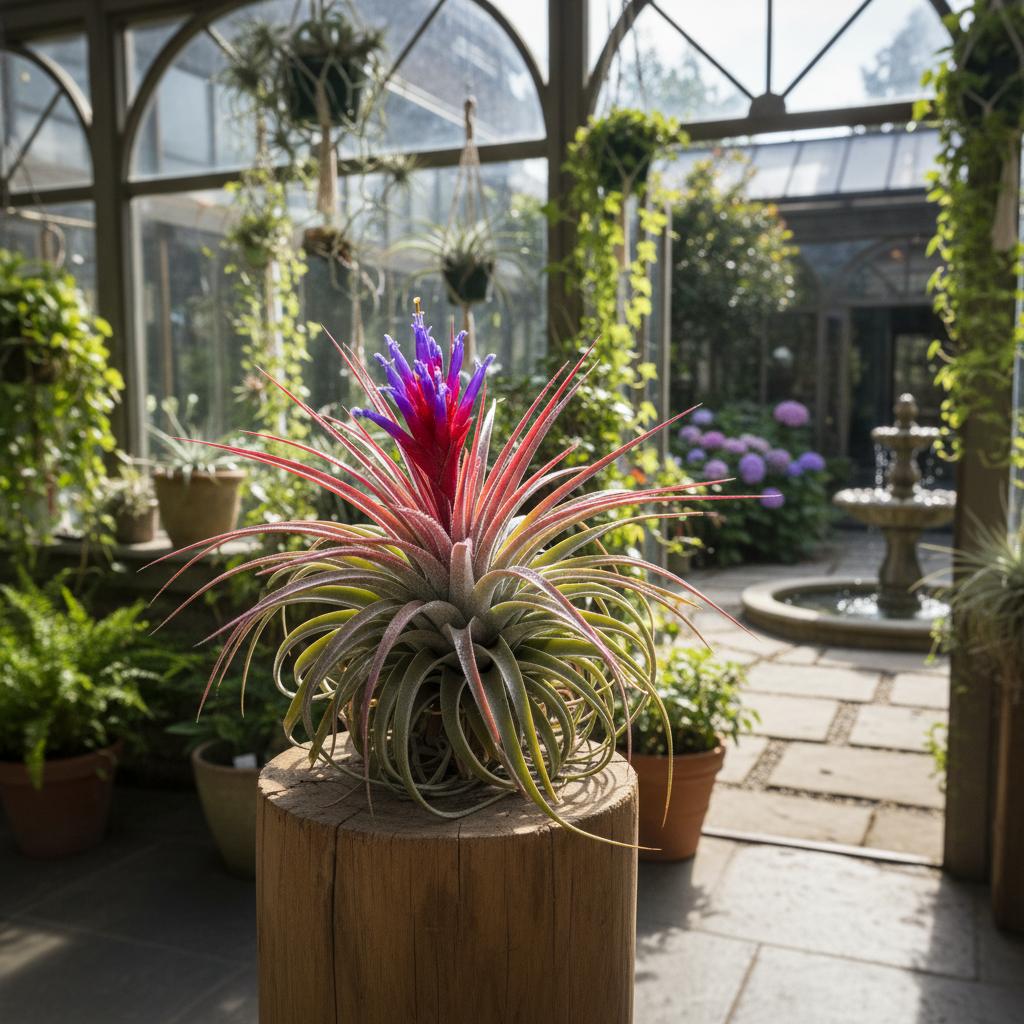
- Leaves: Silvery-green, densely covered in trichomes, forming a compact rosette; inner leaves turn striking bright red or pink prior to blooming;
- Flowers: Narrow, tubular violet-purple flowers emerging from the center of the rosette, featuring prominent yellow stamens;
- Roots: Wiry and sparse, functioning solely as holdfasts to anchor the plant to tree bark or rocks, not for nutrient absorption.
Care Guide
Watering
Soak the entire plant in room-temperature water for 20-30 minutes once a week, shaking off excess water gently.
Fertilization
Mist with highly diluted fertilizer once a month.. Use a bromeliad or orchid specific fertilizer diluted to 1/4 strength.
Aquarium Water Soak:Use water from routine freshwater aquarium changes to soak the plant. Ensure the water contains no added aquarium salts or fish medications. This provides a gentle, natural source of nitrogen.Pruning
- Gently pull away dried, brown basal leaves from the bottom of the rosette;
- Snip off spent flower stalks close to the base using sterilized scissors;
- Leave offsets (pups) attached to form a clump, or carefully separate them once they reach 1/3 the size of the mother plant.
Toxicity
Warning: this plant may be toxic.
Pets & Humans
Pets: Non-toxic to cats per ASPCA.
Humans: Non-toxic to humans; safe to handle.
Garden Uses & Culture
Culture: Highly popular in modern Western interior design, often featured in minimalist decor, geometric himmeli brass prisms, and vertical living walls as a symbol of low-maintenance, soil-free living.
Usage: Used as an indoor ornamental houseplant, mounted on driftwood, placed in terrariums, or incorporated into bridal bouquets and living wreaths.