 PlantFun
Plant Needs
Sunlight
Prefers bright, indirect light or partial shade; protect from harsh afternoon sun.
Watering
Requires consistently moist but well-draining soil; do not allow the root ball to dry out completely.
Temperature
Thrives in warm, tropical to subtropical temperatures; frost tender.
Characteristics
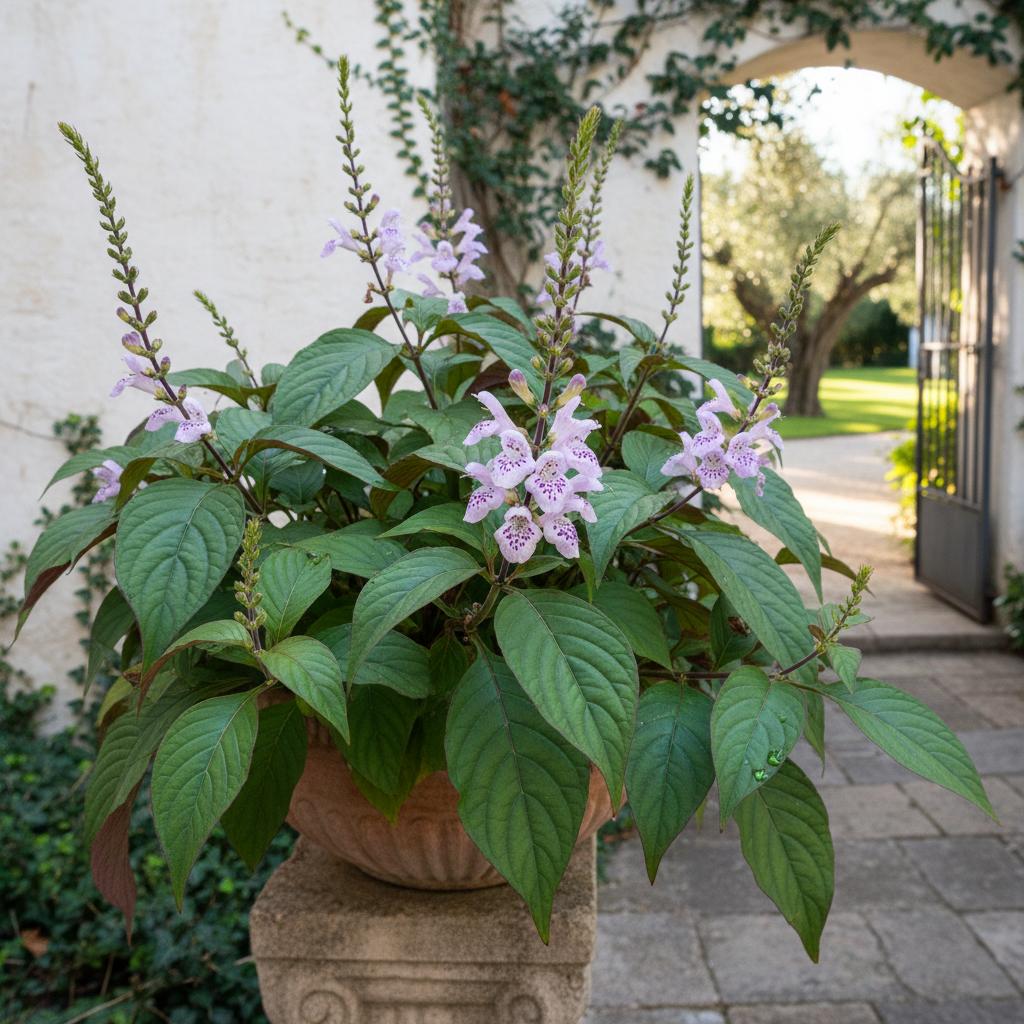
- Leaves: Opposite, ovate to elliptic, with entire margins and a slightly pubescent surface, often featuring prominent venation.
- Flowers: Tubular and bilabiate (two-lipped), typically pink to light purple, arranged in terminal or axillary spike-like inflorescences.
- Stem: Herbaceous, becoming slightly woody at the base, with characteristically swollen nodes typical of the Acanthaceae family.
Care Guide
Watering
Water thoroughly when the top inch of soil feels dry, maintaining even moisture.
Fertilization
Apply a balanced organic fertilizer to support new foliage growth.. Feed monthly during the active growing season; withhold fertilizer during winter dormancy.
Banana Peel Tea:Steep chopped banana peels in water for 24-48 hours. Dilute 1:1 with water and apply to the soil to promote healthy blooming. Discard peels in compost to avoid attracting pests and odors.Pruning
- Pinch back young shoot tips early in the growing season to encourage a bushier habit.
- Deadhead spent flower spikes to maintain a tidy appearance and potentially prolong the blooming period.
- Prune back leggy stems in late winter or early spring before new growth begins.
Toxicity
Warning: this plant may be toxic.
Pets & Humans
Pets: Non-toxic to cats per ASPCA guidelines for the Justicia genus.
Humans: Generally recognized as safe; no known toxicity for humans.
Garden Uses & Culture
Culture: N/A
Usage: Cultivated as an ornamental plant in tropical and subtropical shade gardens, borders, and as a potted specimen in conservatories.