 PlantFun
Plant Needs
Characteristics
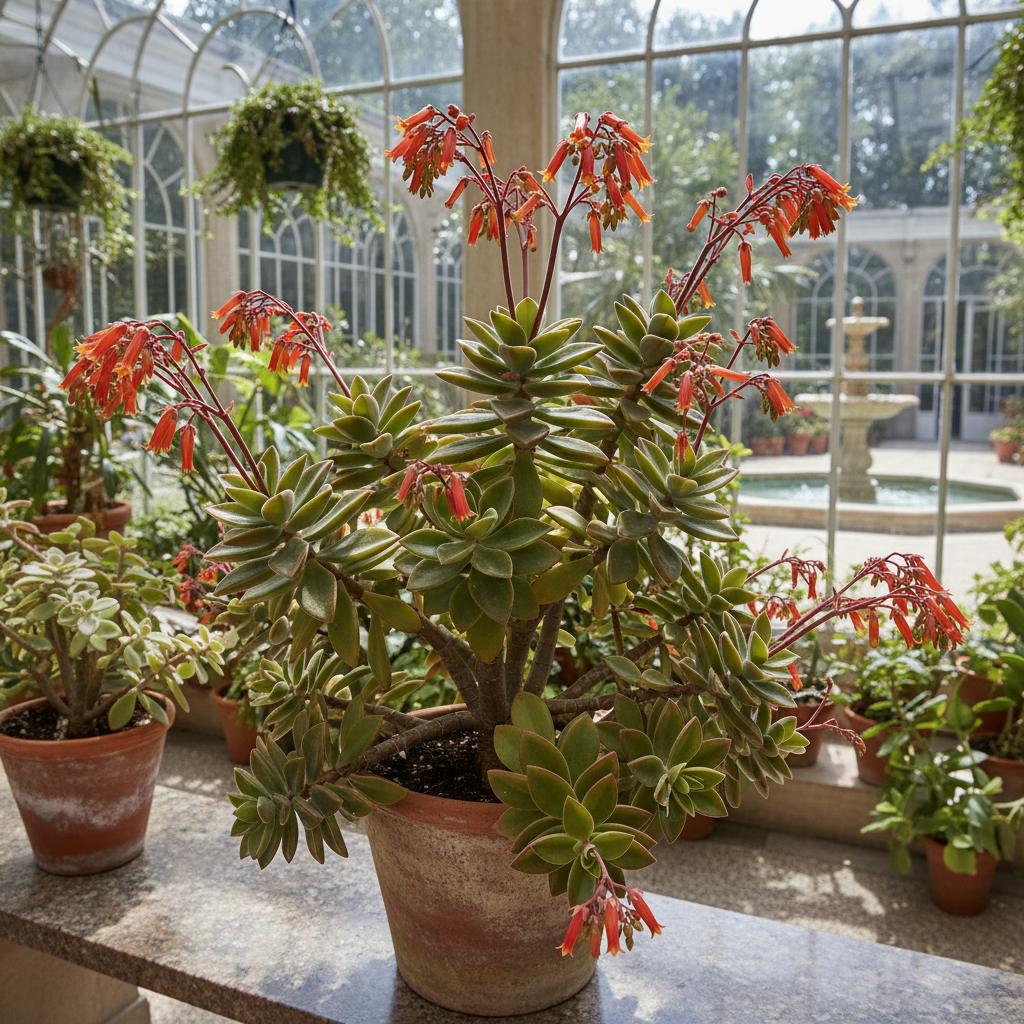
- Leaves: Small, fleshy, obovate to spatulate, green to reddish-brown under strong light, with slightly crenate margins near the apex;
- Stems: Woody at the base, highly branched, forming a dense, small shrub-like structure;
- Flowers: Small, tubular, erect, greenish-white to pale pink, borne in terminal cymose inflorescences.
Care Guide
Water thoroughly, allowing water to drain completely, then wait until soil is dry.
Apply a diluted, balanced fertilizer.. Feed sparingly during the active growing season; do not fertilize in winter.
Banana Peel Tea:Soak chopped banana peels in water for 24 hours, strain, and dilute 1:1 with water. Use to promote root strength and overall resilience. Avoid leaving solid peels on the soil to prevent mold and pests.- Shape control: Prune back leggy or overgrown stems in spring to encourage a bushier, more compact habit;
- Deadheading: Remove spent flower stalks at the base to redirect energy to foliage growth;
- Propagation: Save healthy pruned stem cuttings, let them callous for a few days, and root in dry succulent soil.
Toxicity
Warning: this plant may be toxic.
Pets: Toxic per ASPCA; contains cardiac glycosides (bufadienolides) which can cause severe gastrointestinal and cardiac issues.
Humans: Mildly toxic if ingested, causing gastrointestinal irritation.
Garden Uses & Culture
Culture: In Western indoor gardening, succulents like Kalanchoe are celebrated as symbols of endurance, resilience, and timelessness due to their ability to thrive in harsh conditions.
Usage: - **Ornamental**: Excellent for container gardening, sunny windowsills, and succulent arrangements; - **Landscaping**: Used in xeriscaping and rock gardens in frost-free regions.