 PlantFun
Plant Needs
Sunlight
Prefers bright, indirect light to partial sun; avoid intense afternoon sun which can scorch leaves.
Watering
Drought tolerant; water only when the soil is completely dry.
Temperature
Thrives in warm temperatures; not frost-tolerant and must be protected from freezing.
Characteristics
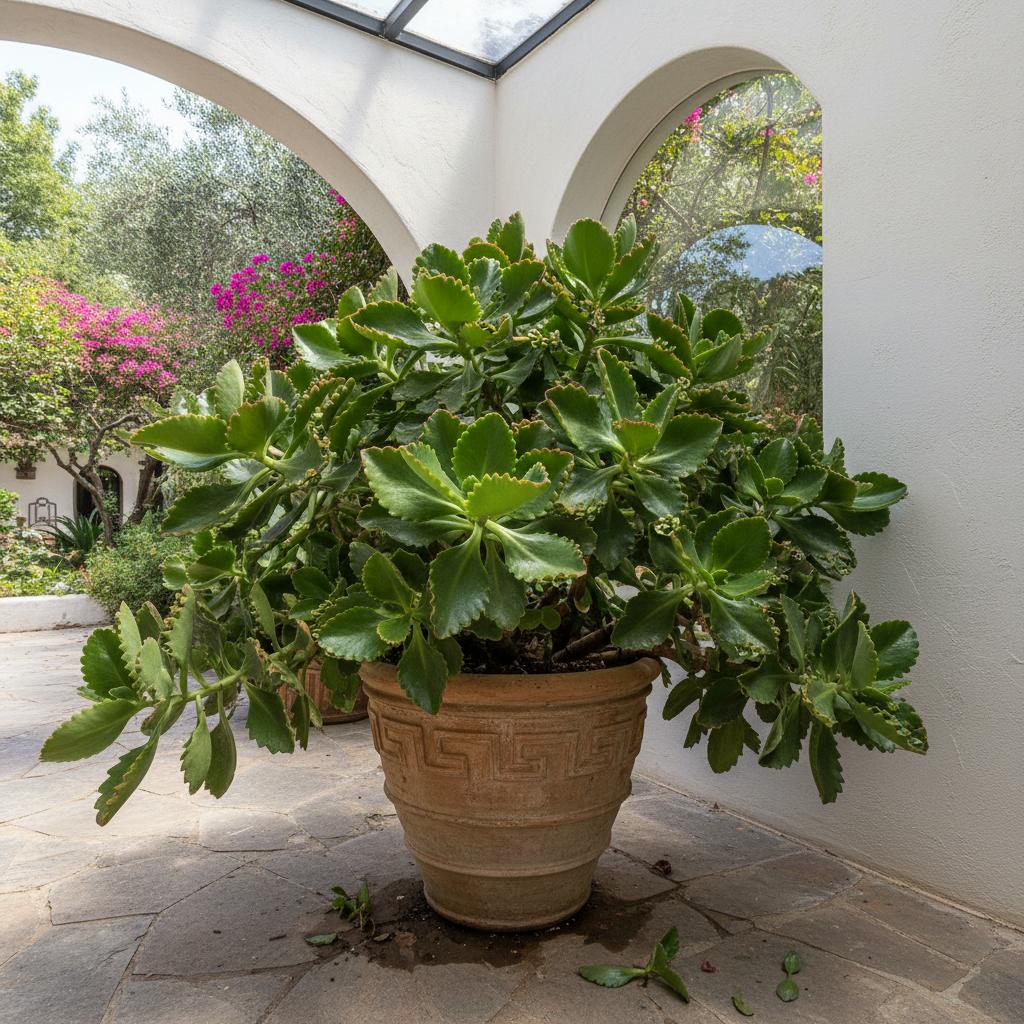
- Leaves: Large, fleshy, opposite, bluish-green to bright green, up to 20 cm long, margins crenate and bearing numerous bulbils (plantlets);
- Flowers: Terminal corymbiform cymes, tubular to bell-shaped, greenish-white to pinkish;
- Stem: Erect, stout, glabrous, often unbranched unless the tip is damaged;
- Roots: Fibrous, shallow root system, with plantlets readily forming new roots upon touching soil.
Care Guide
Watering
Water thoroughly when the top 2 inches of soil are dry.
Fertilization
Apply a diluted, balanced liquid fertilizer once.. Requires very little feeding; over-fertilizing can cause weak, leggy growth.
Banana Peel Tea:Soak chopped banana peels in water for 24 hours, strain, and dilute 1:1 with water. Use the liquid to water the plant. Discard the peels in compost to avoid attracting fungus gnats.Pruning
- Remove dead or shriveled leaves at the base of the plant;
- Pinch off the top growth if a bushier plant is desired;
- Carefully collect and dispose of fallen plantlets if you wish to prevent them from aggressively spreading to neighboring pots.
Toxicity
Warning: this plant may be toxic.
Pets & Humans
Pets: Highly toxic per ASPCA; contains bufadienolides which can cause severe cardiac and gastrointestinal issues.
Humans: Contains cardiac glycosides; ingestion can cause gastrointestinal irritation and potential heart rate changes.
Garden Uses & Culture
Culture: Often shared among indoor gardeners in the West as a novelty plant, symbolizing fertility, endurance, and the ease of propagation.
Usage: Grown primarily as an ornamental houseplant or in xeriscaping in frost-free climates.