 PlantFun
Plant Needs
Characteristics
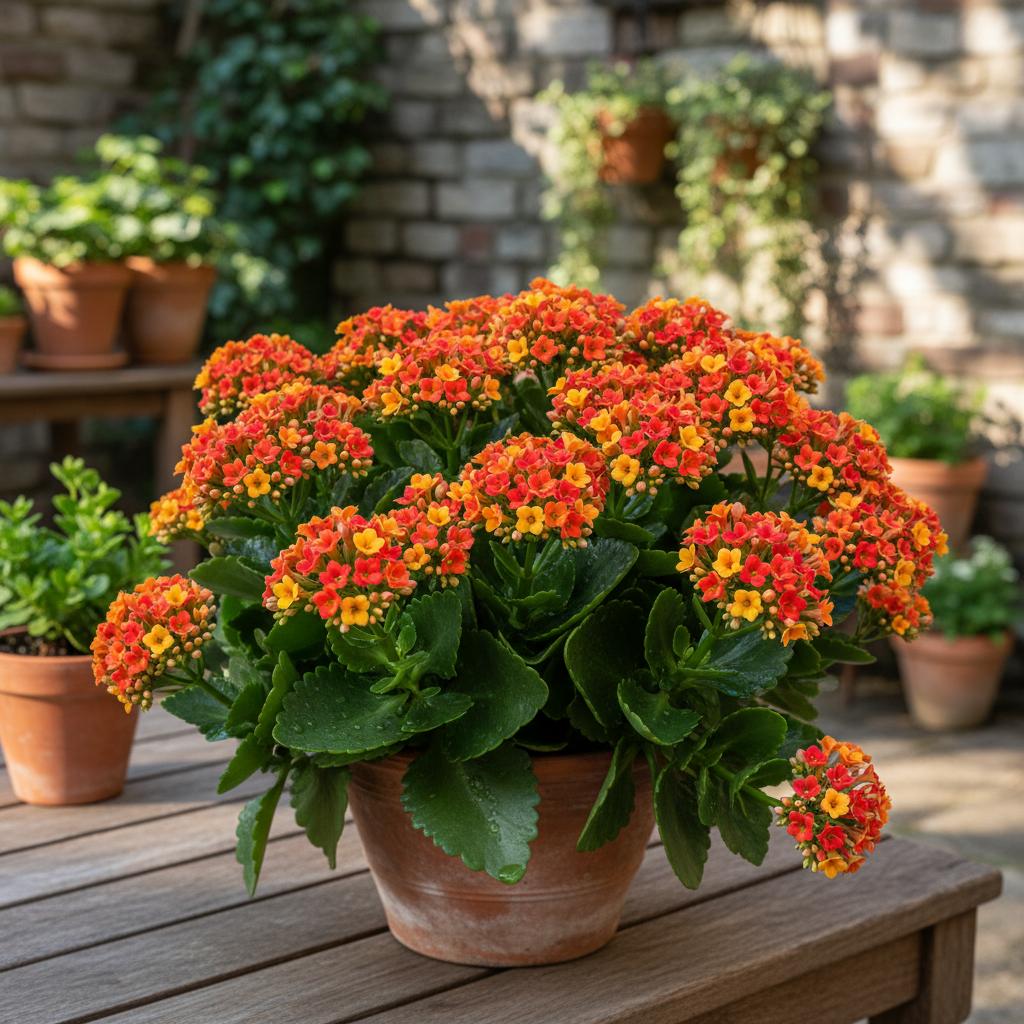
- Leaves: Fleshy, dark green, ovate to oblong, up to 7 cm long, with scalloped (crenate) margins and a waxy texture;
- Flowers: Dense terminal corymbs of small, 4-petaled tubular flowers available in red, pink, yellow, orange, or white;
- Stem: Upright, fleshy, branching, green but becoming woody at the base with age.
Care Guide
Water thoroughly when soil dries out completely, allowing excess water to drain.
Apply a balanced liquid fertilizer diluted to half strength.. Feed only during the active growing season; withhold fertilizer during the winter resting period.
Banana Peel Tea:Soak chopped banana peels in water for 24 hours. Strain and dilute 1:1 with water. Promotes blooming. Discard solids in compost to avoid fruit flies.- Pinch back leggy stems after blooming to encourage bushier growth;
- Deadhead spent flower clusters by snipping the stem down to the first set of leaves;
- Remove any yellowing or dead leaves at the base to improve air circulation.
Toxicity
Warning: this plant may be toxic.
Pets: Toxic per ASPCA; contains cardiac glycosides (bufadienolides) which can cause severe gastrointestinal and cardiac issues.
Humans: Mildly toxic if ingested; may cause stomach upset, nausea, or vomiting.
Garden Uses & Culture
Culture: In the Western floral trade, it is a staple holiday and winter houseplant, symbolizing persistence and enduring affection due to its remarkably long-lasting blooms.
Usage: Ornamental houseplant, patio container plant in warm climates, and popular seasonal gift plant.