 PlantFun
Plant Needs
Characteristics
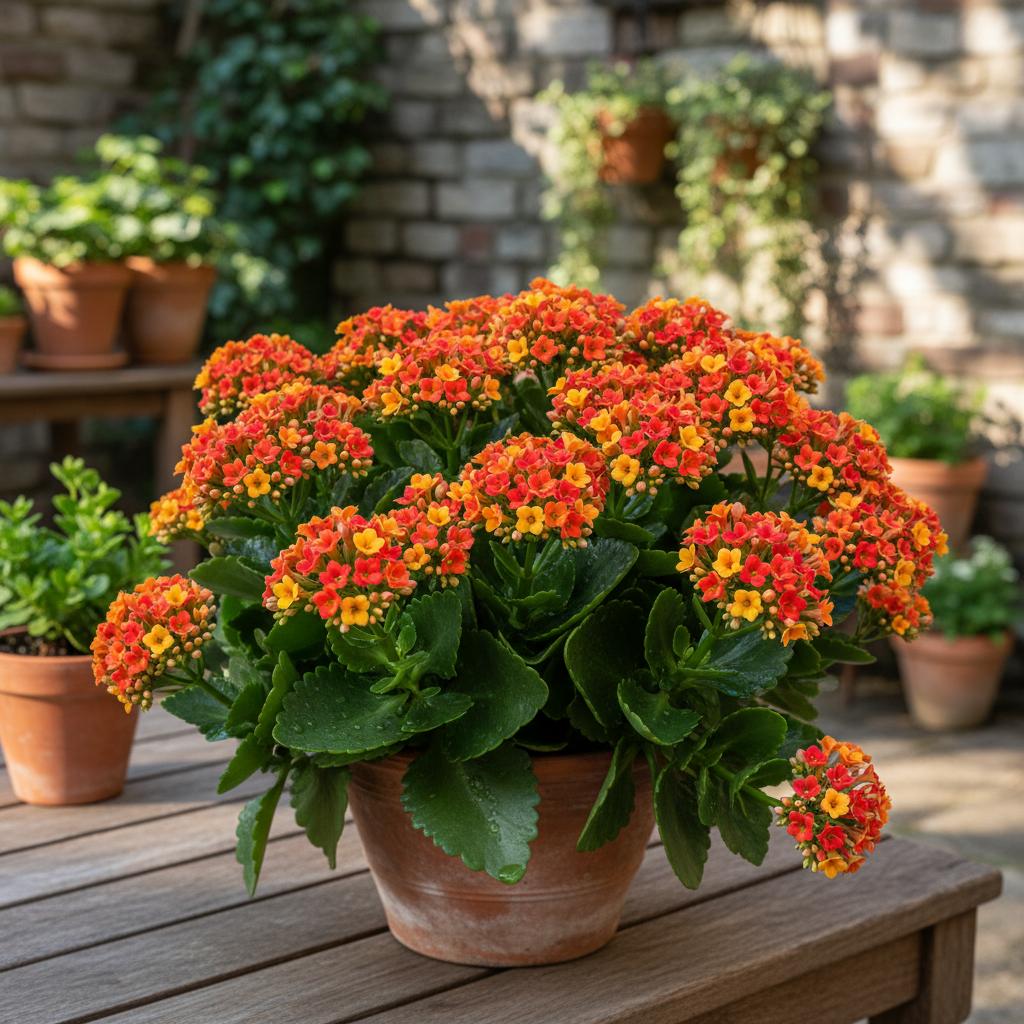
- Leaves: Fleshy, dark green, ovate to oblong with scalloped (crenate) margins, glabrous and waxy;
- Flowers: Dense terminal cymes featuring small, tubular flowers with four spreading petals in shades of red, pink, yellow, orange, or white;
- Stem: Upright, fleshy, branching, becoming somewhat woody at the base with age.
Care Guide
Water thoroughly when the soil is dry to the touch, allowing excess to drain.
Apply a balanced, water-soluble fertilizer diluted to half strength.. Do not fertilize during the winter rest period or when the plant is in full bloom.
Banana Peel Tea:Soak chopped banana peels in water for 24 hours, strain, and dilute 1:1 with water. Apply to soil to support blooming. Discard solids in compost to avoid attracting fruit flies. Avoid high salt content.- Deadheading: Snip off spent flower stems at their base to maintain a tidy appearance and redirect energy;
- Pinching: Pinch back leggy stem tips after blooming to encourage bushier growth;
- Cleanup: Remove any yellowing or dead leaves from the base to improve air circulation.
Toxicity
Warning: this plant may be toxic.
Pets: Toxic per ASPCA. Ingestion causes vomiting and diarrhea. Rarely, cardiac glycosides (bufadienolides) can cause abnormal heart rhythms.
Humans: Ingestion may cause mild gastrointestinal upset. Sap may cause minor skin irritation in sensitive individuals.
Garden Uses & Culture
Culture: Often gifted during the winter holidays in Europe and the Americas, it symbolizes endurance, lasting affection, and wealth due to its long-lasting blooms and coin-like fleshy leaves.
Usage: Popular as an indoor potted plant, florist gift plant, and in warm climates, used in rock gardens or xeriscaping.