 PlantFun
Plant Needs
Characteristics
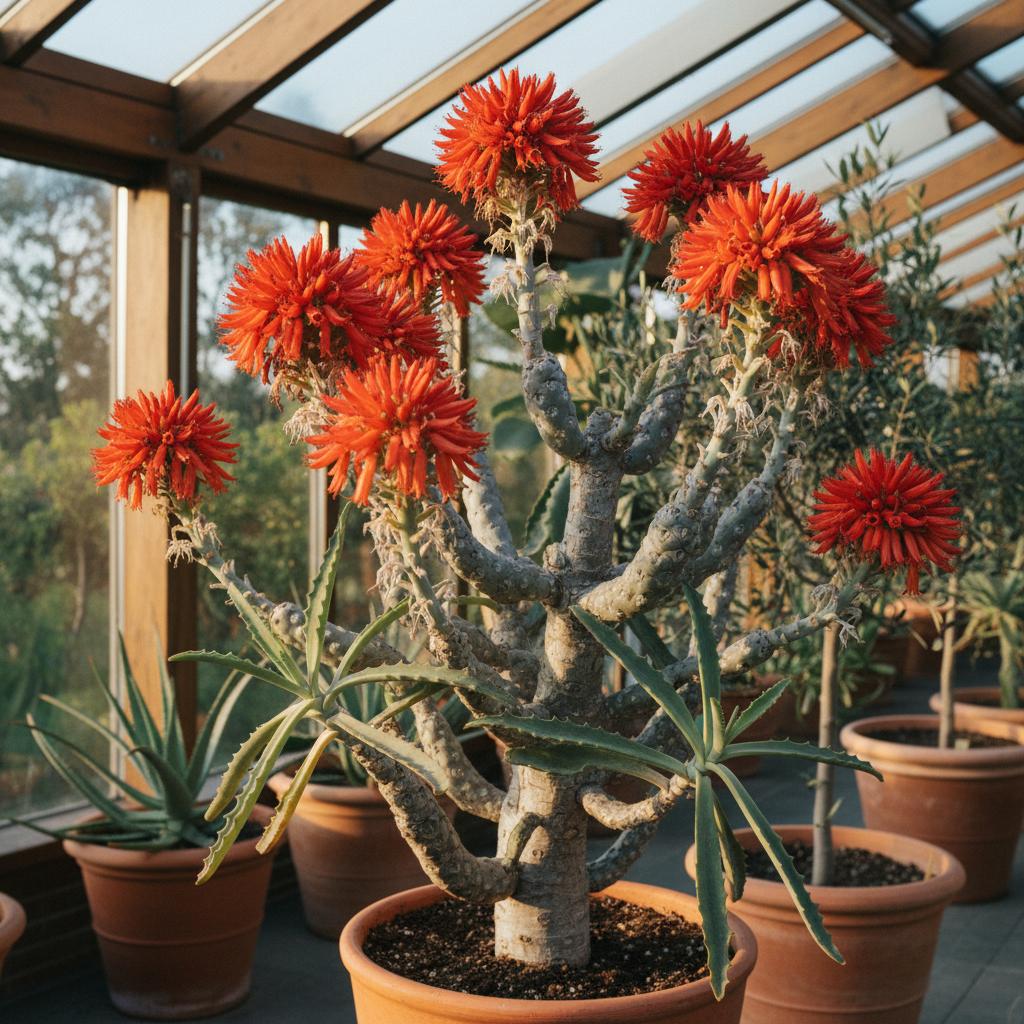
- Leaves: Fleshy, spatulate to obovate, glaucous blue-green with a powdery white bloom, arranged in dense rosettes;
- Flowers: Terminal capitula lacking ray florets, consisting entirely of bright orange to red tubular disc florets resembling small brushes;
- Stem: Succulent, branching from the base, often becoming woody with age.
Care Guide
Water thoroughly, allowing the water to drain completely, then wait until the soil is entirely dry before watering again.
Apply a diluted, low-nitrogen succulent fertilizer once at the start of the growing season.. Requires very little feeding; over-fertilizing can cause weak, leggy growth.
Banana Peel Tea:Steep dried banana peels in water for 24 hours. Dilute 1:1 with water before applying. Avoid using raw peels directly on the soil to prevent fungal gnats and rot.- Remove spent flower stalks at the base to maintain a tidy appearance;
- Prune back leggy stems in early spring to encourage branching and a more compact rosette;
- Remove any dead or shriveled basal leaves to prevent moisture buildup and rot.
Toxicity
Warning: this plant may be toxic.
Pets: Toxic if ingested; can cause liver damage, vomiting, and lethargy (characteristic of Senecio/Kleinia species).
Humans: Contains pyrrolizidine alkaloids which can cause liver toxicity if ingested in large amounts.
Garden Uses & Culture
Culture: Highly valued in Western succulent collections and water-wise landscaping for the dramatic color contrast between its icy blue foliage and fiery blooms.
Usage: Excellent for rock gardens, xeriscaping, and as a striking potted specimen for sunny patios or windowsills.