 PlantFun
Plant Needs
Characteristics
- Leaves: Alternate, trifoliate; leaflets are elliptic to obovate, 4-8 cm long, glossy dark green above and notably glabrous (hairless) beneath;
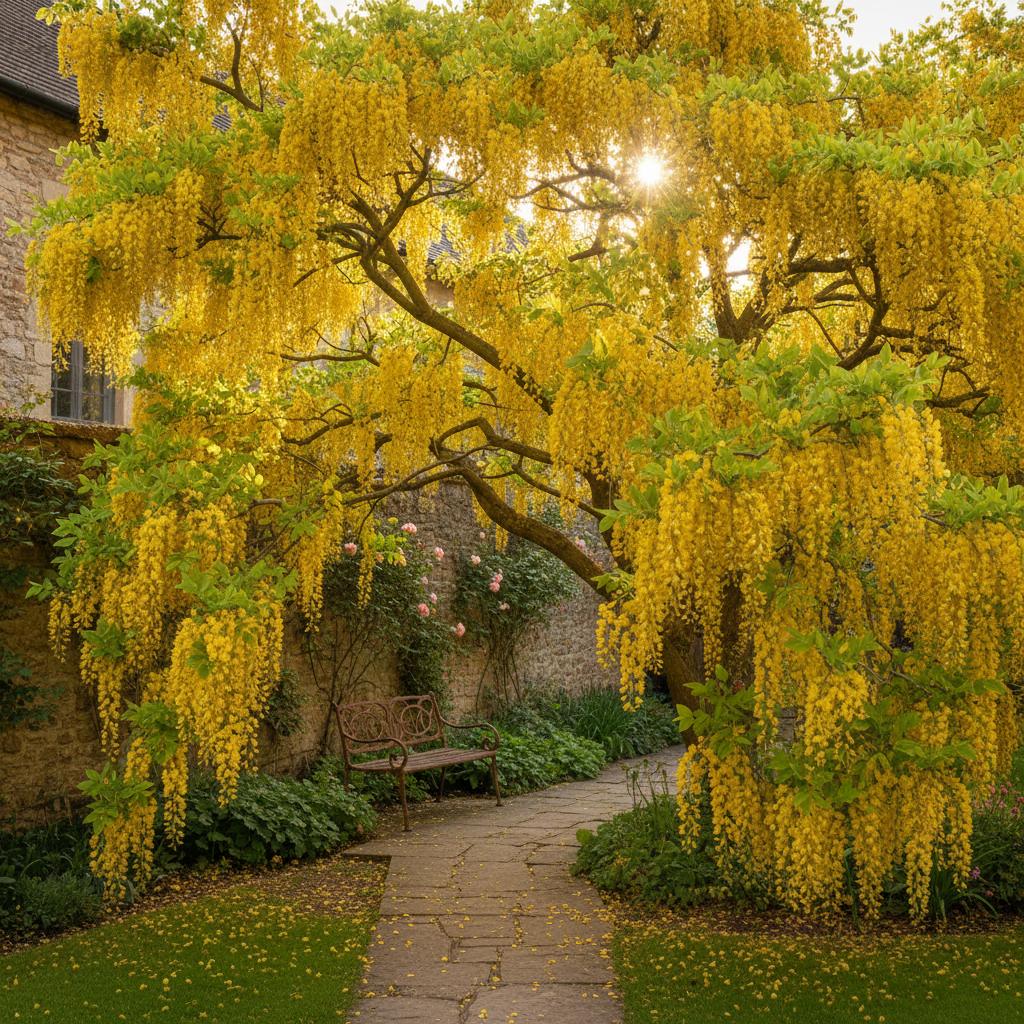
- Flowers: Bright yellow, pea-like flowers arranged in dense, pendulous racemes up to 40 cm long; highly fragrant;
- Fruit: Flattened, glabrous green pods that mature to brown, containing highly toxic black seeds;
- Bark: Smooth, greenish-brown, developing slight fissures with age.
Care Guide
Water deeply once a week during active growth and dry spells.
Apply a light layer of compost or a low-nitrogen fertilizer if soil is extremely poor.. As a legume, it requires minimal feeding. Over-fertilizing can reduce flowering.
Banana Peel Tea:Steep chopped banana peels in water for 24 hours. Dilute 1:1 with water and pour around the drip line in early spring to support heavy blooming. Avoid high-nitrogen DIY fertilizers like coffee grounds, as this plant fixes its own nitrogen.- Prune only in late summer to prevent the sap from bleeding, which occurs if pruned in spring;
- Remove dead, diseased, or crossing branches to maintain an open, healthy canopy;
- Carefully snip off developing seed pods after flowering to conserve the tree's energy and reduce the risk of accidental poisoning.
Toxicity
Warning: this plant may be toxic.
Pets: Highly toxic per ASPCA. Ingestion of any part, especially seeds, can cause severe gastrointestinal and neurological distress.
Humans: Highly toxic. All parts, especially the seeds, contain the quinolizidine alkaloid cytisine, which can cause severe poisoning and can be fatal if ingested.
Garden Uses & Culture
Culture: In European garden history, Laburnum has been widely planted to create stunning "golden chain" walkways and pergolas, symbolizing both striking beauty and hidden danger due to its toxicity.
Usage: Primarily used as an ornamental specimen tree. Historically, its hard, dark heartwood was used for cabinet making and musical instruments, earning it the name "false ebony."