 PlantFun
Plant Needs
Sunlight
Requires full sun to maintain compact growth and encourage prolific blooming.
Watering
Highly drought-tolerant; water only when the soil is completely dry.
Temperature
Thrives in warm climates; frost tender and requires protection below freezing.
Characteristics
- Leaves: Fleshy, blue-gray to silver-green, distinctively triangular (deltoid) in cross-section, with reddish, lightly toothed margins.
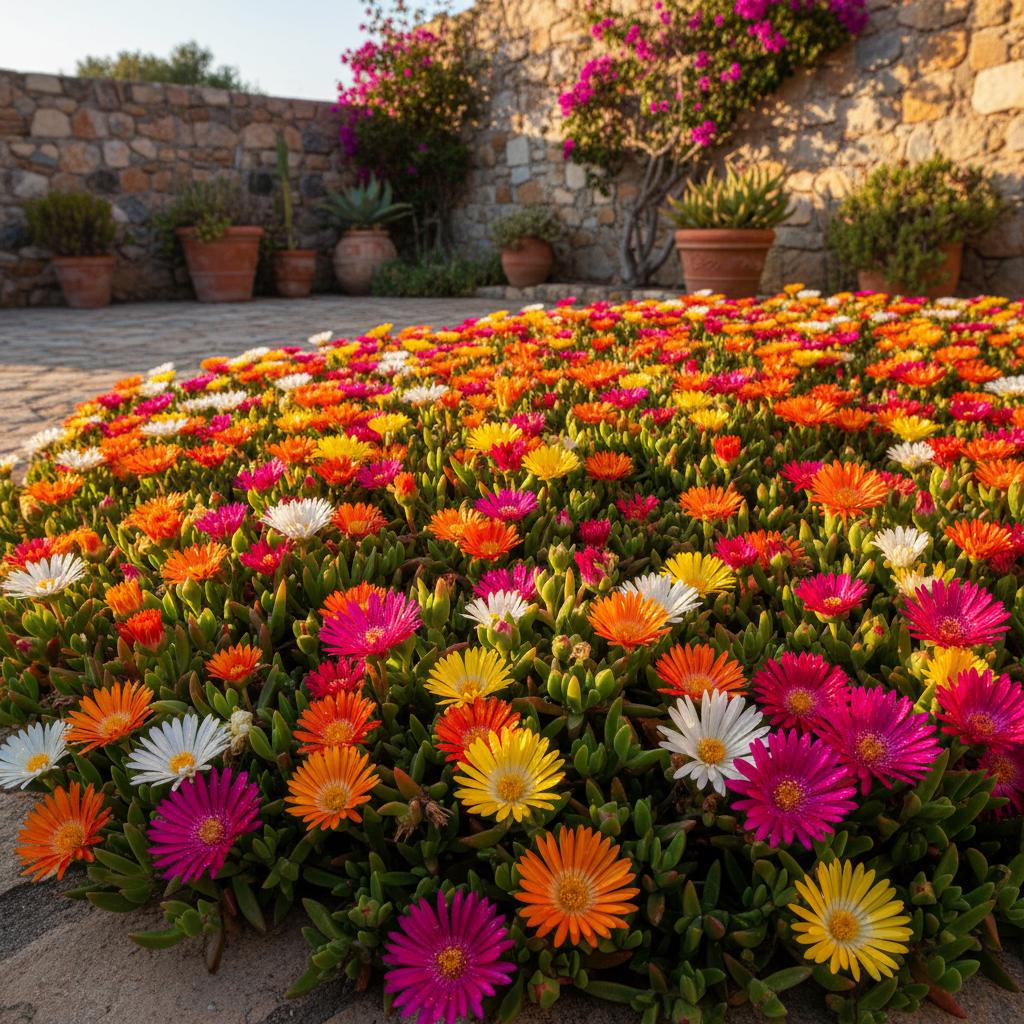
- Flowers: Small, daisy-like, vibrant pink to magenta with yellow centers, opening fully in bright sunlight and closing at night.
- Stems: Wiry, reddish-purple, spreading or trailing, forming a dense mat over time.
Care Guide
Watering
Water deeply but infrequently, allowing the soil to dry out completely between waterings.
Fertilization
Apply a light, diluted organic feed at the start of the growing season.. Fertilization recommendations description
Banana Peel Tea:Soak chopped banana peels in water for 24-48 hours, strain, and use the liquid to water the plant in early spring to support vibrant pink blooms. Avoid leaving raw peels on the soil surface to prevent pests.Pruning
- Post-bloom: Trim back spent flowers and leggy stems after the spring bloom to maintain a compact, dense shape.
- Maintenance: Remove any dead or woody undergrowth to improve air circulation.
- Propagation: Use healthy stem cuttings from pruning to easily propagate new plants.
Toxicity
Warning: this plant may be toxic.
Pets & Humans
Pets: Non-toxic to cats per ASPCA guidelines for typical ice plants.
Humans: Non-toxic to humans; safe to handle.
Garden Uses & Culture
Culture: Widely embraced in Californian and Southern European water-wise landscaping, symbolizing resilience and the beauty of arid environments.
Usage: Excellent as a drought-tolerant groundcover, trailing plant for hanging baskets, rock garden specimen, or for erosion control on dry slopes.