 PlantFun
Plant Needs
Sunlight
Requires full sun for optimal blooming and compact growth.
Watering
Drought-tolerant once established; prefers deep, infrequent watering. Soil must dry out between waterings.
Temperature
Thrives in Mediterranean climates; protect from hard frosts and freezing temperatures.
Characteristics
- Leaves: Tough, leathery, spirally arranged along the stems, ovate to heart-shaped, often with 3 to 6 glandular teeth at the apex.
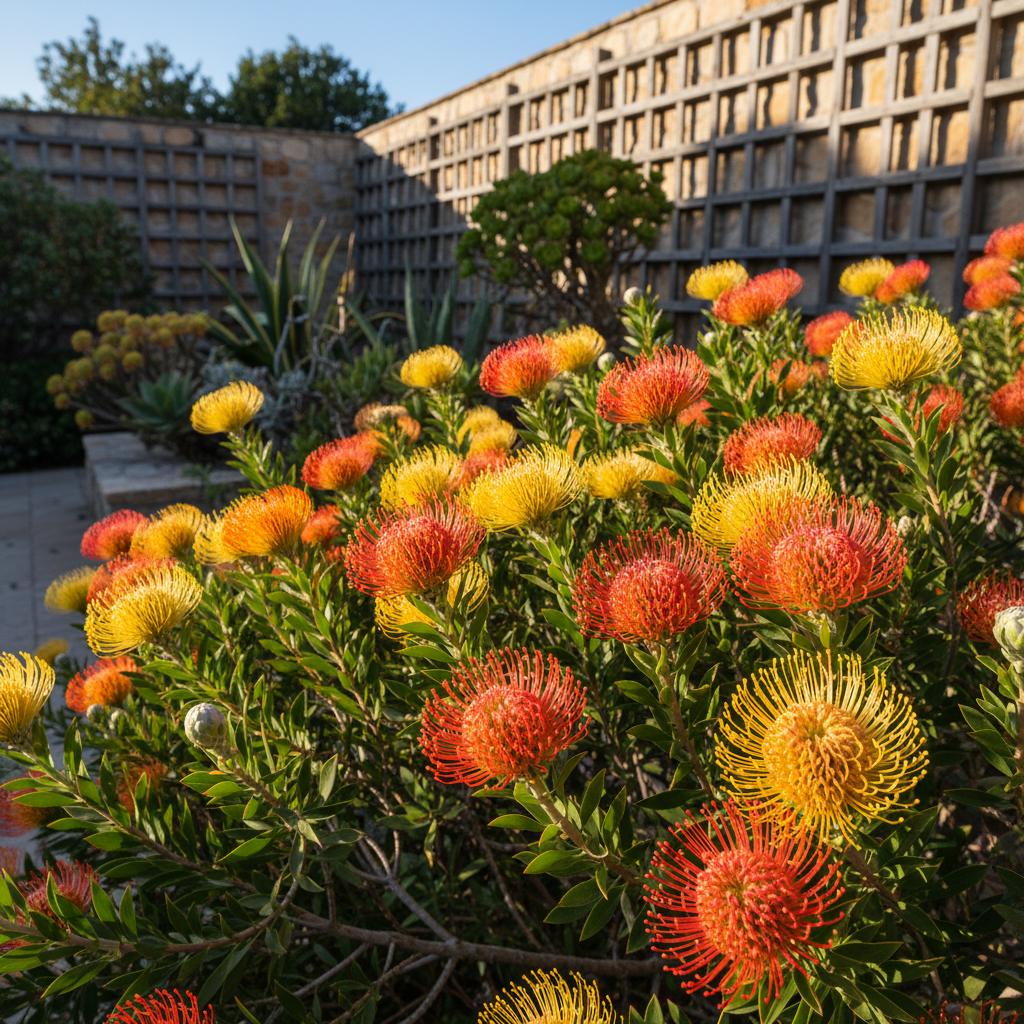
- Flowers: Dense, rounded inflorescences (capitula) up to 10 cm across, featuring prominent, stiff, upward-curving styles in vibrant shades of orange, red, or yellow.
- Stem: Woody, branching stems that spread horizontally and upwards, covered in a smooth to slightly rough grayish-brown bark.
Care Guide
Watering
Water deeply once a week during active growth and dry spells.
Fertilization
Do not apply standard fertilizers; use only phosphorus-free organic matter if absolutely necessary.. Proteaceae have specialized proteoid roots that are highly sensitive to phosphorus; standard fertilizers can be fatal.
Used Coffee Grounds:Lightly sprinkle a small amount of used coffee grounds around the drip line to help maintain soil acidity. Caution: Never use bone meal, banana peels, or any high-phosphorus household waste, as phosphorus toxicity will kill the plant.Pruning
- Prune immediately after flowering to maintain a compact shape.
- Cut stems back, leaving at least 10-15 cm of leafy stem; never cut into bare, old wood as it will not resprout.
- Remove any dead, diseased, or crossing branches to improve air circulation.
Toxicity
Warning: this plant may be toxic.
Pets & Humans
Pets: Non-toxic to cats per ASPCA guidelines.
Humans: Non-toxic to humans; no adverse effects expected from handling or accidental ingestion.
Garden Uses & Culture
Culture: Highly prized in Western floral design for their architectural form, vibrant colors, and exceptional vase life, often used in modern and exotic arrangements.
Usage: Excellent for water-wise landscaping, coastal gardens, rockeries, and as premium commercial cut flowers.