 PlantFun
Plant Needs
Characteristics
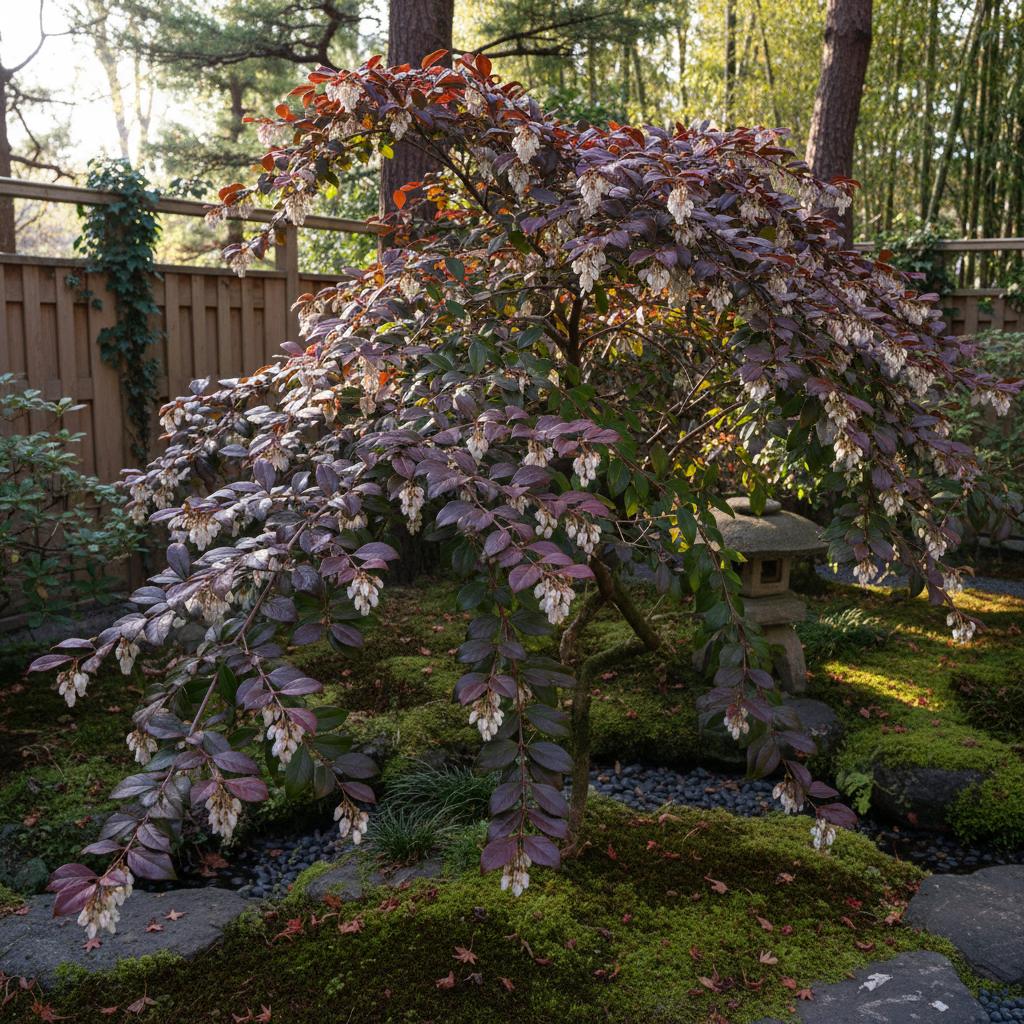
- Leaves: Alternate, simple, lanceolate to narrowly ovate, 5-12 cm long, leathery with serrulate margins, dark green turning bronze or purplish in winter;
- Flowers: Small, white, urn-shaped (urceolate), approximately 6 mm long, borne in dense axillary racemes;
- Stems: Arching, gracefully zigzagging, reddish-green when young, becoming woody with age.
Care Guide
Water deeply and regularly to keep the root zone consistently moist.
Apply an acid-forming organic fertilizer before new growth begins.. Feed sparingly, as it is sensitive to heavy salt buildup from synthetic fertilizers.
Coffee Grounds Topdressing:Sprinkle used, cooled coffee grounds lightly around the drip line to help maintain soil acidity and add organic matter. Do not pile thickly against the stems to prevent fungal rot.- Prune immediately after flowering in late spring to shape the plant;
- Remove dead, damaged, or diseased branches at the base;
- Thin out older, woody stems to encourage vigorous new arching growth;
- Avoid severe pruning late in the season, as it sets buds for the following year.
Toxicity
Warning: this plant may be toxic.
Pets: Toxic per ASPCA; ingestion of leaves or nectar can lead to life-threatening cardiovascular and neurological issues.
Humans: Contains grayanotoxins; ingestion of any part can cause severe gastrointestinal and cardiovascular toxicity.
Garden Uses & Culture
Culture: The genus is named after Leucothoe, a mortal princess in Greek mythology who was loved by Apollo. According to Ovid's Metamorphoses, after her tragic death, Apollo transformed her buried body into a sweet-scented shrub.
Usage: - Excellent for woodland gardens and shaded shrub borders; - Effective as a foundation planting or informal hedge; - Useful for erosion control on shaded slopes due to its spreading root system.