 PlantFun
Plant Needs
Sunlight
Requires full sun for best flowering, but appreciates light afternoon shade in hot summer climates.
Watering
Prefers moderate watering; soil must dry out slightly between waterings to prevent root rot.
Temperature
Hardy in USDA zones 6-9; tolerates winter freezing but dislikes extreme summer heat and high humidity.
Characteristics
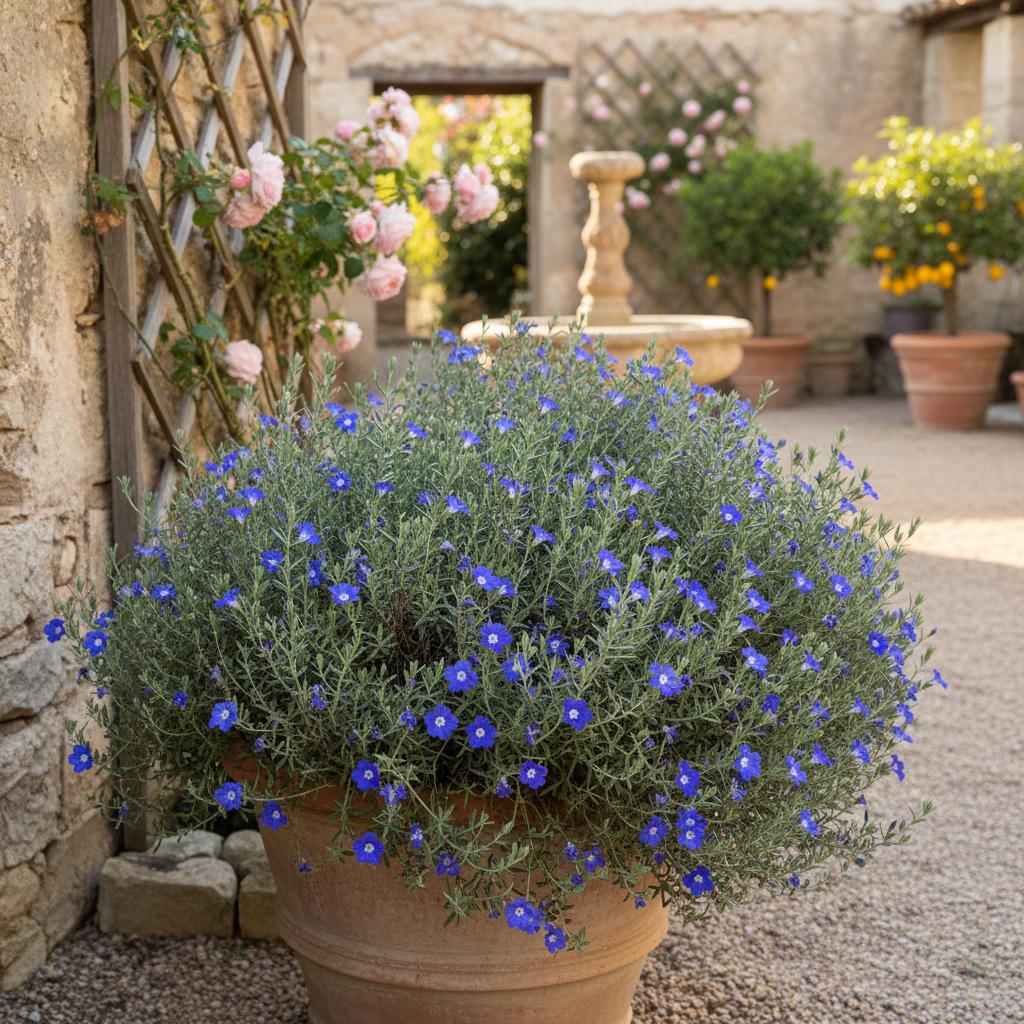
- Leaves: Small, narrow, oblong to lanceolate, dark green, covered in bristly hairs, evergreen and alternate;
- Flowers: Funnel-shaped, 5-lobed, vivid deep blue (often with a reddish-purple tinge in bud), borne in terminal cymes;
- Stems: Trailing, woody at the base, mat-forming, densely pubescent.
Care Guide
Watering
Water deeply when the top inch of soil feels dry.
Fertilization
Apply a slow-release, acid-forming fertilizer.. Avoid over-fertilizing, which promotes leggy foliage growth at the expense of flowers.
Coffee Grounds Soil Acidifier:Sprinkle used, cooled coffee grounds lightly around the base to help maintain soil acidity; avoid thick layers that might mold.Pruning
- Lightly shear back by about one-third immediately after flowering to maintain a compact habit;
- Remove any dead or winter-damaged stems in early spring;
- Avoid cutting into old, leafless wood as it may not regenerate.
Toxicity
Warning: this plant may be toxic.
Pets & Humans
Pets: Non-toxic per ASPCA guidelines, though ingestion of rough leaves may cause mild mechanical irritation.
Humans: Generally considered non-toxic, though bristly hairs may cause minor skin irritation upon contact.
Garden Uses & Culture
Culture: A staple of European rock gardens, prized for providing one of the truest, most intense blues available in temperate horticulture.
Usage: Excellent as a groundcover, trailing over retaining walls, or planted in alpine troughs and rockeries.