 PlantFun
Plant Needs
Sunlight
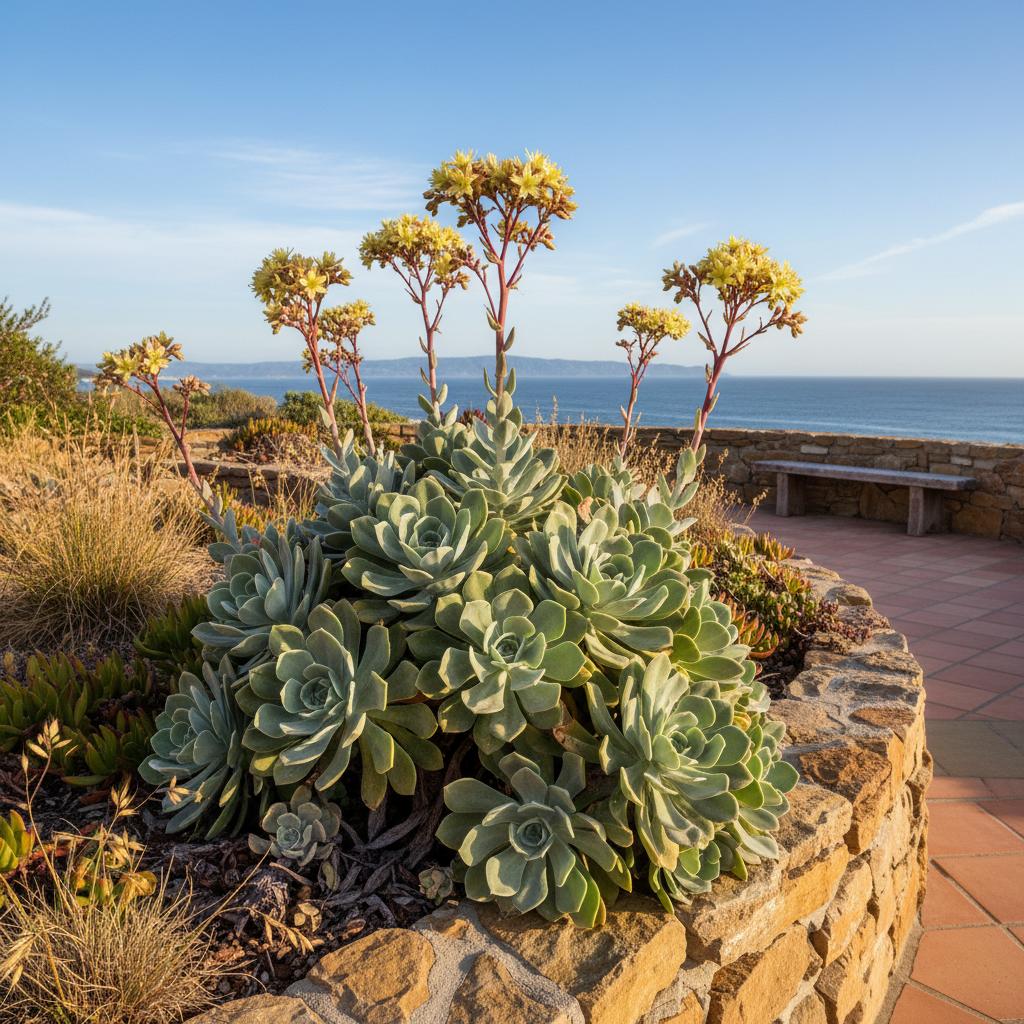
Requires full sun, typical of its open coastal bluff habitat.
Watering
Highly drought-tolerant; requires minimal watering once established.
Temperature
Prefers mild, frost-free coastal Mediterranean climates.
Characteristics
- Leaves: Basal, fleshy, glaucous (gray-green), and highly dissected into small pinnate segments;
- Flowers: Small, yellow flowers arranged in compound umbels atop stout stalks;
- Fruit: Flattened, winged schizocarps adapted for wind dispersal across coastal bluffs;
- Root: Stout, deep taproot adapted to rocky, dry soils and strong winds.
Care Guide
Watering
Water sparingly, allowing soil to dry completely between waterings.
Fertilization
Apply a very light, low-nitrogen top dressing if grown in poor container soil.. Requires very little fertilization, adapted to nutrient-poor coastal soils.
Crushed Eggshells:Rinse, dry, and finely crush eggshells to mix into the soil, providing slow-release calcium without excess nitrogen. Avoid high-salt or uncomposted materials.Pruning
- Remove dead or yellowing basal leaves in late summer;
- Leave spent flower stalks if seed collection or natural dispersal is desired;
- Do not disturb the taproot during maintenance.
Toxicity
Warning: this plant may be toxic.
Pets & Humans
Pets: No known toxicity to cats (per general Lomatium data).
Humans: Generally considered non-toxic, though foraging wild Apiaceae is highly dangerous due to resemblance to deadly hemlock.
Garden Uses & Culture
Culture: While many mainland Lomatium species (biscuitroots) were vital food sources for Native American tribes, this specific island endemic is primarily a focus of modern botanical conservation in California.
Usage: Ecological restoration, native coastal gardens, and conservation seed banking.