 PlantFun
Plant Needs
Characteristics
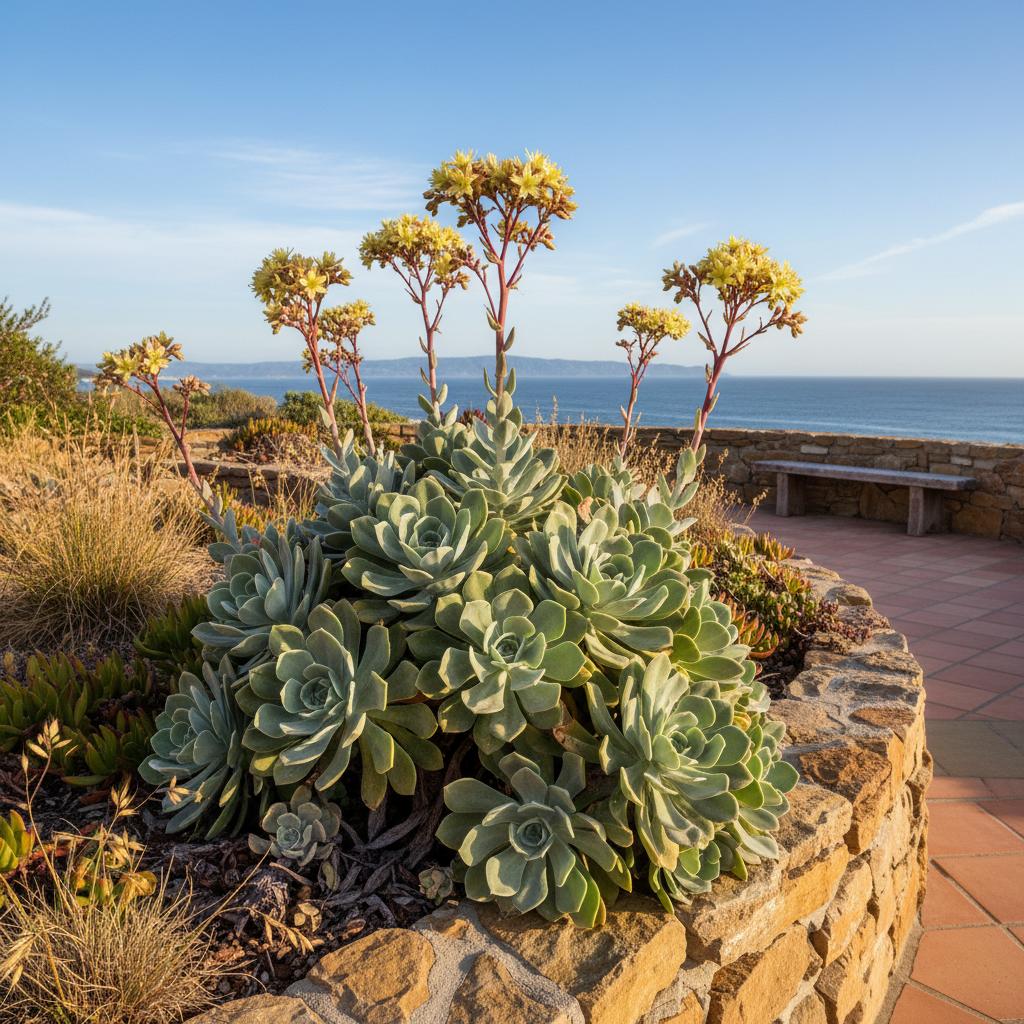
- Leaves: Basal, highly dissected, fleshy, glaucous (gray-green), pinnately compound;
- Flowers: Small, yellow, arranged in compound umbels typical of the carrot family;
- Fruit: Flattened schizocarps with lateral wings, adapted for wind dispersal;
- Root: Thick, deep taproot adapted to rocky, dry coastal soils.
Care Guide
Water sparingly, allowing soil to dry out completely between waterings.
Apply a very light organic topdressing if soil is extremely poor.. Minimal fertilization required; adapted to nutrient-poor soils.
Crushed Eggshells:Rinse, dry, and crush eggshells into a fine powder. Sprinkle sparingly around the base to provide slow-release calcium without overloading the soil with nitrogen.- Remove dead or yellowing basal leaves to maintain appearance;
- Deadhead spent flower stalks if seed collection is not desired;
- Avoid heavy pruning as the plant relies entirely on its basal rosette.
Toxicity
Warning: this plant may be toxic.
Pets: No known toxicity to cats.
Humans: No known toxicity; many related species are edible, but caution is advised due to highly toxic look-alikes in the family.
Garden Uses & Culture
Culture: While this specific island endemic is rare, the genus Lomatium holds significant historical importance in Western North America, where indigenous peoples relied heavily on the starchy taproots of various species as a staple winter food, commonly known as biscuitroot.
Usage: Primarily used in ecological restoration and conservation on the Channel Islands; rarely cultivated in standard gardens.