 PlantFun
Plant Needs
Characteristics
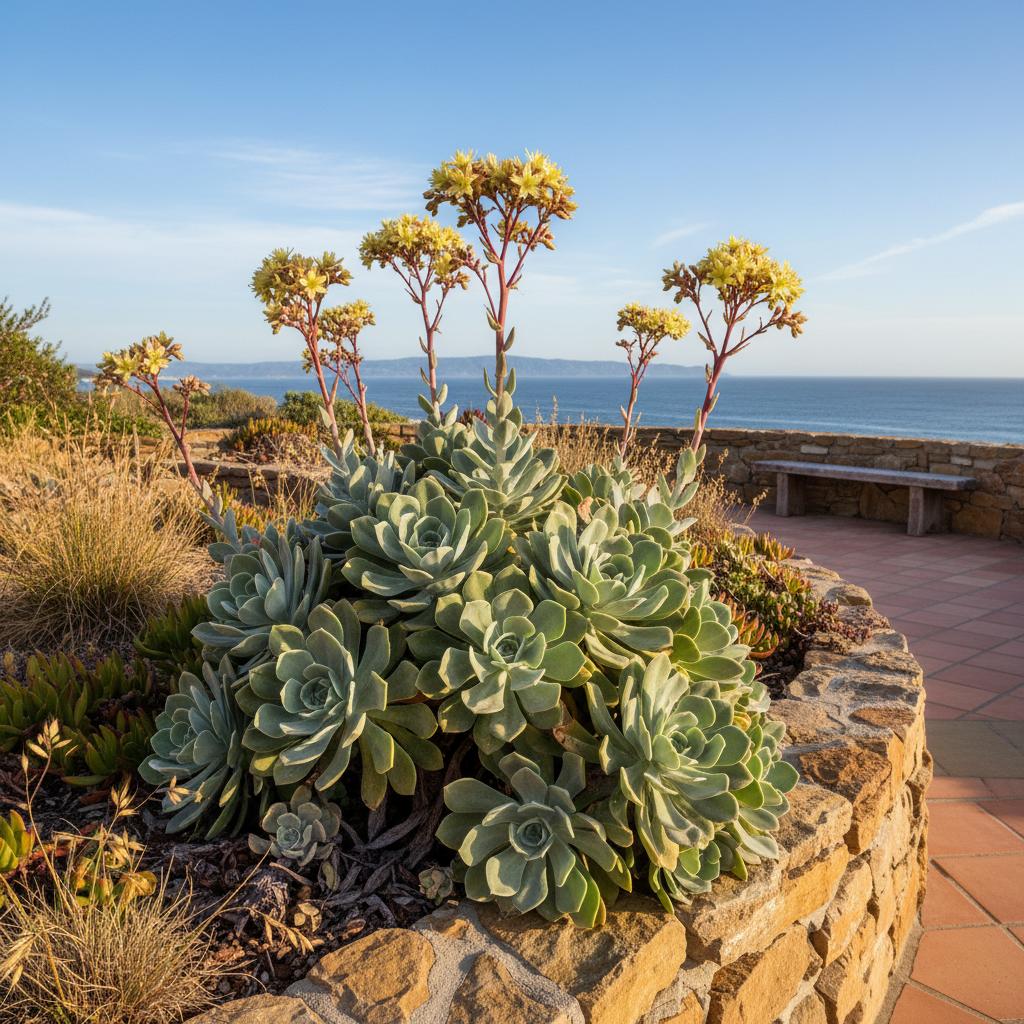
- Leaves: Basal, fleshy, glaucous (bluish-green), pinnately compound with broad, lobed leaflets adapted to coastal winds;
- Flowers: Small, yellow flowers arranged in compound umbels typical of the carrot family;
- Fruit: Flattened schizocarps with lateral wings, aiding in wind dispersal along the bluffs;
- Root: Stout, deep taproot that anchors the plant in rocky, sandy coastal soils.
Care Guide
Water sparingly during the active spring growth; allow soil to dry completely in summer.
Apply a very light top-dressing of organic compost if grown in sterile soil.. Native to nutrient-poor coastal bluffs; requires little to no supplemental fertilization.
Crushed eggshells:Rinse, dry, and finely crush eggshells to mix into the soil; this provides slow-release calcium and slightly improves soil grit without adding excess nitrogen.- Remove dead or senescing foliage in late summer or fall after the plant has gone dormant;
- Do not disturb the woody taproot during maintenance;
- Collect seeds carefully if propagation is desired, leaving some for natural dispersal.
Toxicity
Warning: this plant may be toxic.
Pets: No known toxicity to cats, though ingestion of any non-grass plant material may cause mild stomach upset.
Humans: Generally considered non-toxic, though foraging wild Apiaceae is highly discouraged due to deadly look-alikes (e.g., poison hemlock).
Garden Uses & Culture
Culture: As a rare island endemic, it represents the unique evolutionary pathways of isolated flora and is a focal point for Californian conservationists.
Usage: Primarily grown for ecological restoration, habitat preservation, and in specialized botanical garden collections.