 PlantFun
Plant Needs
Characteristics
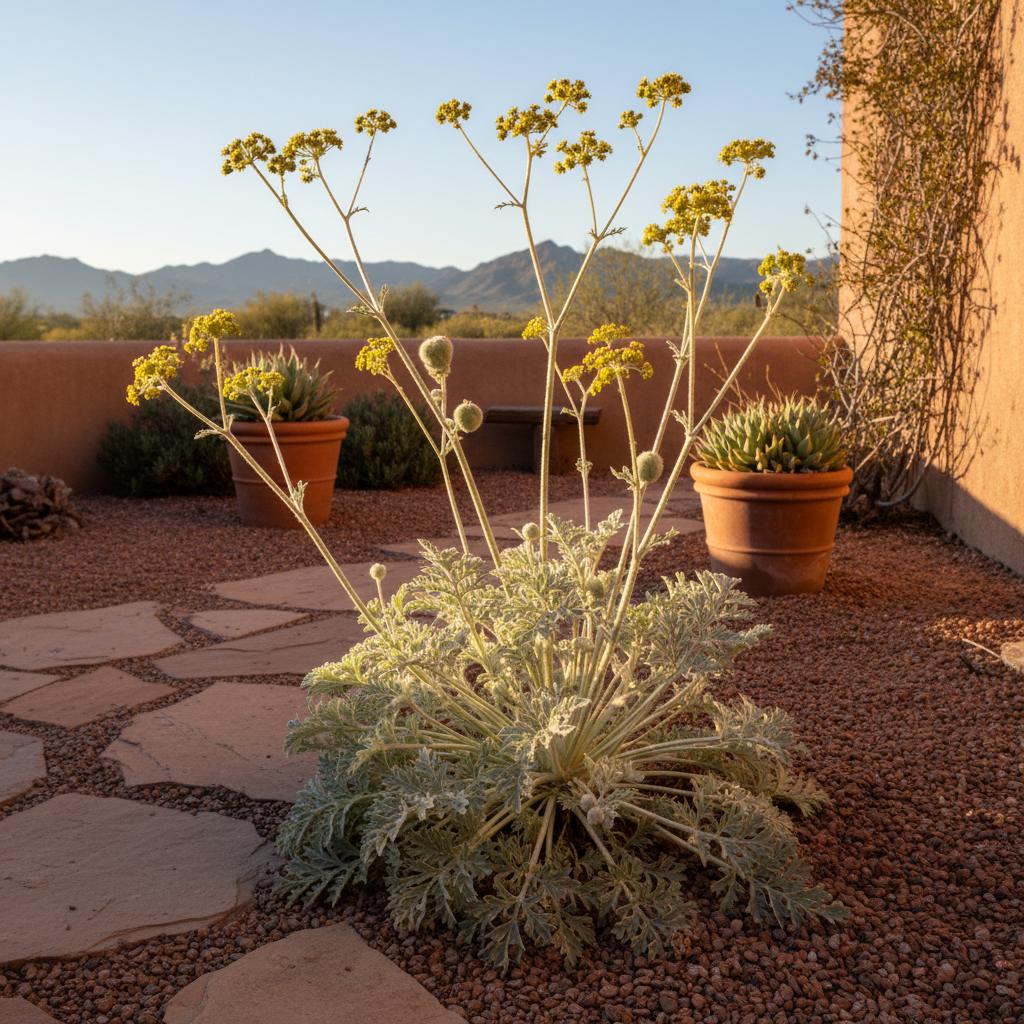
- Leaves: Basal, highly dissected, and covered in dense, woolly (tomentose) hairs that give the plant a grayish-green, frosted appearance;
- Flowers: Small, yellow to greenish-yellow, arranged in compound umbels typical of the parsley family;
- Stem: Short, often subterranean or barely emerging above ground, arising from a thick, deep taproot;
- Fruit: Schizocarp, flattened, with distinct winged margins to aid in wind dispersal.
Care Guide
Water sparingly, allowing the soil to dry out completely between waterings
Apply a very light, low-nitrogen organic top-dressing if soil is completely barren. Requires very little fertilization; thrives in poor, rocky soils.
Eggshell Tea:Crush clean, dried eggshells and steep them in water for a few days. Use the strained water to provide a gentle calcium boost without adding excess nitrogen, which can cause leggy growth. Avoid rich organic matter that retains too much moisture.- Remove spent flower stalks in late summer to tidy the plant's appearance;
- Clear away dead or decaying basal foliage in late fall to prevent fungal issues during winter dormancy;
- Do not disturb the deep taproot when cleaning around the base.
Toxicity
Warning: this plant may be toxic.
Pets: Non-toxic per general botanical data; no specific ASPCA listing indicates severe toxicity.
Humans: Generally considered non-toxic; historically, the roots of many Lomatium species were consumed, though caution is advised due to highly toxic look-alikes in the Apiaceae family.
Garden Uses & Culture
Culture: In North America, the genus Lomatium (often called biscuitroot) holds significant historical importance for Indigenous peoples of the West, who harvested the starchy taproots as a vital, nutrient-dense staple food.
Usage: - **Ecological**: Excellent for xeriscaping, rock gardens, and native pollinator restoration projects; - **Wildlife**: Attracts early-season native bees and serves as a host plant for certain swallowtail butterfly caterpillars.