 PlantFun
Plant Needs
Characteristics
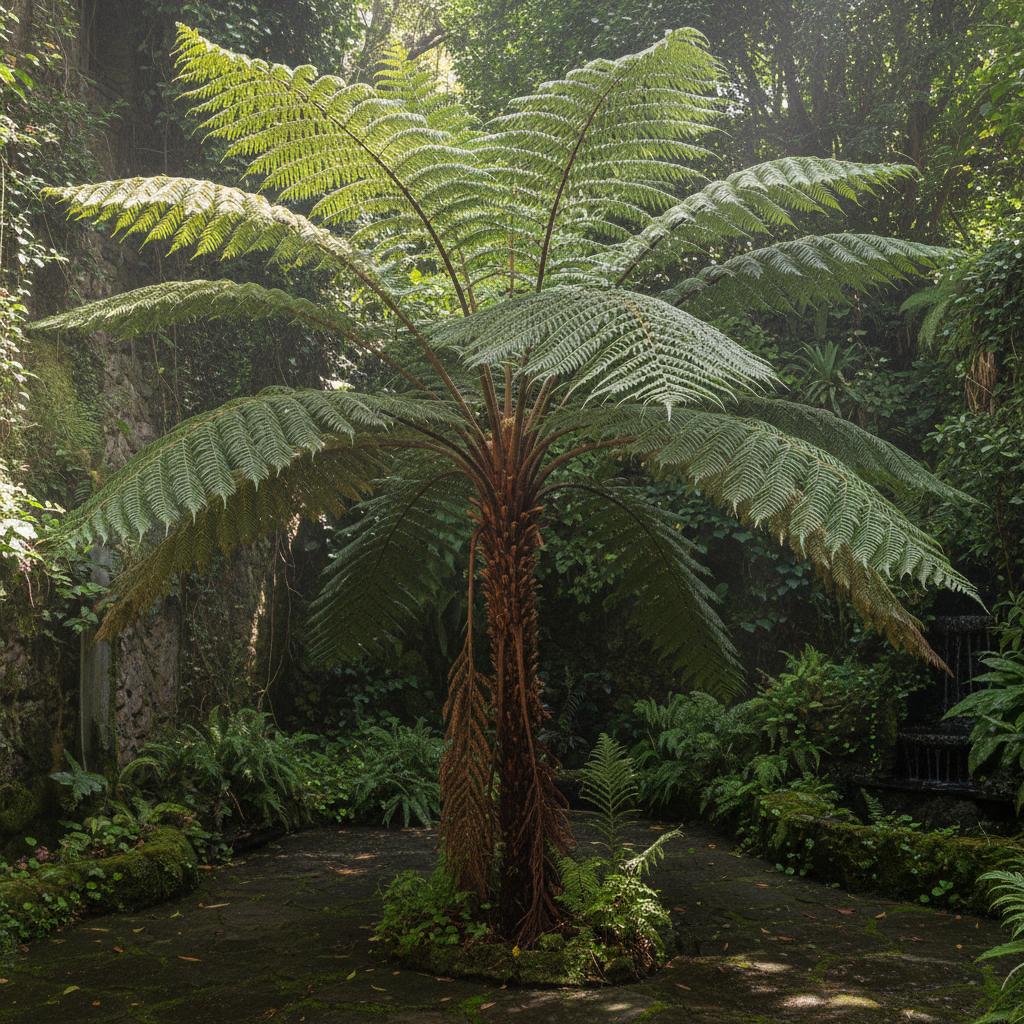
- Fronds: Large, arching, up to 3-4 meters long, quadripinnate (highly divided), dark green above and distinctly glaucous (silvery-white) below;
- Rhizome: Stout, creeping to ascending, sometimes forming a short trunk up to 1 meter tall, densely covered with soft, pale brownish hairs rather than scales;
- Sori: Round, naked (lacking an indusium), located on the undersides of the ultimate leaf segments.
Care Guide
Keep soil consistently moist but not waterlogged, watering deeply when the top inch feels slightly dry.
Apply a weak, balanced organic fertilizer once as new fronds emerge.. Ferns are sensitive to heavy fertilization; use half-strength or highly diluted solutions.
Used Tea Leaves:Scatter used, unflavored tea leaves or grounds around the base to gently boost nitrogen and maintain soil acidity. Avoid thick layers to prevent mold.- Remove old, brown, or damaged fronds at the base using sterilized secateurs;
- Do not cut into the main rhizome or crown;
- Leave healthy green fronds intact to support the plant's energy needs.
Toxicity
Warning: this plant may be toxic.
Pets: Non-toxic to cats per general fern safety guidelines.
Humans: Non-toxic to humans, though not considered edible.
Garden Uses & Culture
Culture: In South America, particularly in Chile, the fronds have been historically used by local communities for thatching and temporary shelters, while the plant itself became admired in Victorian-style fernery gardens in Europe.
Usage: - **Ornamental**: Excellent architectural plant for woodland gardens and shaded borders; - **Ecological**: Acts as a pioneer species in disturbed cloud forests, stabilizing soil.