 PlantFun
Plant Needs
Characteristics
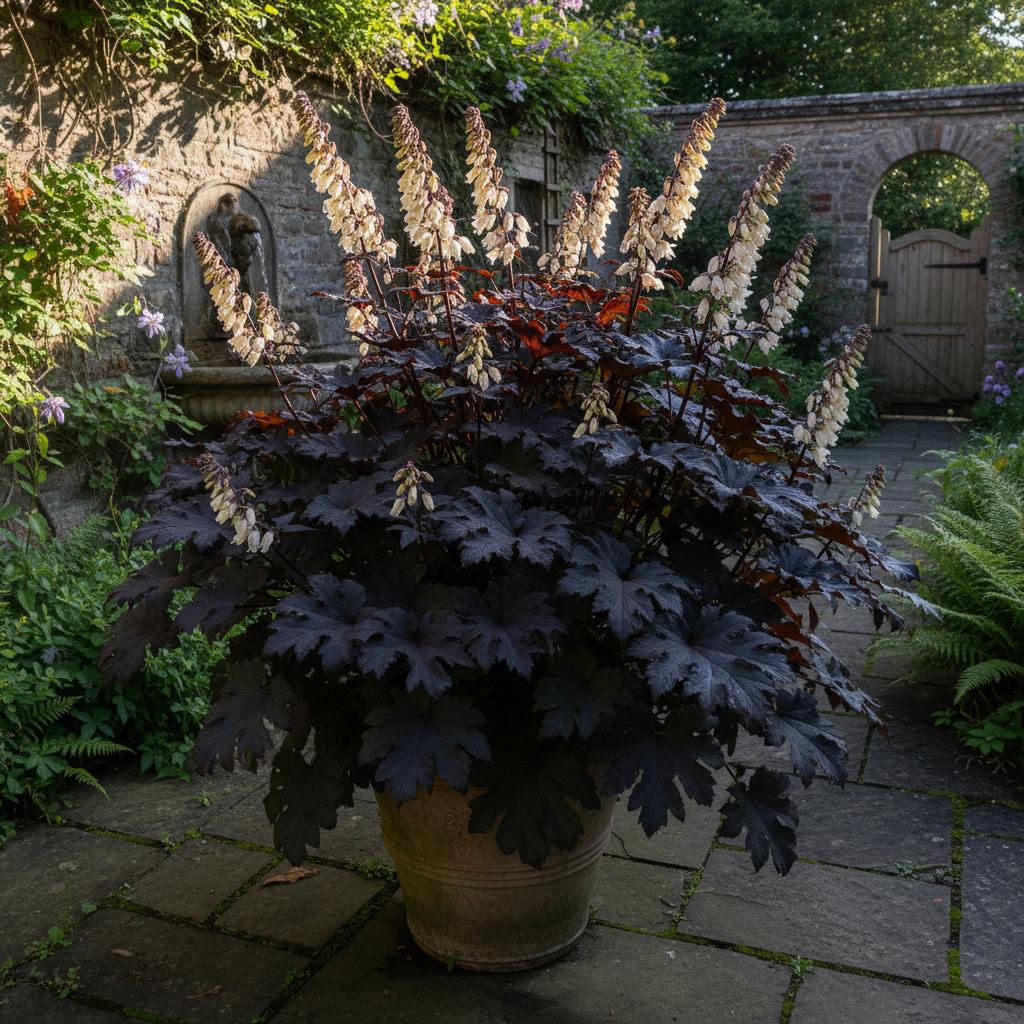
- Leaves: Alternate, ovate to elliptical, striking dark purple to almost black, retaining their dark coloration exceptionally well throughout the seasons;
- Flowers: Clustered in small corymbs, featuring 4 narrow, strap-like (spidery) petals that are bright pink to magenta, creating a stark contrast with the dark foliage;
- Bark: Brownish-gray, with young stems exhibiting a slightly pubescent, starry-hairy texture;
- Habit: Evergreen shrub with a graceful, multi-stemmed, arching and spreading growth habit.
Care Guide
Water deeply when the top 2 inches of soil feel dry, especially during prolonged dry spells.
Apply a slow-release fertilizer formulated for acid-loving plants before new growth begins.. Avoid over-fertilizing, which can reduce flowering in favor of excessive foliage growth.
Coffee Grounds:Sprinkle used, cooled coffee grounds lightly around the base of the plant and scratch into the topsoil. This provides a gentle nitrogen boost and helps maintain the slight soil acidity the plant prefers. Avoid thick layers to prevent mold.- Prune immediately after the main spring bloom to shape the plant and control its size;
- Remove dead, damaged, or crossing branches to improve air circulation;
- Tolerates heavy pruning and can be sheared into formal hedges, though a natural arching shape is often preferred;
- Avoid late summer or fall pruning, as this removes the buds set for the following spring's flowers.
Toxicity
Warning: this plant may be toxic.
Pets: Non-toxic to cats (per ASPCA general guidelines for the genus).
Humans: Generally considered non-toxic to humans.
Garden Uses & Culture
Culture: Highly prized in Western contemporary landscaping for its dramatic dark foliage, often used as a striking focal point or contrast plant in mixed borders across the Southern United States and Europe.
Usage: Excellent as a specimen plant, foundation planting, informal hedge, or mass planted on slopes for erosion control. Also adapts well to large containers.