PlantFun
Plant Needs
Sunlight
Requires full sun for optimal berry production; tolerates partial shade in hot climates
Watering
Water deeply when top 2–3 cm of soil is dry; avoid prolonged waterlogging
Temperature
Hardy to -15°C; thrives in 18–28°C during growing season; tolerates hot dry summers
Characteristics
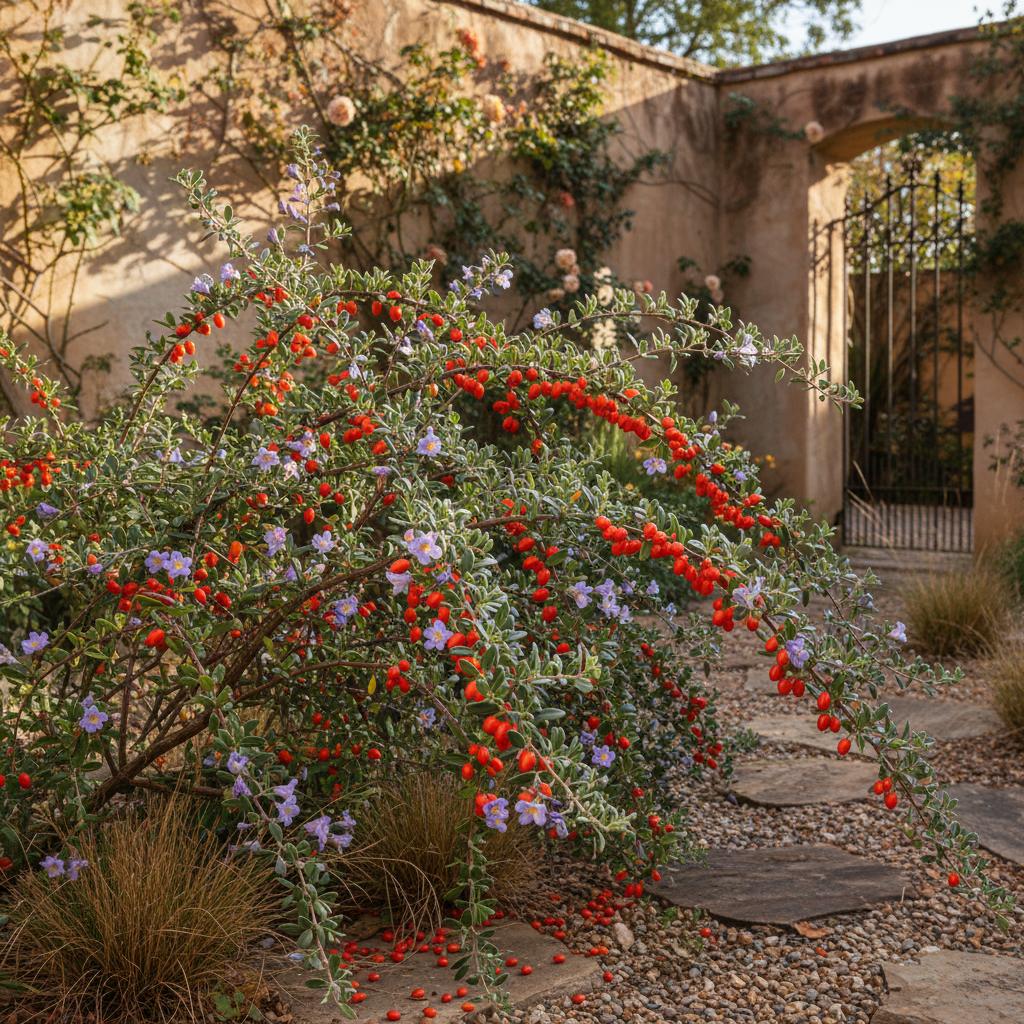
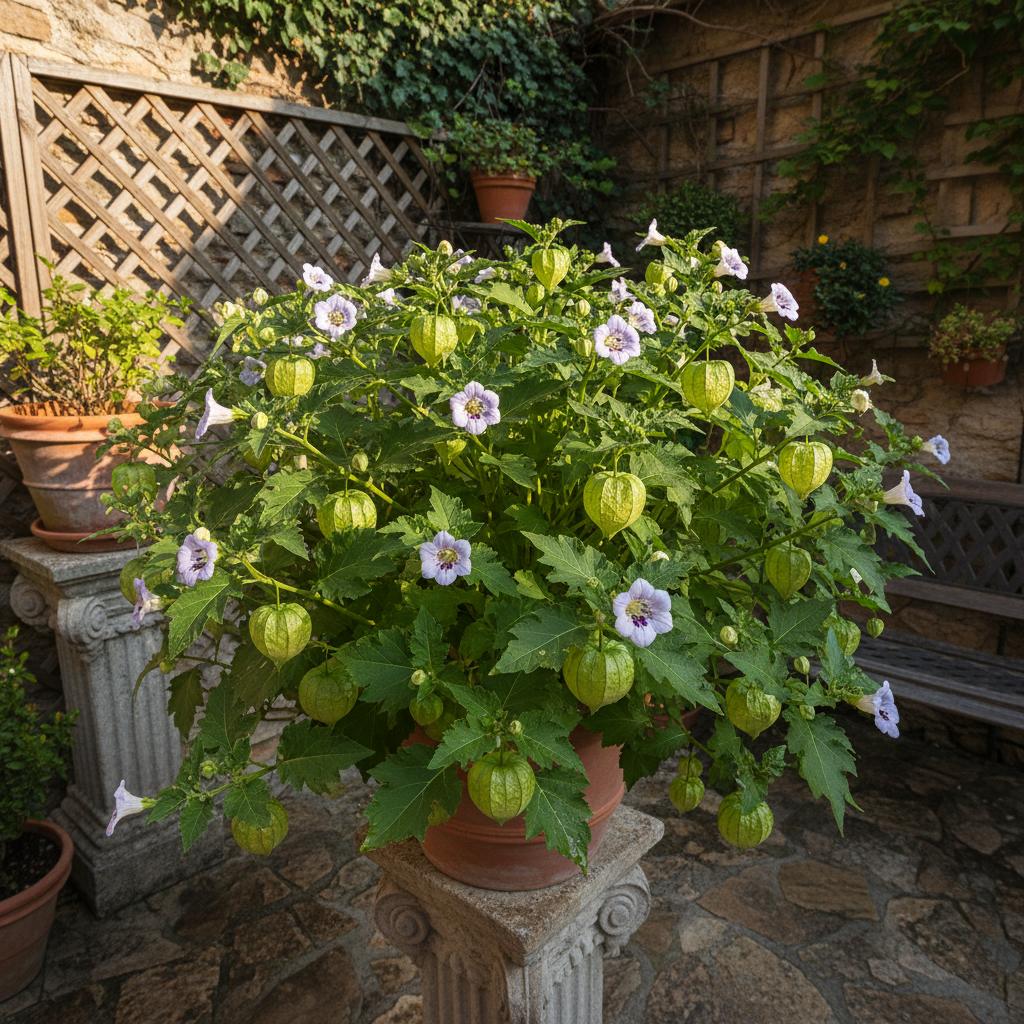
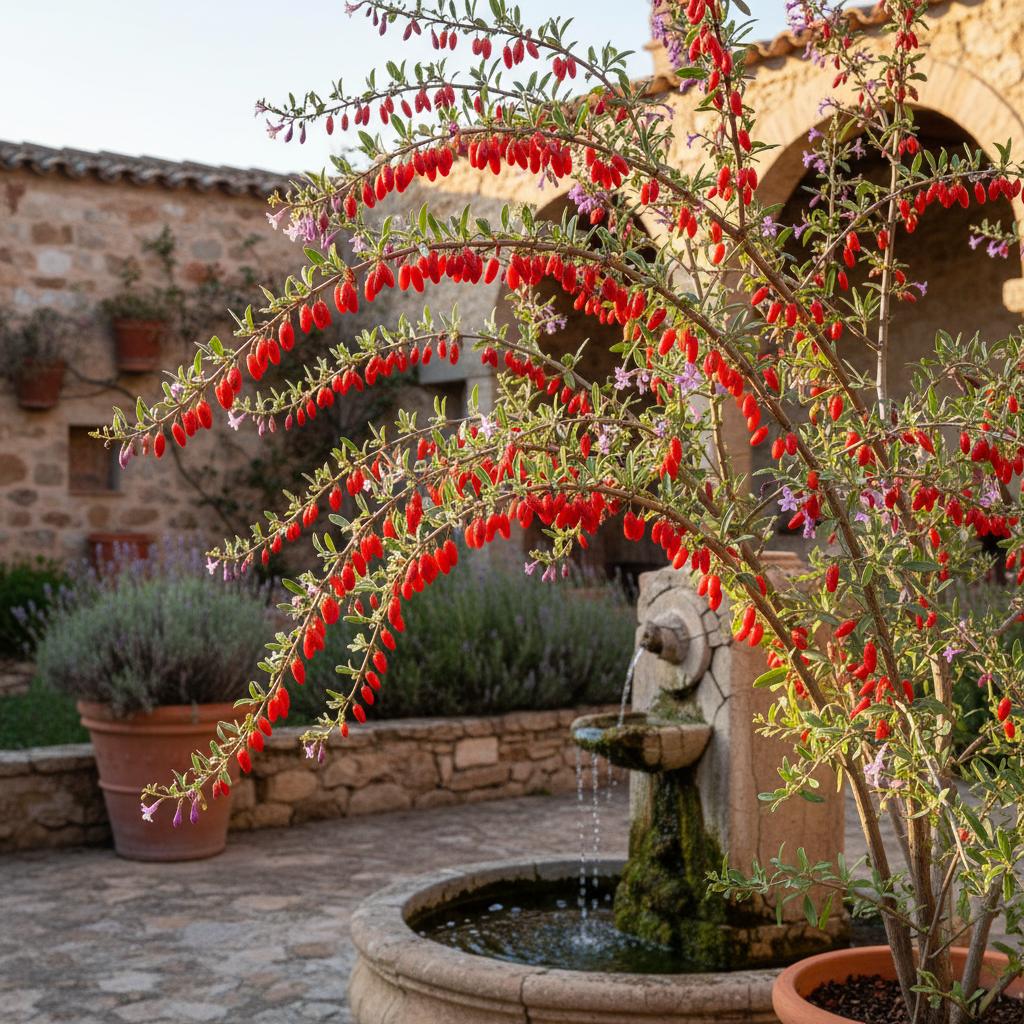
- Leaf: Narrow lanceolate leaves; bright green, arranged alternately or in small clusters
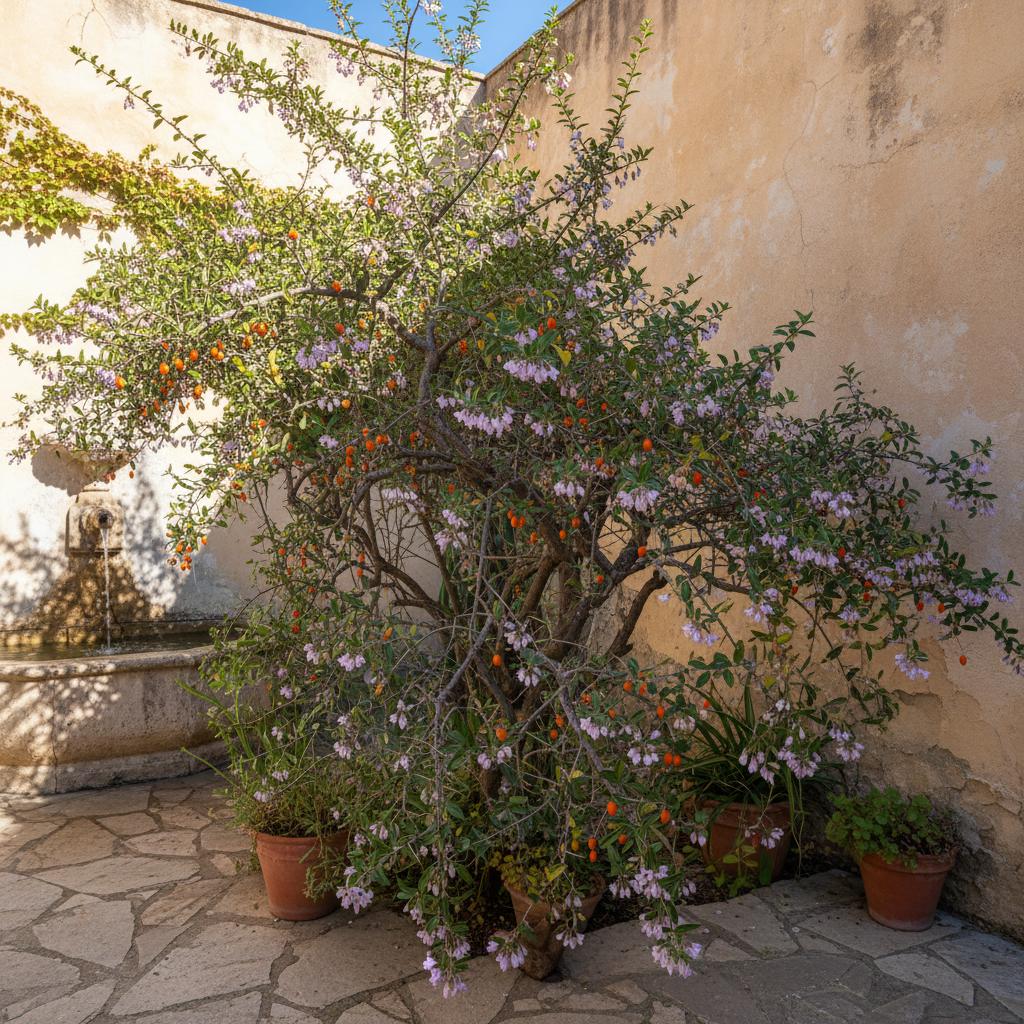
- Flower: Small funnel-shaped pale purple or lavender flowers with five delicate petals
- Fruit: Ovoid bright orange-red berries, 1–2 cm long, ripening in late Summer
Care Guide
Watering
Keep soil consistently moist during fruiting season; avoid overwatering
Fertilization
Apply balanced organic fertilizer every 4 weeks. Reduce feeding entirely in late autumn and winter
Banana peel tea:Soak 2–3 chopped banana peels in 1 liter water for 3 days; strain and water at the base of the plant to avoid leaf burnPruning
- Prune dead or damaged branches in late Winter to stimulate new growth
- Thin overcrowded stems to improve air circulation and sunlight access for berry production
- Trim back long, leggy branches in early Spring to maintain a compact, manageable shape
Toxicity
Warning: this plant may be toxic.
Pets & Humans
Pets: ASPCA confirmed non-toxic; no adverse effects reported
Humans: No known toxicity; berries are widely consumed as edible food
Garden Uses & Culture
Culture: Berries symbolize longevity in traditional Chinese culture; used in herbal medicine for vitality
Usage: Edible berries for fresh eating, drying, or tea; ornamental foliage and flowers for garden borders