 PlantFun
Plant Needs
Characteristics
- Leaves: Deciduous, alternate, simple, obovate to broadly elliptical, 4-8 inches long, dark green above and paler beneath, with smooth margins;
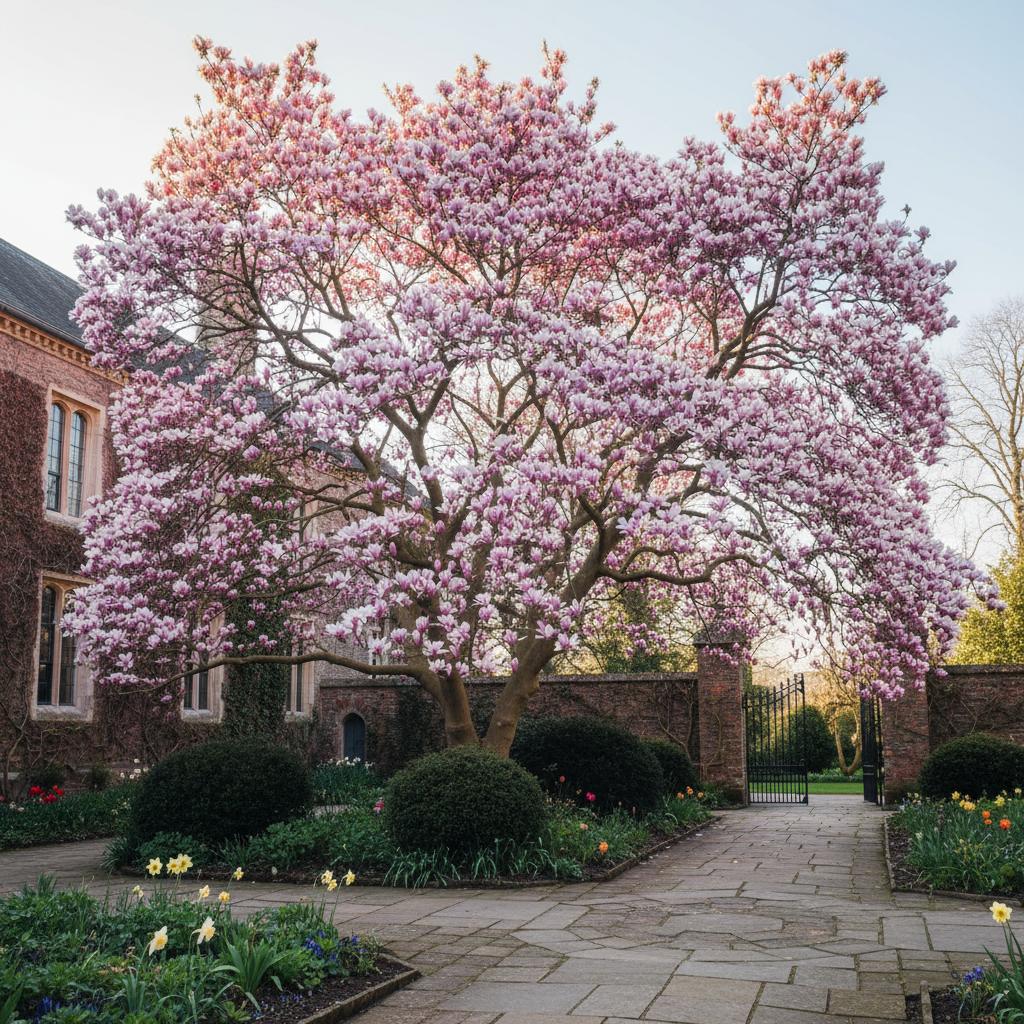
- Flowers: Large, solitary, cup or saucer-shaped, 5-10 inches across, featuring 9 fleshy tepals that are white inside and flushed with pink to purplish-pink on the outside, emerging before the leaves;
- Bark: Smooth, silvery-gray, developing slight ridges with advanced age;
- Stems: Stout, grayish-brown, bearing large, fuzzy, silky terminal buds during winter.
Care Guide
Water deeply and regularly to keep the root zone moist, especially during dry spells
Apply a balanced, slow-release fertilizer just before new growth begins. Fertilize primarily during the active early growing season.
Coffee Grounds and Banana Peels:Mix used coffee grounds into the topsoil around the drip line to provide gentle nitrogen and maintain slight soil acidity. Bury chopped banana peels shallowly to boost potassium for root and flower health. Avoid piling directly against the trunk.- Prune immediately after flowering finishes in late spring;
- Avoid late summer or winter pruning, as this removes the fuzzy buds set for next year's flowers;
- Remove dead, diseased, or crossing branches to maintain an open, attractive framework;
- Limit severe pruning, as magnolias are slow to heal from large cuts.
Toxicity
Warning: this plant may be toxic.
Pets: Non-toxic to cats per ASPCA guidelines.
Humans: Generally considered non-toxic to humans; no clinically relevant effects expected from incidental exposure.
Garden Uses & Culture
Culture: A staple in European and American spring gardens, the saucer magnolia is widely celebrated as a herald of spring. Its massive, early blooms against bare branches symbolize perseverance, nobility, and the dramatic awakening of nature after winter.
Usage: - Specimen tree for lawns and gardens; - Focal point in spring landscape designs; - Urban landscaping (due to moderate pollution tolerance).